Published · Updated
The quick answer
- Effective nail fungus treatment has three parts: an active treatment, ongoing nail management (filing, clipping), and removing the cause (damp shoes, untreated athlete's foot).
- Options range from prescription oral terbinafine to topicals, in-clinic laser and at-home light therapy — all take months, not days.
- Progress is judged by the clear band of new nail at the base, not by the already-damaged tip.
- Severe, painful or fast-changing nails, especially with diabetes or neuropathy, need a clinician's assessment before self-treatment.
Part one: stopping the infection
Your options are prescription oral antifungals, prescription or over-the-counter topicals, in-clinic laser, and at-home light therapy. They differ enormously in cost, speed and effort, and every one of them works only if used for months rather than weeks, because nails simply grow too slowly to show change any faster.
Pick one and commit to it. Cycling through three treatments in three months is the most common reason people conclude that nothing works — you never give any single approach long enough to show in the nail's growth.
Oral terbinafine, prescribed for around twelve weeks, generally has the strongest published cure rates but needs a doctor's involvement and sometimes blood monitoring. Topicals and at-home light therapy put the daily work on you but need no prescription. In-clinic laser needs no daily effort but the highest upfront cost.
Part two: managing the nail itself
This part is free, and it makes every treatment work better, whichever one you pick.
- Soak for ten minutes to soften, then clip straight across in small bites rather than curved.
- File the thickened surface down weekly with a file dedicated to that nail only.
- Keep nails short so debris cannot build under the free edge.
- Throw away disposable files after each use, and disinfect metal clippers with alcohol.
Part three: removing the cause
Dermatophytes live in your shoes, your shower and the skin between your toes. Treat athlete's foot at the same time with an antifungal cream if it is present, rotate shoes so each pair dries for a full day before wearing again, wear moisture-wicking socks, wash socks and towels on a hot cycle, wear sandals in communal changing areas and pools, and disinfect the shower floor periodically.
This is the step people skip, and it is why infections return a year after an otherwise successful treatment. Fungus is opportunistic — if the damp, warm environment it needs is still there, a new infection can take hold even after the old one has fully cleared.
Comparing the main treatment routes
None of these repair the nail instantly. All of them are trying to do the same underlying thing — stop the fungus so healthy nail can grow out clear from the base — and the differences are really about cost, supervision and daily effort rather than fundamentally different outcomes.
| Route | Typical cost | Time to complete | Prescription needed |
|---|---|---|---|
| Oral terbinafine | Rx cost, ~12 weeks course | 12 weeks + growth time | Yes |
| Prescription/OTC topicals | $15–$80+ | Many months | Some yes, some no |
| In-clinic laser | $300–$1,200+ | 3–4 sessions + growth time | No |
| At-home light therapy | $34.99–$49.99 | Daily, several months | No |
The daily step, made easy
Ninety seconds a day, drug-free, with free shipping and a 30-day money-back guarantee.
- From $34.99 per device
- Free tracked shipping
- 30-day money-back
“I have been using FungaBeam since January. My case has cleared up and my nails look great.” — Patricia L., Ohio, US
Choosing a device if you go the at-home route
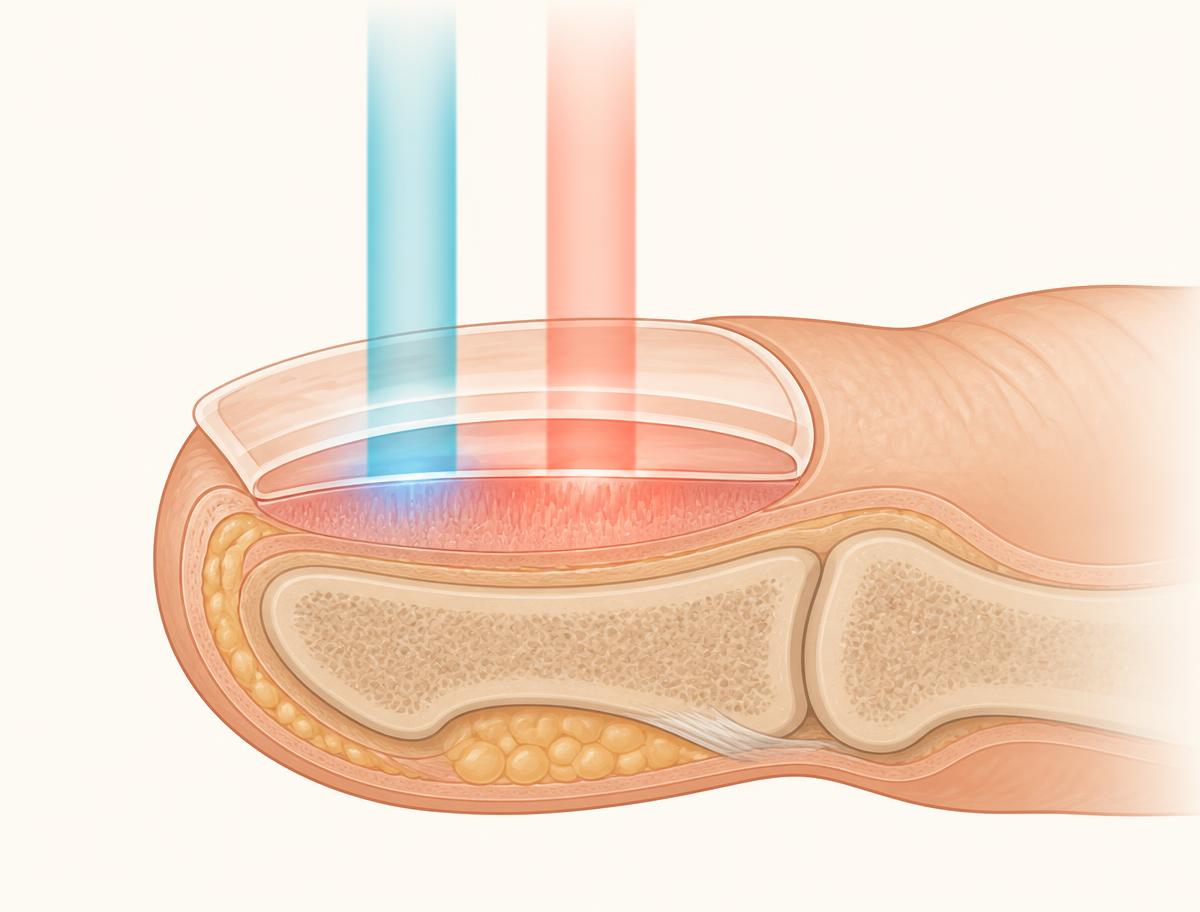
FungaBeam meets each of these: stated 470nm and 910nm wavelengths, 36W across 18 LEDs, roughly 90-second sessions, a folding shell that fits hands and feet, a 30-day money-back guarantee, and a 12-month warranty extendable to two years with the optional Coverage add-on.
| Checklist item | Why it matters |
|---|---|
| Wavelengths stated (e.g. 470nm / 910nm) | Vague marketing like 'red light' without numbers is a red flag |
| Session length under 5 minutes | Anything longer daily is unlikely to be followed consistently |
| Fits toes and fingers | One device covering both is better value than single-purpose gadgets |
| Published return window | 30 days is enough to judge whether the routine suits you; 7 days is not |
| Warranty length | 12 months minimum suggests the maker expects the unit to last |
Measuring progress honestly
Ignore the tip of the nail — that portion was damaged before you started and will stay damaged until it is trimmed off over the following months. Watch the band closest to the cuticle instead. If nail grown in the last two months is coming in clear and smooth, your treatment is working, regardless of how the rest of the nail looks.
Photographing the nail monthly from the same angle is the single most useful habit for judging progress objectively, since day-to-day memory is unreliable and the change is genuinely gradual.
When treatment is not the answer, at least not yet
Severely deformed nails, nails lifting fully from the bed, or infections in someone with diabetes or neuropathy need professional assessment before any self-treatment begins. A clinician may take a nail clipping for laboratory testing to confirm it is actually fungus rather than nail psoriasis or trauma, debride the nail properly with tools you would not have at home, or in rare, severe cases discuss nail removal.
Self-treating a nail that is not actually fungal is the most common reason home treatments of any kind appear to fail — you cannot treat away a condition that was never fungus in the first place.
What most buyers get wrong
Expecting a two-week result is the top mistake across every treatment type, not just devices — it applies equally to prescription topicals and even to early weeks of oral tablets. The second is treating the nail while ignoring the shoes and shower, which quietly reinfects the foot while you are busy congratulating yourself on the treatment working.
Frequently asked questions
Ready to start treating the nail bed tonight?
Treat the infection, manage the nail, and fix the cause — do all three and most cases genuinely do resolve over the following months.
- From $34.99 per device
- Free tracked shipping
- 30-day money-back
“I have been using FungaBeam since January. My case has cleared up and my nails look great.” — Patricia L., Ohio, US
Keep reading
- Best treatment comparedEvery option ranked by evidence, cost, effort and speed.
- Step-by-step planA month-by-month routine covering the nail, the skin, the shoes and the tracking.
- Onychomycosis explainedThe clinical picture: types, stages, diagnosis and every treatment route.
- Terbinafine and LamisilThe prescription standard: how it works, success rates, side effects and monitoring.
Sources
This page is general information, not medical advice. FungaBeam is a consumer wellness device and is not intended to diagnose, treat, cure or prevent any disease. Speak to a doctor or podiatrist about your own situation, particularly if you have diabetes, circulation problems or worsening symptoms.