Published · Updated
The quick answer
- Onychomycosis is a fungal infection of the nail plate, bed and sometimes the matrix, usually caused by dermatophyte fungi.
- It rarely clears on its own because the nail plate shields the fungus from most topical products.
- Diagnosis is confirmed with a nail clipping sent for microscopy or culture, not by appearance alone.
- Treatment options range from topical lacquers to prescription oral antifungals, clinic laser and at-home light therapy, each with different cost, time and prescription requirements.
- First visible new growth typically appears in 4-8 weeks; a full toenail replacement takes 9-12 months.
What onychomycosis actually is
Onychomycosis is an infection of the nail unit — the plate you can see, the bed underneath it and the matrix at the base where new nail is produced. Most cases are caused by dermatophytes, a family of fungi that digest keratin, the protein nails are made of. Yeasts such as Candida and a smaller group of non-dermatophyte moulds account for the rest, and the exact organism can change which treatment makes sense.
Because the fungus lives beneath a hard, largely impermeable plate, it sits in one of the best-protected niches on the human body. That single fact explains almost everything about the condition: why it rarely clears on its own, why surface products struggle to reach it, and why any honest treatment timeline is measured in months rather than days.
The infection usually begins small and localised — a discoloured patch near the free edge — and expands slowly along the length of the nail toward the cuticle. Left alone, it does not stay contained; it typically advances, thickens the plate, and often spreads to neighbouring nails on the same foot.
The main types and how they present
Podiatrists usually sort onychomycosis into four patterns, and the pattern affects both how it looks and how it is treated.
- Distal subungual — by far the most common. Starts at the free edge and works backwards toward the cuticle, with yellow-brown discolouration and thickening.
- White superficial — chalky white patches sitting on the surface of the plate rather than underneath it. Often the easiest to improve because the fungus is more accessible.
- Proximal subungual — starts at the cuticle end and grows outward. Less common, and worth a doctor's opinion because it can be associated with a weakened immune system.
- Candidal — yeast-driven, more often seen in fingernails and in hands that spend a lot of time wet, frequently with swelling of the skin fold around the nail.
How it progresses if nothing changes
Early on you may see nothing more than a small white or yellow dot near the tip. Over months the discolouration spreads toward the base, the nail thickens, and debris builds under the plate. In advanced cases the nail becomes crumbly, lifts away from the bed (onycholysis) and can become painful in shoes or when pressed.
Nail growth is the limiting factor in recovery at every stage. A toenail replaces itself roughly every nine to twelve months, so even once the infection itself stops advancing, the visibly damaged nail still has to grow out before the nail looks normal again. This is why patience, not intensity, decides most outcomes.
How doctors diagnose it
Appearance alone is unreliable — psoriasis, lichen planus, old trauma and simple aging can all mimic fungal nails. A podiatrist or dermatologist will usually clip a small piece of the affected nail and send it for potassium hydroxide (KOH) microscopy, fungal culture, or PCR testing. Culture can take two to three weeks to come back but tells you the specific organism, which matters if oral medication is being considered.
If you have tried a treatment for several months with zero change, a confirmed diagnosis is worth getting before spending more money — you may be treating the wrong thing entirely.
Treatment options, honestly compared
There is no instant cure, and any product promising one is selling you something. The realistic options are topical antifungals, prescription oral antifungals, in-clinic laser, and at-home light therapy — often used alongside careful nail hygiene and thinning of the plate.
Oral terbinafine has the strongest clinical record but requires a prescription, a multi-month course, and for some patients periodic liver-function monitoring. Clinic laser is expensive and rarely covered by insurance, and evidence for it remains mixed. Topicals are cheap but limited by how little actually penetrates the nail plate. At-home light therapy sits in between: a one-off cost, drug-free, and dependent entirely on doing it daily.
| Option | Typical cost | Time to see change | Prescription needed | Realistic expectation |
|---|---|---|---|---|
| Topical antifungal lacquer | $15-$50/month | 3-6 months | Some OTC, some Rx | Modest for mild, surface cases |
| Oral terbinafine | $10-$40/month (generic) | 2-3 months for new growth | Yes | Highest cure rates, needs monitoring |
| In-clinic laser | $300-$1,200 per course | Variable, months | No, but clinic visit | Evidence mixed, expensive |
| At-home light therapy (FungaBeam) | From $34.99 one-off | 4-8 weeks for new growth | No | Drug-free, requires daily consistency |
| Nail thinning/filing routine | Under $10 | Ongoing | No | Supports every other option, not a cure alone |
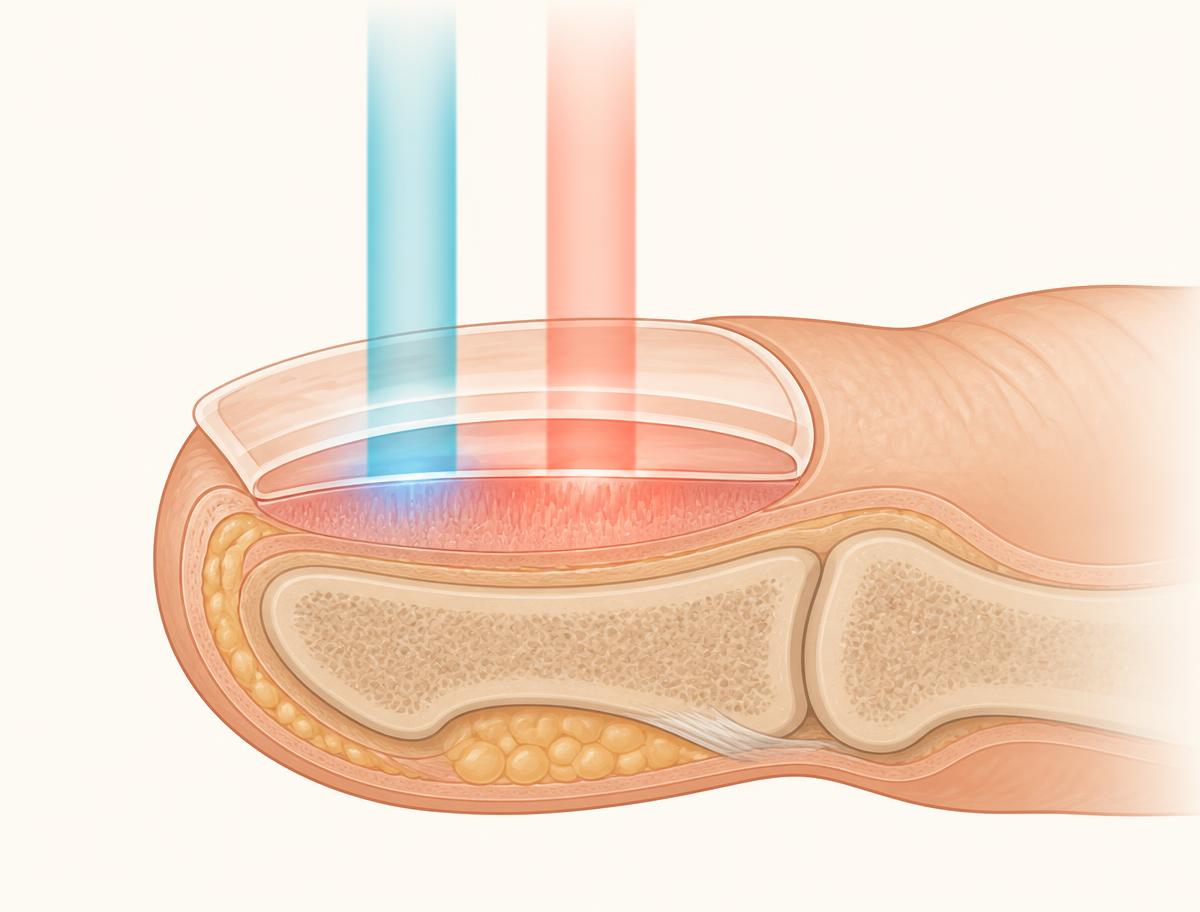
Treat the nail bed at home, drug-free
FungaBeam delivers 470nm blue and 910nm near-infrared light straight through the nail plate in a 90-second daily session — no prescription, no appointment.
- From $34.99 per device
- Free tracked shipping
- 30-day money-back
“I have been using FungaBeam since January. My case has cleared up and my nails look great.” — Patricia L., Ohio, US
What commonly goes wrong
The single biggest mistake is stopping too early. People apply a treatment for three or four weeks, see no visible change, and quit — but the nail plate simply cannot show progress that fast because the new growth has to travel up from the base. Judging a nail treatment before eight weeks is judging it before it had a chance to work.
The second common mistake is treating the nail while ignoring the skin around it, particularly if athlete's foot is present. Reinfection from untreated skin or from shoes that were never disinfected is one of the most common reasons a otherwise sound treatment 'fails.'
Prevention and daily habits
Keep feet dry, change socks if they get damp, rotate at least two pairs of shoes so each can dry fully between wears, and wear sandals in gym showers and pool areas. Trim nails straight across, avoid sharing clippers, and disinfect tools you do use on an affected nail.
If you have already had onychomycosis once, treat the inside of your shoes with an antifungal spray or powder, since spores can survive there for months and reseed a nail you just cleared.
Is this you? Who should self-treat and who should not
If you are otherwise healthy, the nail is discoloured or mildly thickened but not painful, and you have no diabetes or circulation problems, self-treatment with topicals or light therapy alongside good foot hygiene is a reasonable starting point.
If you have diabetes, peripheral neuropathy, poor circulation, or a compromised immune system, see a podiatrist before self-treating. Reduced sensation and healing capacity mean small foot problems can escalate quickly, and a professional should confirm the diagnosis and rule out complications first.
When to see a doctor
See a doctor or podiatrist if you have diabetes, poor circulation or a suppressed immune system; if the nail is painful, bleeding or lifting away; if the surrounding skin is red, swollen or warm to the touch; or if the discolouration started suddenly after an injury rather than gradually. Several conditions can look identical to fungus, and a nail clipping sent for testing is the only way to be certain what you are dealing with.
Frequently asked questions
Ready to start treating the nail bed tonight?
Start a 90-second daily habit aimed at the nail bed, from $34.99 with a 30-day money-back guarantee.
- From $34.99 per device
- Free tracked shipping
- 30-day money-back
“I have been using FungaBeam since January. My case has cleared up and my nails look great.” — Patricia L., Ohio, US
Keep reading
- Tinea unguiumThe dermatophyte form of nail fungus — how it spreads from athlete's foot and how to stop it.
- Toe fungus signsEarly warning signs, look-alike conditions, and what to do in the first month.
- Nail fungus treatmentThe full treatment landscape, plus the home care that decides whether it returns.
- Early-stage fungusWhy the first few months matter more than any product you choose.
Sources
This page is general information, not medical advice. FungaBeam is a consumer wellness device and is not intended to diagnose, treat, cure or prevent any disease. Speak to a doctor or podiatrist about your own situation, particularly if you have diabetes, circulation problems or worsening symptoms.