Published · Updated
The quick answer
- Early-stage toenail fungus looks like a small white, yellow or cream-coloured spot near the tip, with no thickening yet.
- Treating at this stage gives the fastest realistic results because there is far less damaged nail to grow out.
- A daily, consistent routine matters more at this stage than which specific product you choose.
- First visible new growth at the base can appear in as little as 4-8 weeks when started early.
What early-stage fungus looks like
The earliest visible sign is usually a small, isolated white, yellow or cream-coloured spot or streak near the free edge of the nail or along one side. The nail is still flexible, there is no odour, and there is no crumbling debris underneath yet. This stage can last months before progressing, which is exactly the window worth acting in.
As it progresses even slightly further, you may notice the spot widening or a faint change in texture — the nail surface loses a little of its shine and smoothness. This is still considered early, and still responds faster to treatment than a nail that has already thickened.
Why early treatment works so much better
Every nail treatment, whether topical, oral or light-based, works by supporting healthy new growth from the base while stopping the infection from advancing further. The less already-damaged nail there is, the sooner the whole nail looks normal, because you are not waiting for a large discoloured area to fully grow out.
A nail caught at the earliest spot-sized stage might look completely normal within four to six months. The same infection left for two years, with a fully thickened and crumbling nail, can take the full nine to twelve months even with excellent treatment, simply because there is more damaged material to replace.
Causes and risk factors at this stage
Early infections are picked up the same way any nail fungus is: warm, damp communal environments such as gym showers, pool decks and nail salons, plus footwear that stays damp between wears. Minor nail trauma, tight shoes, sweaty feet and a recent athlete's foot infection are the most common entry points.
How it is confirmed
At this stage many people reasonably skip a lab test and start a conservative treatment, since the risk of misdiagnosis with a small isolated spot is low and the treatments available are also low-risk. If the spot does not respond to eight to twelve weeks of consistent treatment, or if it is unclear whether it is fungus at all, a nail clipping sent for microscopy settles the question.
The earlier you start, the faster it ends
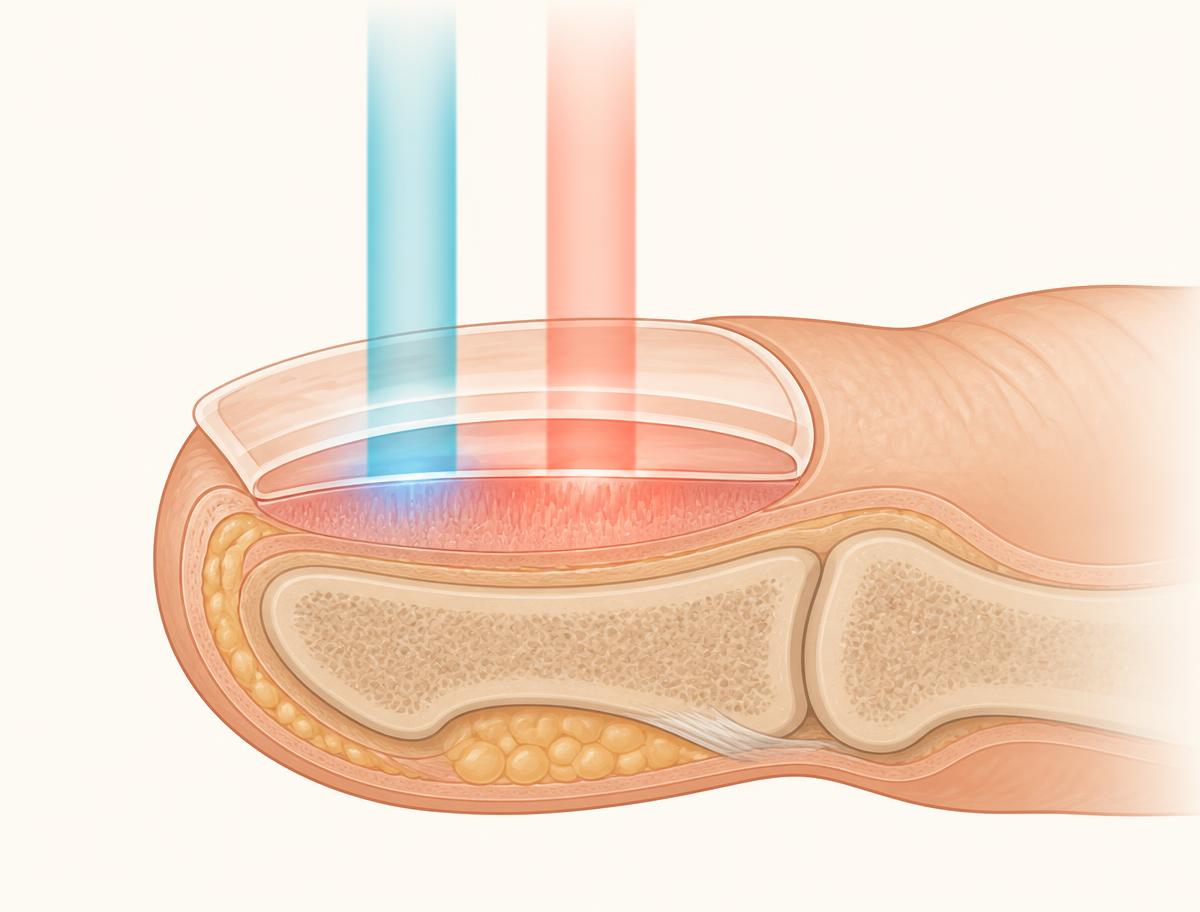
A 90-second daily session aimed at the nail bed gives early-stage infections the best possible head start.
- From $34.99 per device
- Free tracked shipping
- 30-day money-back
“I have been using FungaBeam since January. My case has cleared up and my nails look great.” — Patricia L., Ohio, US
Treatment options for early-stage cases
Because the nail plate is thinner and less obstructed at this stage, topical treatments and light therapy tend to perform closer to their best-case results here than they do on advanced infections.
| Option | Approx. cost | Time to visible change | Why it suits early stage |
|---|---|---|---|
| OTC topical antifungal | $15-$40 | 6-10 weeks | Less nail plate to penetrate |
| At-home light therapy | From $34.99 one-off | 4-8 weeks for new growth | Reaches the bed directly, drug-free |
| Filing plus hygiene changes alone | Under $10 | Slows progression | Supports any other option |
| Oral antifungal | $10-$40/month | 4-6 weeks for new growth | Usually unnecessary unless it progresses |
Common mistakes at this stage
The biggest mistake is doing nothing because it 'doesn't look bad yet.' Early spots are exactly when treatment is easiest, and waiting simply guarantees a longer road later. The second mistake is switching products every couple of weeks out of impatience — pick one approach and give it eight full weeks before judging it.
Prevention and daily habits
Keep the treated nail dry, rotate shoes so each pair fully dries, wear sandals in communal showers, and treat any accompanying athlete's foot immediately. These habits both support treatment and reduce the chance of the fungus reappearing once it clears.
Is this you? When to see a doctor
If you are healthy with no diabetes or circulation issues and the spot is small and not painful, self-treatment at this stage is entirely reasonable. See a podiatrist if you have diabetes, neuropathy or poor circulation, even for a small spot, since professional guidance is safer before self-treating any foot issue in those circumstances.
Frequently asked questions
Ready to start treating the nail bed tonight?
Start now, while the affected area is still small, for the fastest realistic path to a clear nail.
- From $34.99 per device
- Free tracked shipping
- 30-day money-back
“I have been using FungaBeam since January. My case has cleared up and my nails look great.” — Patricia L., Ohio, US
Keep reading
- Toe fungus signsEarly warning signs, look-alike conditions, and what to do in the first month.
- Onychomycosis explainedThe clinical picture: types, stages, diagnosis and every treatment route.
- How long it takesA week-by-week and month-by-month timeline, and how to judge progress.
- White spots on toenailsLeukonychia vs white superficial onychomycosis — a simple way to tell them apart.
Sources
This page is general information, not medical advice. FungaBeam is a consumer wellness device and is not intended to diagnose, treat, cure or prevent any disease. Speak to a doctor or podiatrist about your own situation, particularly if you have diabetes, circulation problems or worsening symptoms.