Published · Updated
The quick answer
- The earliest sign of toe fungus is a small white, cream or yellow discoloured patch near the tip or side of the nail, not thickness.
- Bruising, psoriasis, polish staining and simple pressure thickening all look similar early on and are frequently mistaken for fungus.
- The sooner you start a consistent daily routine, the less already-damaged nail you have to grow out.
- Diagnosis by a clinician is worth getting if the nail looks unusual or a treatment shows no change after two to three months.
The earliest signs
The first change is almost always colour, not thickness. A small white, cream or yellow patch appears near the tip or along one side of the nail. It does not hurt, and most people ignore it for a year or more, assuming it will grow out or is simply a stain.
Next comes texture: the nail feels slightly rougher, then thicker, and clippers start to struggle where they used to glide through cleanly. By the time debris builds under the plate and the nail begins to lift at the edge, the infection has usually been present for a considerable time already, which is why early recognition matters so much.
Causes and risk factors
Toe fungus is almost always dermatophyte-driven and picked up in warm, damp, shared environments: gym showers, pool decks, nail salons and hotel bathrooms. Once picked up, it thrives inside socks and shoes that trap moisture against the skin.
Risk increases with age, diabetes, poor circulation, excessive sweating, repeated minor nail trauma from running or ill-fitting shoes, and a history of athlete's foot. People who share showers or living spaces with someone who has an active infection are also at higher risk.
Things that look like fungus but are not
Before you treat, it is worth ruling out the common look-alikes, since treating the wrong condition wastes months.
- Bruising under the nail from running or a dropped object — usually purple to black, and it grows out as a defined patch that moves toward the tip over weeks.
- Nail psoriasis — often shows tiny pits in the surface and affects several nails plus patches of skin elsewhere on the body.
- Yellow staining from dark nail polish worn continuously — the nail is discoloured but remains flexible and normal in thickness.
- Simple thickening from repeated pressure in tight shoes, common in older adults and long-distance runners, without any crumbling or debris.
How it is diagnosed
A podiatrist can usually make a strong visual call, but the only way to be certain is a nail clipping sent for microscopy or culture. This is especially worthwhile if you have already tried an over-the-counter treatment for two to three months with no change, since you may be treating psoriasis, trauma or aging rather than fungus.
Start early, finish faster
The sooner you begin a consistent daily routine, the less damaged nail you have to grow out.
- From $34.99 per device
- Free tracked shipping
- 30-day money-back
“I have been using FungaBeam since January. My case has cleared up and my nails look great.” — Patricia L., Ohio, US
Treatment options and what they realistically do
Options range from simple hygiene changes through topical antifungals to prescription oral medication and light-based devices. None work overnight, and all require weeks of consistency before any visible change appears at the base of the nail.
| Option | Approx. cost | Time to first visible change | Prescription? |
|---|---|---|---|
| Filing and hygiene routine alone | Under $10 | Supports other treatments; rarely cures alone | No |
| OTC topical antifungal | $15-$40 | 8-12 weeks | No |
| Prescription topical lacquer | $50-$150 | 3-6 months | Yes |
| Oral terbinafine | $10-$40/month | 6-12 weeks for new growth | Yes |
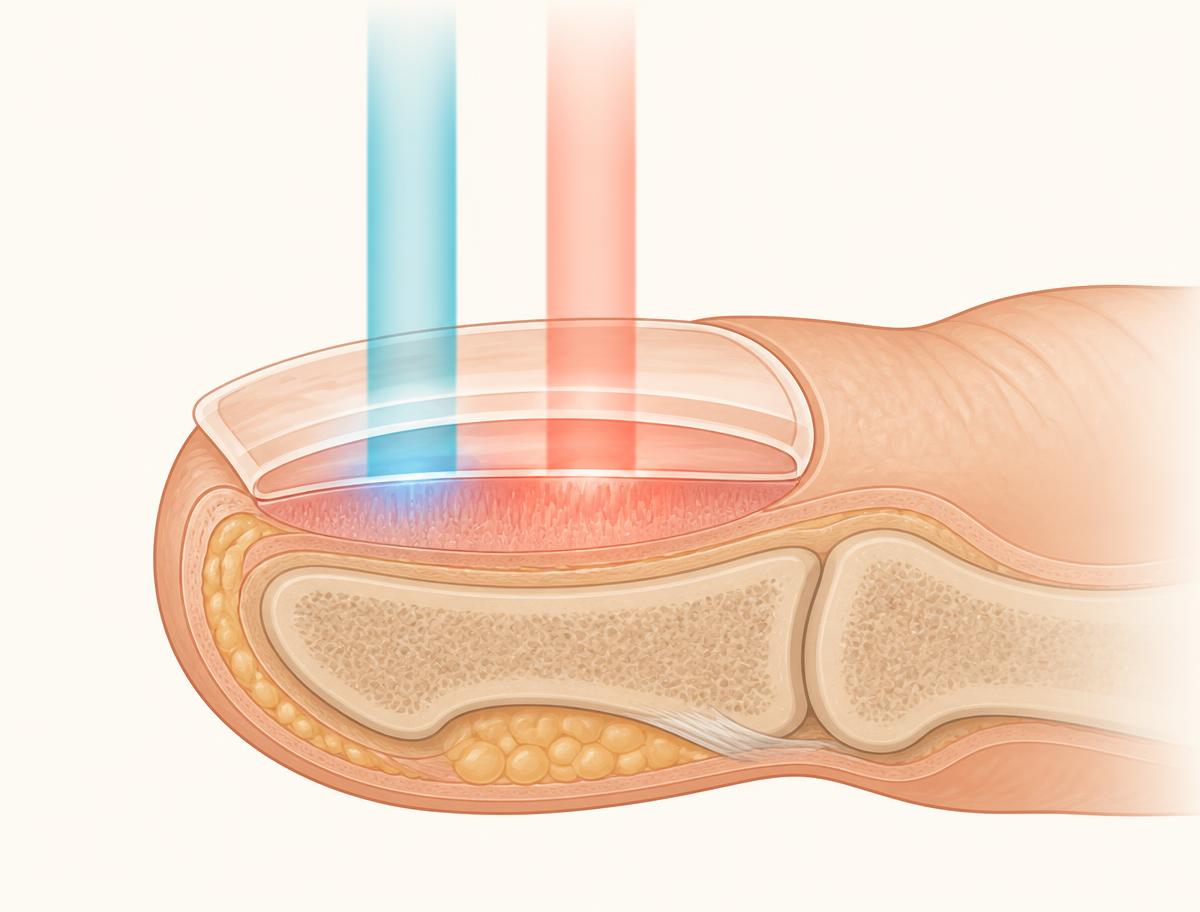
| At-home light therapy | From $34.99 one-off | 4-8 weeks for new growth | No |
What makes it worse
Damp shoes worn day after day, cotton socks that hold moisture against the skin, walking barefoot in changing rooms, cutting nails too short so the surrounding skin is nicked, and picking at the affected nail and then touching another toe all accelerate spread and slow recovery.
A sensible first month
Trim and gently file the thickened part of the nail down so anything you apply or shine at it has less material to get through. Treat the skin of the foot with an antifungal cream at the same time, since skin and nail infections often travel together. Pick one nail treatment and use it every single day — consistency beats intensity in this condition. Photograph the nail on day one so you can judge progress honestly at week eight rather than relying on memory.
Is this you? Who should self-treat
If the affected area is small, the nail is not painful, and you are otherwise healthy, an early self-treatment routine is reasonable and often successful precisely because you caught it early. If you have diabetes, neuropathy, or the nail is painful, swollen or bleeding, see a podiatrist before starting anything on your own.
Frequently asked questions
Ready to start treating the nail bed tonight?
Catch it early and pair daily light therapy with good foot hygiene for the fastest realistic timeline.
- From $34.99 per device
- Free tracked shipping
- 30-day money-back
“I have been using FungaBeam since January. My case has cleared up and my nails look great.” — Patricia L., Ohio, US
Keep reading
- Thick yellow toenailsFungus, trauma, age or polish? Identify the cause and pick the right fix.
- Black toenail causesTelling a fungal nail from a runner's bruise — and the warning signs to take seriously.
- Early-stage fungusWhy the first few months matter more than any product you choose.
- Step-by-step planA month-by-month routine covering the nail, the skin, the shoes and the tracking.
Sources
This page is general information, not medical advice. FungaBeam is a consumer wellness device and is not intended to diagnose, treat, cure or prevent any disease. Speak to a doctor or podiatrist about your own situation, particularly if you have diabetes, circulation problems or worsening symptoms.