Published · Updated
The quick answer
- Thick yellow toenails are most often caused by fungal infection, but trauma, age and polish staining can all look similar.
- Fungal nails feel crumbly and have an irregular, advancing edge to the discolouration; trauma and aging tend to be uniform and clean-edged.
- Nothing bleaches a damaged nail back to normal — the goal is a widening band of clear new growth at the base.
- Filing the nail thin weekly makes every treatment, topical or light-based, considerably more effective.
The four common causes
Thick, yellow toenails can come from more than one source, and correctly identifying which one you have changes what actually helps.
- Fungal infection — yellow or brown discolouration that spreads from the tip backwards, with crumbly debris underneath. The most common cause by far.
- Repeated trauma — runners, hikers and anyone in tight shoes. The nail thickens uniformly and is usually more grey-brown than yellow, without crumbling.
- Age — nail growth slows and plates naturally thicken and yellow slightly after sixty, with no infection present and no advancing edge.
- Polish staining — continuous wear of dark colours leaves a yellow tint on an otherwise normal, flexible nail that grows out or fades within weeks of stopping polish.
How to tell fungus from the rest
Fungal nails usually feel crumbly rather than merely hard, and you can often scrape a dry, powdery debris from under the free edge with a fingernail or file. The discolouration has an irregular, advancing border that moves toward the cuticle over time. Trauma and age produce thickening that is even across the whole nail with a clean, uniform colour. Staining wipes off partially with acetone or grows out fully within a few weeks of stopping polish.
If more than one nail is involved and the skin between your toes is itchy or flaky, fungus is very likely to be the cause, since it commonly travels between the nail and the surrounding skin.
How it is diagnosed
When the cause is genuinely unclear, a podiatrist can take a small nail clipping for lab testing, which distinguishes fungus from psoriasis, trauma and other nail dystrophies with far more certainty than appearance alone. This is worth doing if a treatment has been used correctly for three months with no change at all.
Treatment options compared
If fungus is confirmed or strongly suspected, the same treatment ladder applies as for any onychomycosis. If trauma or age is the cause, better-fitting shoes and regular filing are usually enough, with no antifungal needed at all.
| Likely cause | What actually helps | Realistic timeline |
|---|---|---|
| Fungal infection | Topical or oral antifungal, light therapy, filing | 4-8 weeks for new growth, 9-12 months full replacement |
| Trauma from shoes | Better-fitting shoes, regular gentle filing | Grows out over one full nail cycle |
| Age-related thickening | Routine filing and moisturising the cuticle area | Ongoing maintenance rather than a cure |
| Polish staining | Stop polish, buff gently, allow to grow out | 2-4 weeks |
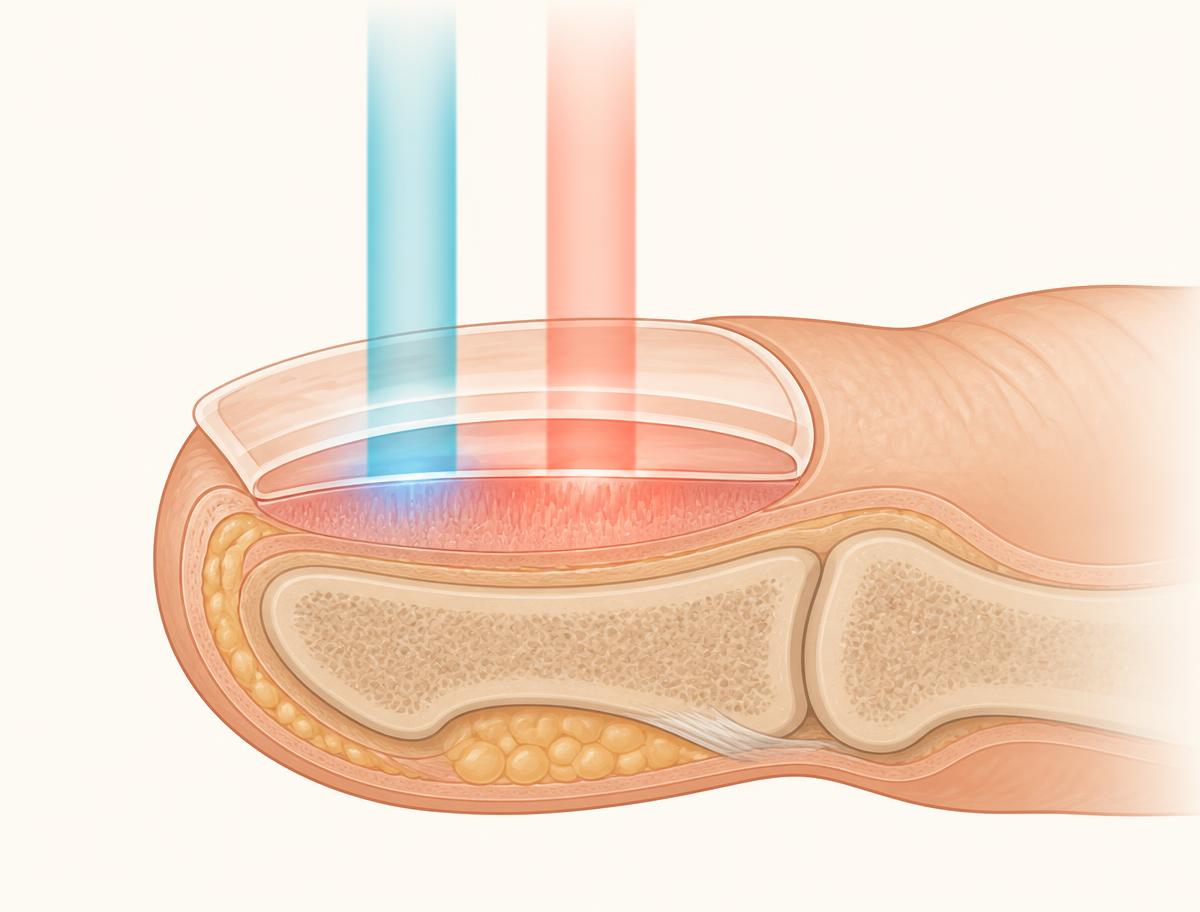
Grow out a clear nail
Nothing restores a damaged plate — the goal is healthy new nail behind it. FungaBeam targets the bed where that new nail is made.
- From $34.99 per device
- Free tracked shipping
- 30-day money-back
“I have been using FungaBeam since January. My case has cleared up and my nails look great.” — Patricia L., Ohio, US
Reducing the thickness
Thickness itself is treatable at home and makes every other step work better. Soak the foot for ten minutes to soften the nail, clip straight across in small bites rather than one big cut, then file the surface down gently with a dedicated file you use on no other nail. Do this weekly, never aggressively — the aim is thinning, not removing.
Thinning the plate lets topical products and light-based treatments reach the nail bed with far less obstruction, and it is one of the few steps that genuinely accelerates every other treatment on this list.
What goes wrong
The most common mistake is expecting the existing discoloured nail to change colour, then giving up when it does not. Nothing bleaches a damaged nail back to clear. What you are actually aiming for is a clear band of new nail at the base that widens month by month as the damaged portion grows out and gets trimmed away.
The second mistake is over-filing, which can thin the nail so much it becomes painful or prone to splitting. Weekly, gentle filing is the right pace for almost everyone.
Prevention and daily habits
Choose shoes with enough toe room that nails are not repeatedly struck against the front of the shoe, especially for running and hiking. Keep feet dry, rotate shoes, and address any fungal infection on the skin promptly so it does not migrate to the nail.
Is this you? When to see a doctor
See a podiatrist if the nail is painful, if you have diabetes or poor circulation, if only one nail changed suddenly after an injury, or if a confirmed fungal treatment has produced no visible new growth after three months of consistent use.
Frequently asked questions
Ready to start treating the nail bed tonight?
Support a widening band of clear growth with a 90-second daily light session, from $34.99.
- From $34.99 per device
- Free tracked shipping
- 30-day money-back
“I have been using FungaBeam since January. My case has cleared up and my nails look great.” — Patricia L., Ohio, US
Keep reading
- Toe fungus signsEarly warning signs, look-alike conditions, and what to do in the first month.
- Onychomycosis explainedThe clinical picture: types, stages, diagnosis and every treatment route.
- How long it takesA week-by-week and month-by-month timeline, and how to judge progress.
- White spots on toenailsLeukonychia vs white superficial onychomycosis — a simple way to tell them apart.
Sources
This page is general information, not medical advice. FungaBeam is a consumer wellness device and is not intended to diagnose, treat, cure or prevent any disease. Speak to a doctor or podiatrist about your own situation, particularly if you have diabetes, circulation problems or worsening symptoms.