Published · Updated
The quick answer
- Most white spots on toenails are leukonychia, harmless marks from minor trauma, and they grow out on their own.
- White superficial onychomycosis is a fungal infection that looks similar but sits as a chalky, crumbly patch on the nail's surface.
- The scrape test is the simplest at-home clue: fungal white spots flake or crumble when scraped gently; trauma-related spots do not.
- White superficial fungal infections are often easier to treat than deeper infections because the fungus sits close to the surface.
The two main explanations
Leukonychia is the medical term for white spots, streaks or patches on the nail caused by minor trauma to the nail matrix — a stubbed toe, tight shoes, or a knock you may not even remember. It is extremely common, entirely harmless, and simply grows out with the nail over a few months with no treatment needed.
White superficial onychomycosis (WSO) is a fungal infection where the organism colonises only the top layers of the nail plate rather than the deeper nail bed. It produces chalky, opaque white patches that can be scraped off in small flakes, unlike the smooth, embedded appearance of leukonychia spots.
How to tell them apart
Leukonychia spots are usually smooth to the touch, do not flake, and often appear as small dots or a horizontal line that moves toward the tip as the nail grows, at a fixed distance from where it started. White superficial fungal patches feel slightly rough or powdery, tend to expand over weeks rather than staying a fixed size, and often start near the middle of the nail surface rather than at the base.
A simple, gentle scrape test with a clean fingernail or an emery board is genuinely useful: if a thin layer of chalky white material comes away and the patch looks slightly indented afterward, that points toward fungus. If the surface is smooth and nothing scrapes off, it is very likely ordinary leukonychia.
Causes and risk factors
Leukonychia comes from physical trauma: repetitive impact in shoes, manicure tools pressed too hard at the cuticle, or a single dropped object. White superficial fungal infection is picked up the same way as any dermatophyte infection — warm, damp, shared environments, and it is more common in people who also have athlete's foot or a fungal infection on another nail.
How it is diagnosed
In most cases, watching the spot over a few weeks answers the question: leukonychia stays a fixed size and simply moves outward with growth, while a fungal patch tends to expand. If it is genuinely unclear, or multiple nails are affected, a clinician can scrape a small surface sample for microscopy, which for white superficial onychomycosis is usually quick and minimally invasive since the fungus sits right on the surface.
If a scrape test suggests fungus
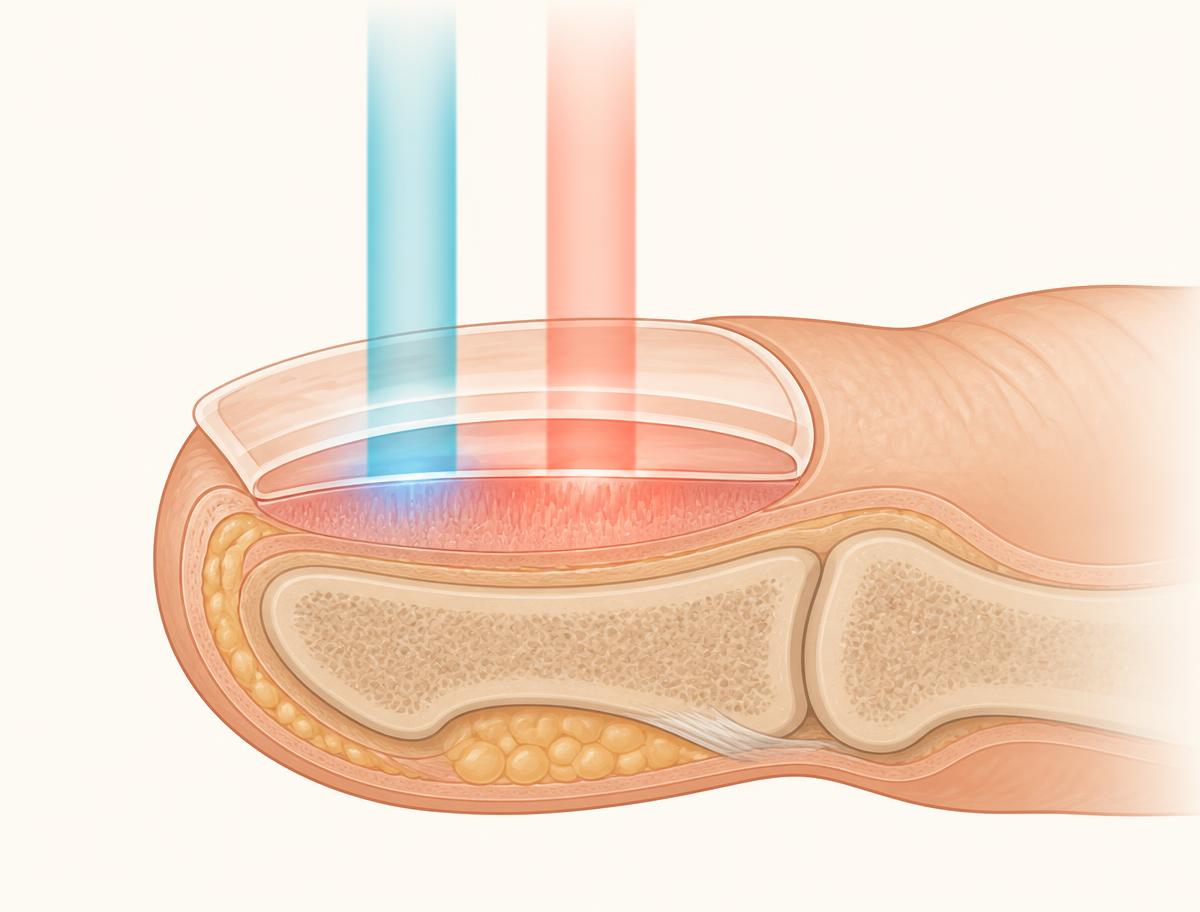
White superficial infections respond well to consistent daily treatment because the fungus sits close to the surface.
- From $34.99 per device
- Free tracked shipping
- 30-day money-back
“I have been using FungaBeam since January. My case has cleared up and my nails look great.” — Patricia L., Ohio, US
Treatment: what to do about each
Leukonychia needs no treatment at all beyond patience — protect the nail from further minor trauma and it will grow out on its own. White superficial fungal infection responds well to gentle filing of the affected surface layer combined with a topical antifungal or light-based treatment, precisely because the fungus has not penetrated deep into the nail plate.
| Feature | Leukonychia (harmless) | White superficial fungus |
|---|---|---|
| Texture | Smooth, does not scrape off | Slightly rough, flakes when scraped |
| Behaviour over weeks | Fixed size, moves outward with growth | Tends to expand or spread |
| Cause | Minor trauma to the matrix | Dermatophyte fungal colonisation of the surface |
| Treatment needed | None, grows out on its own | Filing plus topical or light-based antifungal treatment |
| Typical timeline | Grows out in a few months, no action needed | Often improves within 6-10 weeks of consistent treatment |
What goes wrong
The most common mistake is treating harmless leukonychia with antifungal products for months out of caution, which does nothing since there is no fungus present to target. The opposite mistake — assuming a spreading, flaking white patch is 'just from a knock' and ignoring it — allows an actual fungal infection more time to establish itself before treatment starts.
Prevention and daily habits
For leukonychia, better-fitting shoes and gentler manicure habits reduce the trauma that causes new spots. For white superficial fungus, the same prevention rules as any nail fungus apply: dry feet, rotated shoes, sandals in communal wet areas, and prompt treatment of any athlete's foot.
Is this you? When to see a doctor
If the spot is a single, fixed-size mark with a smooth surface, watching it grow out is reasonable. See a podiatrist if patches are spreading, flaking, appearing on multiple nails, or if you have diabetes or poor circulation, since fungal infections in those cases are best managed with professional input from the start.
Frequently asked questions
Ready to start treating the nail bed tonight?
If it scrapes and crumbles, start a daily light therapy routine while the surface layer grows out.
- From $34.99 per device
- Free tracked shipping
- 30-day money-back
“I have been using FungaBeam since January. My case has cleared up and my nails look great.” — Patricia L., Ohio, US
Keep reading
- Thick yellow toenailsFungus, trauma, age or polish? Identify the cause and pick the right fix.
- Early-stage fungusWhy the first few months matter more than any product you choose.
- Fungus vs psoriasisTwo conditions, near-identical appearance, completely different treatment paths.
- Toe fungus signsEarly warning signs, look-alike conditions, and what to do in the first month.
Sources
This page is general information, not medical advice. FungaBeam is a consumer wellness device and is not intended to diagnose, treat, cure or prevent any disease. Speak to a doctor or podiatrist about your own situation, particularly if you have diabetes, circulation problems or worsening symptoms.