Published · Updated
The quick answer
- Nail psoriasis and toenail fungus can look nearly identical: both cause thickening, discolouration and crumbling.
- Pitting (small dents in the nail surface) and oil-drop patches under the nail point toward psoriasis, not fungus.
- Nail psoriasis often comes with psoriasis patches on the skin or scalp elsewhere; fungus usually does not.
- The two conditions can also coexist in the same nail, which is why lab testing is often the only reliable way to tell them apart.
Why these two conditions get confused
Both toenail fungus and nail psoriasis cause thickened, discoloured, crumbly nails that lift away from the bed, and both worsen gradually over months or years. Both are also more common with age and can affect several nails at once. From a quick glance, telling them apart is genuinely difficult, and this is one of the most common misdiagnoses in nail conditions seen by primary care.
The stakes of getting it wrong are real: antifungal treatment does nothing for psoriasis, and the topical steroids or other psoriasis treatments used by dermatologists do not treat a fungal infection and can, in some cases, make a fungal infection worse by suppressing local immune response.
Key differences to look for
Nail psoriasis has a few tell-tale features that fungus rarely produces: small pinpoint pits across the nail surface, a yellow-red discolouration under the nail called an 'oil drop' or 'salmon patch,' and crumbling that is more uniform across the whole nail rather than advancing from one edge.
- Pitting — small dents across the nail surface, like a thimble. Common in psoriasis, rare in fungus.
- Oil-drop or salmon patch — a yellow-red translucent patch visible under the nail. A classic psoriasis sign.
- Pattern of spread — fungus usually starts at one edge and advances; psoriasis often affects the whole nail more evenly from early on.
- Skin involvement elsewhere — psoriasis plaques on elbows, knees, scalp or skin near the nail strongly suggest psoriasis is at least part of the picture.
- Crumbly debris under the free edge — more typical of fungus, though advanced psoriasis nails can crumble too.
They can coexist
This is the detail that trips up most self-diagnosis: people with nail psoriasis are actually more likely to also develop a fungal infection, because a damaged, lifted nail plate is easier for fungus to colonise. So a nail can have both conditions layered on top of each other, which is one reason lab testing rather than appearance alone is the reliable path when it matters.
Comparing the two side by side
A direct comparison makes the differences easier to hold in mind than a long description.
| Feature | Toenail fungus | Nail psoriasis |
|---|---|---|
| Surface pitting | Rare | Common |
| Oil-drop / salmon patch under nail | No | Common |
| Pattern of spread | Starts at one edge, advances gradually | Often affects whole nail early |
| Skin plaques elsewhere (elbows, scalp) | Not associated | Frequently present |
| Confirmed by | Nail clipping microscopy/culture | Clinical exam plus ruling out fungus; sometimes biopsy |
| Treatment | Antifungal (topical, oral, or light therapy) | Topical steroids, vitamin D analogues, or systemic psoriasis treatment |
Once fungus is confirmed
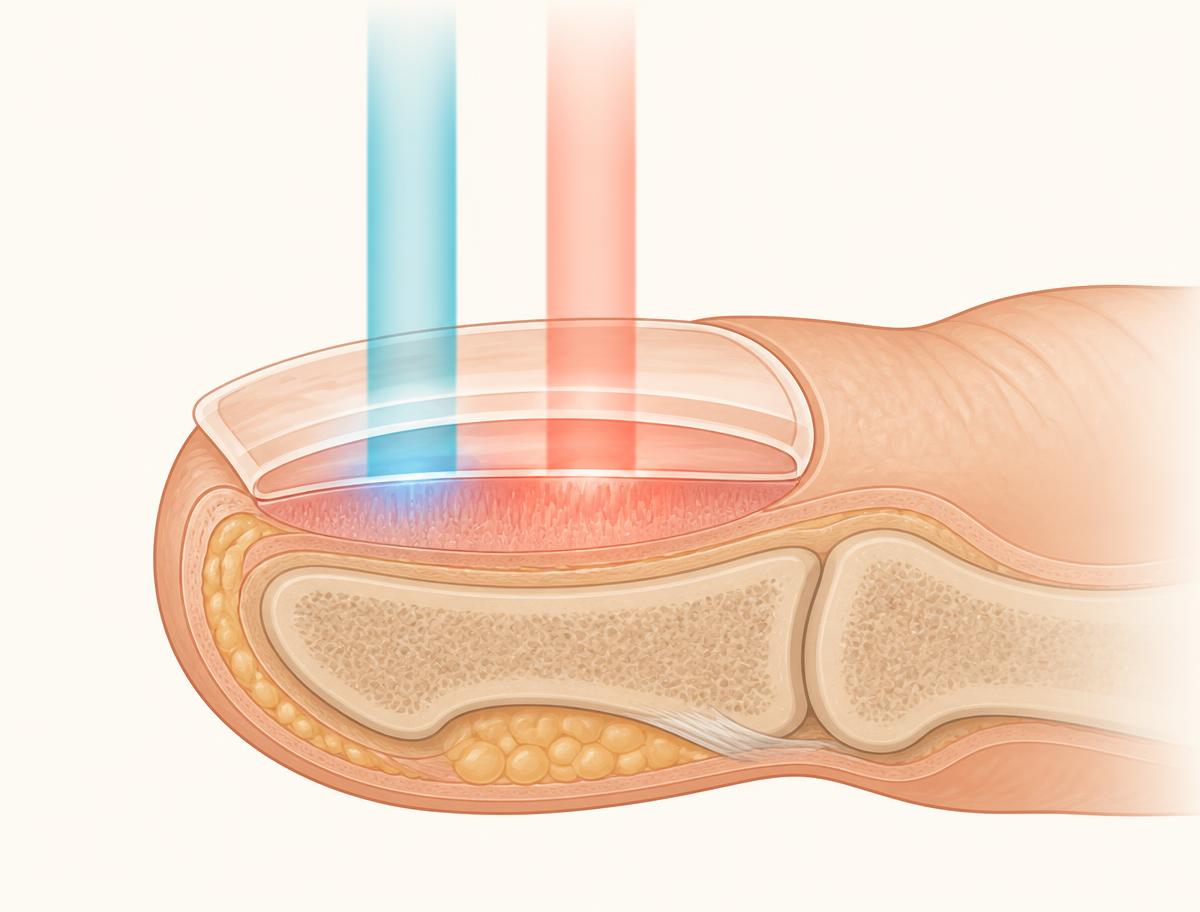
If a clinician rules out psoriasis and confirms fungus, a 90-second daily light session supports the nail while it grows out.
- From $34.99 per device
- Free tracked shipping
- 30-day money-back
“I have been using FungaBeam since January. My case has cleared up and my nails look great.” — Patricia L., Ohio, US
How it is diagnosed properly
The reliable path is a nail clipping sent for fungal microscopy and culture. A negative fungal test in a nail with pitting, oil-drop patches, or known psoriasis elsewhere strongly supports a psoriasis diagnosis, and a dermatologist can then guide psoriasis-specific treatment. A positive fungal culture confirms fungus is present, though it does not fully rule out coexisting psoriasis if the clinical picture still looks mixed.
What goes wrong
The most common mistake is months of antifungal treatment for what turns out to be pure nail psoriasis, which explains why 'nothing works' for some people despite trying several fungal treatments. The reverse mistake — treating a fungal nail as psoriasis with steroid creams — can allow the fungal infection to progress further while the true cause is masked.
Is this you? Who should see a specialist
If you have any personal or family history of psoriasis, pitting on the nail surface, or psoriasis patches on your skin or scalp, see a dermatologist before starting antifungal treatment on your own, since fungal testing and psoriasis assessment are usually best done together. If none of those apply and the nail shows the classic advancing, crumbly, one-edge pattern with no pitting, starting a standard fungal treatment is a reasonable first step.
Frequently asked questions
Ready to start treating the nail bed tonight?
Confirm the diagnosis first, then support a fungal nail with a 90-second daily light session.
- From $34.99 per device
- Free tracked shipping
- 30-day money-back
“I have been using FungaBeam since January. My case has cleared up and my nails look great.” — Patricia L., Ohio, US
Keep reading
- Onychomycosis explainedThe clinical picture: types, stages, diagnosis and every treatment route.
- Thick yellow toenailsFungus, trauma, age or polish? Identify the cause and pick the right fix.
- White spots on toenailsLeukonychia vs white superficial onychomycosis — a simple way to tell them apart.
- Black toenail causesTelling a fungal nail from a runner's bruise — and the warning signs to take seriously.
Sources
This page is general information, not medical advice. FungaBeam is a consumer wellness device and is not intended to diagnose, treat, cure or prevent any disease. Speak to a doctor or podiatrist about your own situation, particularly if you have diabetes, circulation problems or worsening symptoms.