Published · Updated
The quick answer
- Nail fungus (onychomycosis) is a fungal infection of the nail and the nail bed underneath it — extremely common, more so with age, and not a sign of poor hygiene.
- It usually starts as a small white or yellow patch near the tip, then thickens and discolours over months as the infected nail grows out.
- Diagnosis is often visual, but a lab test (clipping or scraping) confirms it and rules out look-alikes such as psoriasis or trauma.
- Prevention is mostly about keeping feet dry, rotating shoes and treating athlete's foot early — the same damp, warm conditions that let fungus start also let it come back.
What nail fungus is, and where it lives
Nail fungus, medically called onychomycosis (tinea unguium when caused by dermatophytes), is a fungal infection of the nail and the nail bed beneath it. It is extremely common, more so with age, and it is not a sign of poor hygiene. Dermatophytes cause most cases, with yeasts and moulds behind a minority.
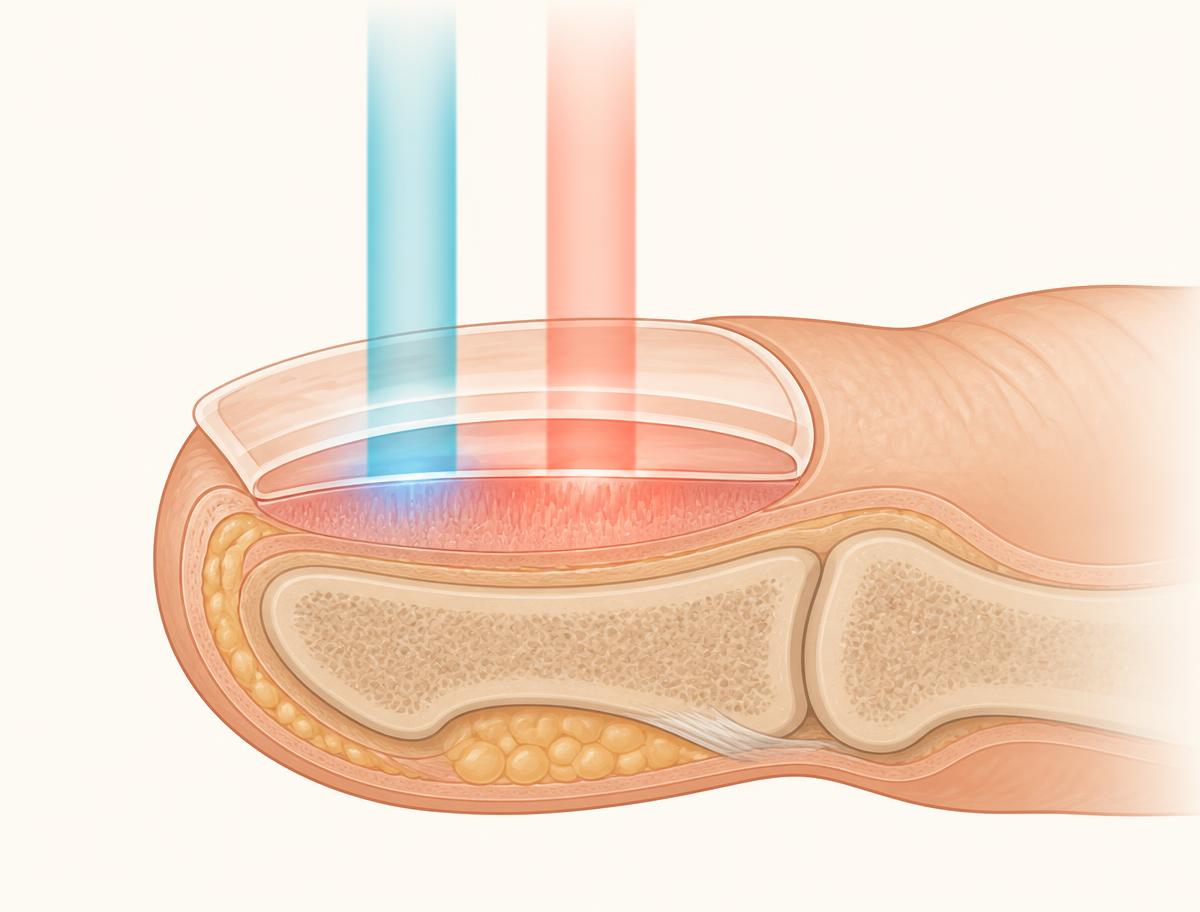
The part that matters for understanding treatment is where the infection actually sits: not on the visible surface of the nail, but underneath the hard nail plate, in the nail bed. That is why anything painted only on top of the nail has a physical barrier to get through before it can reach the problem.
Causes and risk factors
Fungus thrives in warm, damp, dark places — exactly what a shoe is. Common routes in include:
- Untreated athlete's foot spreading from the skin to the nail.
- Communal showers, pool decks and gym changing rooms.
- Nail salons with poorly sterilised tools.
- Small injuries or repeated pressure from tight shoes.
- Sweaty feet in non-breathable footwear day after day.
Risk rises with age, with reduced circulation, and with conditions like diabetes or a weakened immune system. Anyone in those groups should treat a nail change as a reason to see a doctor rather than self-treat.
Symptoms by stage
Nail fungus develops slowly, and what you see roughly tracks how far it has spread through the nail plate and bed.
| Stage | What you see | What's happening underneath |
|---|---|---|
| Early | A small white or yellow spot near the tip or side of the nail | Fungus has taken hold at the free edge, where shoes and trimming give it an opening |
| Moderate | Discolouration spreading, nail thickening, edges starting to crumble | Infection is spreading through the nail plate and into more of the nail bed |
| Advanced | Most of the nail discoloured and distorted, may lift or hurt in shoes, neighbouring nails affected | Infection has spread across the nail bed and often to adjacent nails or skin |
Fingernails grow roughly twice as fast as toenails and spend far less time in warm, damp enclosures, so fingernail cases usually clear sooner. Toenails, especially big toes, grow about 1mm a month — plan on 9 to 12 months for a full grow-out no matter what you use.
Catch it at the early stage, and start tonight
A small white or yellow patch is the easiest point to address. FungaBeam is a one-off purchase under $50, drug-free, and takes about 90 seconds a day — no appointment needed to start.
- From $34.99 per device
- Free tracked shipping
- 30-day money-back
“I have been using FungaBeam since January. My case has cleared up and my nails look great.” — Patricia L., Ohio, US
How it's diagnosed
Doctors often diagnose nail fungus visually, since the pattern of discolouration and thickening is fairly distinctive. To confirm it — and rule out look-alike conditions — they may take a small nail clipping or scraping and send it for lab testing under a microscope or for culture. This matters because several other conditions can look similar at a glance but need a different approach.
Conditions it's mistaken for
Not every discoloured or thickened nail is fungus. These are the conditions people most often confuse it with:
| Condition | How it differs from fungus | Read more |
|---|---|---|
| Nail psoriasis | Pitting, ridging and a salmon-coloured patch under the nail, often with psoriasis on skin elsewhere | Read more |
| Trauma / dropped object | Discolouration appears suddenly after an impact, usually as a bruise-shaped patch that grows out and disappears | Read more |
| Subungual bruise (hematoma) | Dark red, purple or black, tied to a specific injury, moves outward with growth and fades — not spreading | Read more |
| Yellow nail syndrome | Rare condition causing slow-growing, thickened, yellow nails on several fingers and toes at once, unrelated to fungus | Read more |
Full comparison: nail fungus vs nail psoriasis · Full guide: black toenails — bruise, injury or fungus?
Treatment options, briefly
Once fungus is confirmed, the options range from over-the-counter creams and at-home light therapy through prescription lacquers and tablets to in-clinic laser. None of them beat the speed the nail grows — the damaged nail has to grow out no matter what stops the fungus underneath it. Creams struggle to cross the nail plate; oral prescriptions reach the nail bed through the bloodstream but need a doctor and monitoring; light therapy sits in between, reaching the nail bed without a prescription, at a one-off cost.
The full range of toenail fungus treatments · Matching the treatment to how bad the nail actually is
Prevention that actually helps
- Dry between your toes after every shower.
- Rotate shoes so each pair dries fully for 24 hours.
- Choose breathable socks and change them daily.
- Wear sandals in communal wet areas — showers, pool decks, gym floors.
- Treat athlete's foot the moment you spot it.
- Keep your own nail clippers and disinfect them, rather than sharing salon tools.
Reinfection: why it comes back
Nail fungus can return if the conditions that caused it in the first place come back — damp shoes, shared showers, untreated athlete's foot on the surrounding skin. Clearing the nail without addressing those habits is one of the most common reasons an infection resurfaces months later. Replacing old, spore-holding footwear and keeping up the drying habits above matters as much as whatever treatment you use.
When to see a doctor
See a doctor or podiatrist rather than self-treating if you have diabetes, poor circulation or a weakened immune system; if the nail is painful; if the skin around it is red, swollen or leaking; if the infection is spreading quickly; if the nail lifted after an injury; or if a dark streak runs lengthways through it. Those situations need supervision and sometimes a different diagnosis altogether.
“I have been using FungaBeam since January. My case has cleared up and my nails look great.” — Patricia L., Ohio, US
Start the routine while the nail is still growing out
FungaBeam surrounds the nail with 470nm blue and 910nm near-infrared light, reaching the nail bed without a prescription. About 90 seconds a day, one-off purchase, free tracked shipping.
- From $34.99 per device
- Free tracked shipping
- 30-day money-back
“I have been using FungaBeam since January. My case has cleared up and my nails look great.” — Patricia L., Ohio, US
Frequently asked questions
Ready to start treating the nail bed tonight?
FungaBeam is a one-off purchase, drug-free, and takes about 90 seconds a day. Free tracked shipping, and 30 days to send it back if you change your mind.
- From $34.99 per device
- Free tracked shipping
- 30-day money-back
“I have been using FungaBeam since January. My case has cleared up and my nails look great.” — Patricia L., Ohio, US
Keep reading
- Toenail fungus treatment optionsThe full range, from home remedies to prescriptions.
- Creams vs pills vs laser vs FungaBeamAn honest cost and effort comparison of every option.
- Nail fungus vs nail psoriasisTwo conditions that look alike but need different care.
- Black toenails: bruise, injury or fungus?How to tell what you're actually looking at.
Sources
This page is general information, not medical advice. FungaBeam is a consumer wellness device and is not intended to diagnose, treat, cure or prevent any disease. Speak to a doctor or podiatrist about your own situation, particularly if you have diabetes, circulation problems or worsening symptoms.