Published · Updated
The quick answer
- Oral terbinafine (Lamisil) is the most evidence-backed treatment for toenail fungus, reaching the nail bed through the bloodstream rather than sitting on the surface.
- A typical course is twelve weeks of daily tablets for toenails, with mycological cure reported in a majority of patients in trials, though full cosmetic recovery takes longer since damaged nail must grow out.
- It requires a prescription and, because of a small liver injury risk, usually baseline liver blood tests.
- It is not the only route — topical routines, laser and light-based devices exist for people who cannot or would rather not take a systemic tablet.
What it is and how it works
Terbinafine — sold as Lamisil among other brand names — is an allylamine antifungal available both as a prescription tablet and, in a different formulation, as an over-the-counter cream for skin. Taken as a tablet, it travels through the bloodstream into the nail matrix and nail bed, which is how it gets around the barrier that limits every topical product discussed elsewhere on this site.
It also binds into newly formed keratin as the nail grows, so it continues acting on the nail for a period after the course of tablets ends — one reason a relatively short course can have a lasting effect compared with a topical that only works while it is actively being applied.
Typical course and what to expect
A typical course for toenails is twelve weeks of daily tablets; fingernails, which grow faster, usually need only about six weeks. Your prescriber sets the exact regimen based on your health history and the nail(s) involved.
Because nails grow slowly, finishing the tablet course is not the same as seeing a clear nail — most people will not see a fully clear nail until nine to twelve months after starting, once the new, healthy nail has grown out to replace the damaged section.
How well it works
Published trials generally report mycological cure — laboratory confirmation that the fungus is gone — in a majority of patients who complete a course, with complete cosmetic cure (a fully normal-looking nail) in a smaller proportion, since existing nail damage still has to grow out even after the infection itself is cleared.
Relapse within a few years is common, particularly if the underlying causes — such as untreated athlete's foot, damp footwear, or shared damp environments like communal showers — are not also addressed. Treating the nail without addressing those ongoing exposures is one of the most common reasons people see the infection return.
Side effects and monitoring
The reason it is prescription-only rather than available over the counter as a tablet.
- Common: headache, digestive upset, rash, and temporary changes to taste or smell
- Uncommon but important: liver injury, which is why baseline and sometimes follow-up liver blood tests are standard practice
- Interactions with a range of medicines, including some antidepressants and beta blockers
- Not suitable for some people with existing liver or kidney disease, and your prescriber will review your history before starting
What about topical Lamisil cream?
Terbinafine cream is genuinely effective for athlete's foot on the skin of the foot, and treating that skin infection is an important part of any nail plan, since it is often the original source of the nail infection and a reservoir for reinfection. It is not designed or licensed to clear an infection under the nail plate itself — the cream simply cannot reach that tissue in a useful concentration, which is exactly why oral tablets exist for nails.
A drug-free option to discuss
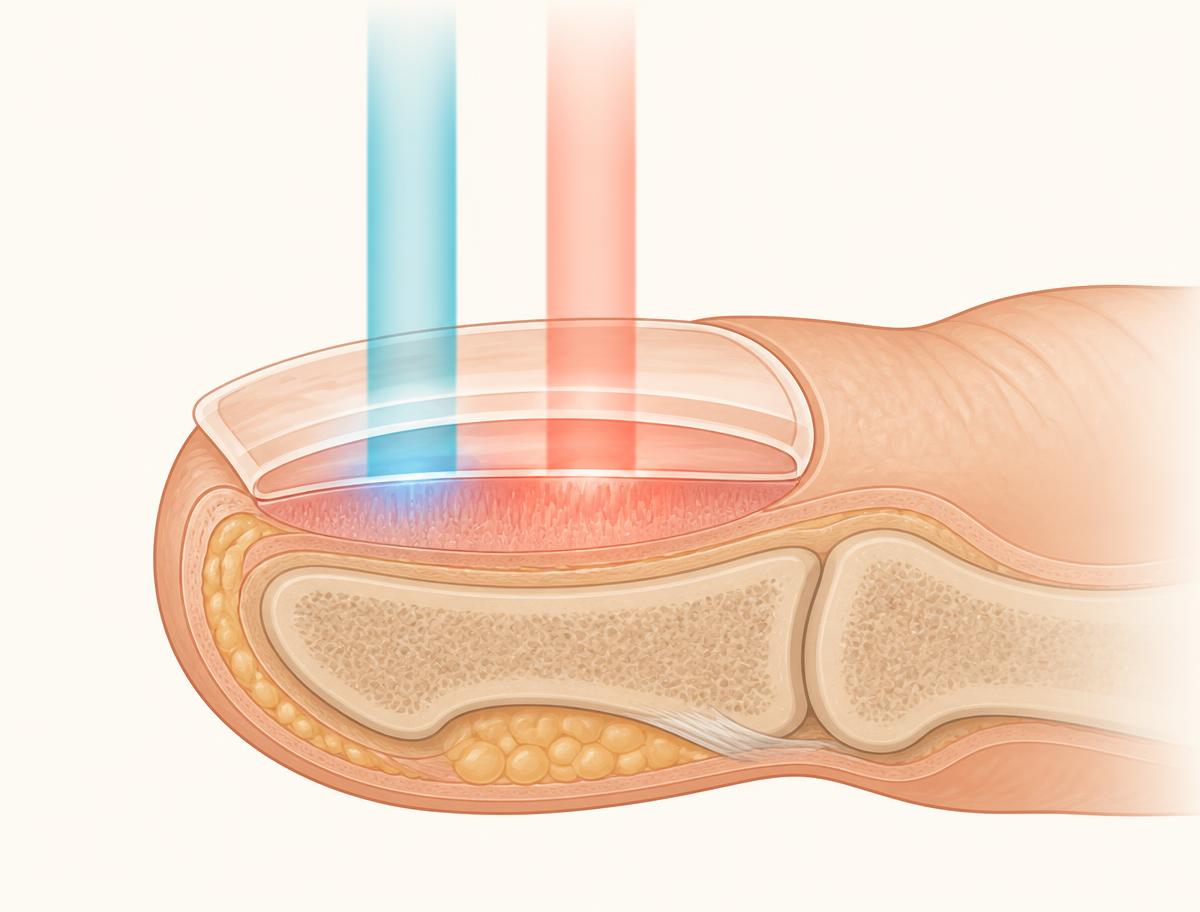
If tablets are not right for you, at-home light therapy involves no medication and no prescription.
- From $34.99 per device
- Free tracked shipping
- 30-day money-back
“I have been using FungaBeam since January. My case has cleared up and my nails look great.” — Patricia L., Ohio, US
Terbinafine compared with other treatment routes
A realistic side-by-side for people weighing a prescription against other options.
| Approach | Evidence strength | Delivery route | Typical timeline | Requires a prescription? |
|---|---|---|---|---|
| Oral terbinafine | Strong, multiple randomised trials | Bloodstream to nail bed | 12-week course, up to a year to full nail | Yes |
| Topical antifungal lacquer | Moderate, weaker than oral | Applied to nail surface | Months to a year, lower cure rates | Some over the counter, some prescription |
| In-clinic laser | Emerging, mixed trial quality | Heat/light through the nail | Several sessions over months | No prescription, but a clinic visit |
| Daily light therapy (e.g. FungaBeam) | Emerging, device-based | Light through the nail plate at home | 4–8 weeks first growth, 9–12 months full nail | No |
What to combine it with
Whichever route you take, filing thickened nail regularly, drying feet thoroughly, wearing breathable socks, and rotating shoes so they dry out between wears all reduce the chance of reinfection and support whatever is doing the actual antifungal work. Treating any active athlete's foot on the skin at the same time as the nail is particularly important with terbinafine, since skin fungus is a common source of reinfection.
Disinfecting or replacing old shoes, and avoiding walking barefoot in communal damp areas such as pool sides and gym showers, are worth doing regardless of which treatment you choose.
If tablets are not for you
Plenty of people cannot or would rather not take a multi-month systemic antifungal: existing liver concerns, other medications with interaction risks, pregnancy, or simply a preference to avoid a tablet with a small but real side-effect profile. The drug-free routes are in-clinic laser, at-home light therapy, and diligent topical use combined with mechanical thinning of the nail — all with weaker average evidence than oral terbinafine, but without the systemic risks.
Talk any decision through with your own doctor, particularly if you have liver, kidney or heart conditions, take other regular medication, or are pregnant or breastfeeding.
When to see a doctor
See a doctor before starting terbinafine if you have any history of liver disease, take other regular medications, or have not had the nail change formally diagnosed as fungal — not every discoloured or thickened nail is onychomycosis, and confirming that first avoids months of the wrong treatment. See a doctor urgently if you develop unusual tiredness, dark urine, or yellowing of the skin or eyes while taking it, as these can be signs of liver injury.
Frequently asked questions
Ready to start treating the nail bed tonight?
Whatever you choose, the goal is the same: something that actually reaches the nail bed, not just the surface.
- From $34.99 per device
- Free tracked shipping
- 30-day money-back
“I have been using FungaBeam since January. My case has cleared up and my nails look great.” — Patricia L., Ohio, US
Keep reading
- Best treatment comparedEvery option ranked by evidence, cost, effort and speed.
- Nail fungus treatmentThe full treatment landscape, plus the home care that decides whether it returns.
- Does laser work?What the evidence supports, and how clinic lasers differ from at-home light devices.
- What kills it instantly?The honest answer to the internet's most searched nail fungus question.
Sources
This page is general information, not medical advice. FungaBeam is a consumer wellness device and is not intended to diagnose, treat, cure or prevent any disease. Speak to a doctor or podiatrist about your own situation, particularly if you have diabetes, circulation problems or worsening symptoms.