Published · Updated
The quick answer
- Laser and light-based treatments can help increase clear nail growth, but evidence is mixed and generally weaker than for oral prescription antifungals.
- Clinic lasers use high-powered heat-based devices administered in sessions; at-home light devices use low-power LEDs used daily over months.
- Neither is marketed or approved as a cure — both are approved for 'temporary increase of clear nail' in regulatory terms.
- They suit people who want a low-risk, drug-free option and are realistic about moderate, gradual results rather than guaranteed clearance.
How light-based treatment is meant to work
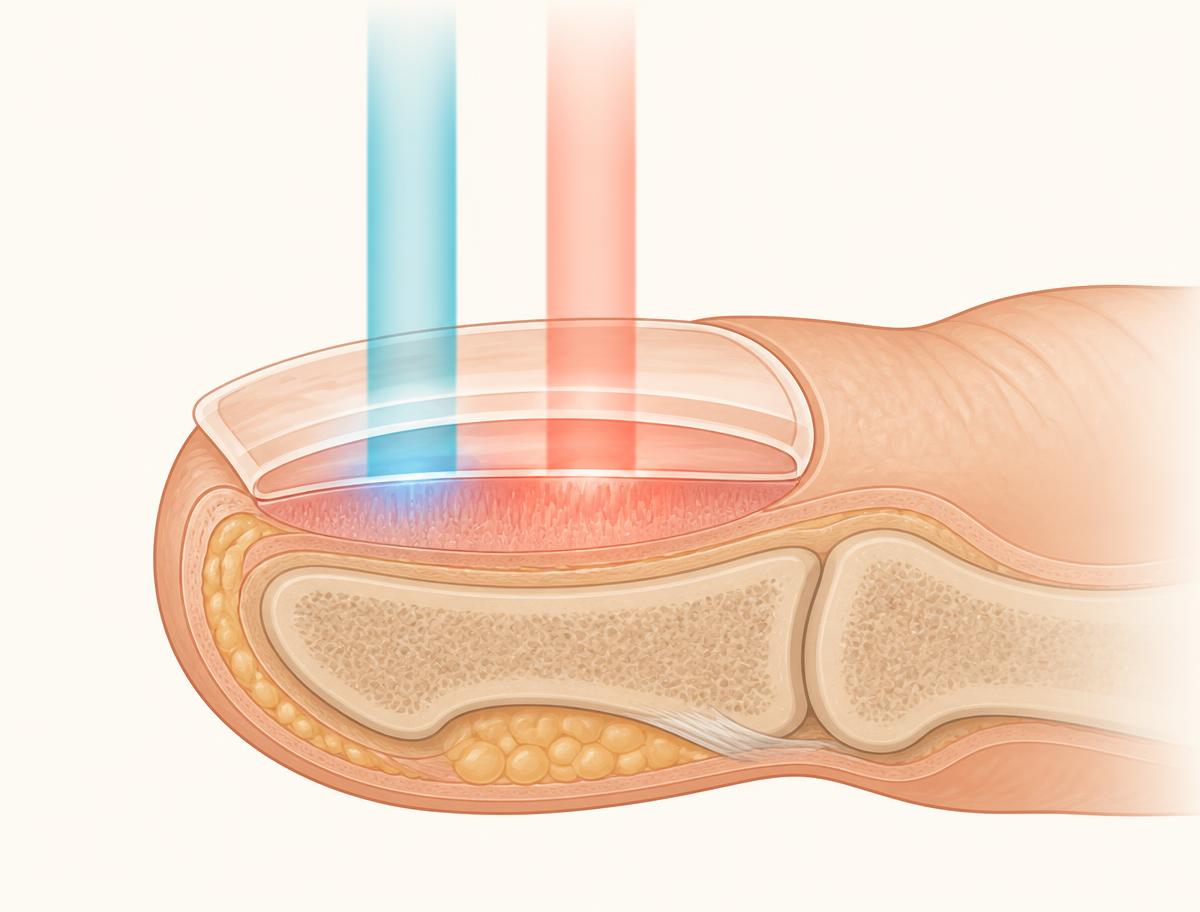
The nail plate is more transparent to light than it is to liquids. Certain wavelengths pass through it to the nail bed, where the theory is that they disrupt fungal cells and the environment they depend on. This is the appeal: delivery through a barrier that blocks most topical creams from reaching the infection at all.
Clinic systems use higher-powered lasers that also generate heat at the treatment site, working on the principle of thermal damage to fungal cells. Consumer devices such as FungaBeam use LED light at much lower power with no meaningful heat and no UV, designed for daily, cumulative use rather than a single intense session.
What people mean when they ask this
Some searchers are choosing between a clinic laser course and a prescription; others are wondering whether a cheap at-home light device is 'the same thing' as a clinic laser under a different name; a third group has already tried a laser course and is disappointed with the result and wants to know if that is normal.
The honest answer serves all three: laser and light therapy are a real, plausible category of treatment, but they are not interchangeable with each other, and neither should be expected to guarantee full clearance on its own.
What the studies actually show
Published results are mixed. Several studies report improvement in nail appearance and clear nail growth, while laboratory-confirmed mycological cure rates are generally lower than those achieved with oral terbinafine. Trials vary widely in wavelength, power, session count and how they define success, which makes clean comparisons between studies difficult.
Two things explain most of the confusion you will find online. The first is regulatory language: clinic lasers are typically cleared for the 'temporary increase of clear nail,' which is a cosmetic improvement endpoint — not clearance as a cure. When a clinic advertises an 'FDA-cleared laser,' that phrase describes the device's clearance, not a promise about your nail. The second is study design: results differ because the studies themselves differ — different lasers, different session counts, different follow-up windows, and different definitions of success. A study measuring appearance at three months reads very differently from one measuring lab-confirmed cure at twelve.
The fair summary: light-based treatment is a plausible, low-risk option with moderate and inconsistent evidence — not the strongest-evidence choice available, but a reasonable one for people who cannot or do not want to use oral medication. If a seller quotes you a single dramatic success percentage without telling you which study it came from and how success was measured, treat that number as marketing, not evidence.
Clinic laser or an at-home device — pick by your situation
If your infection is severe, painful or spreading, if you have diabetes or poor circulation, or if you are not certain it is fungus at all, the clinic route earns its cost: you get a confirmed diagnosis, professional nail debridement, and a clinician watching progress. That supervision is the real product, not just the laser.
If your case is mild to moderate, your budget is finite, and you are confident you can keep a 90-second daily routine, an at-home device is the pragmatic choice — a one-off price instead of a four-figure course, used on your own schedule. The honest trade is power and supervision for cost and convenience. Many people start at home and keep the clinic in reserve if six months of consistency has not moved things.
Does it work? What customers actually see
Evidence tables are one answer to this question; photographs are the other. These are FungaBeam customers, each photo labelled with how long they had been using the device when the after photo was taken. The pattern matches the studies: nothing dramatic in the first weeks, then a growing band of clear nail from the base.
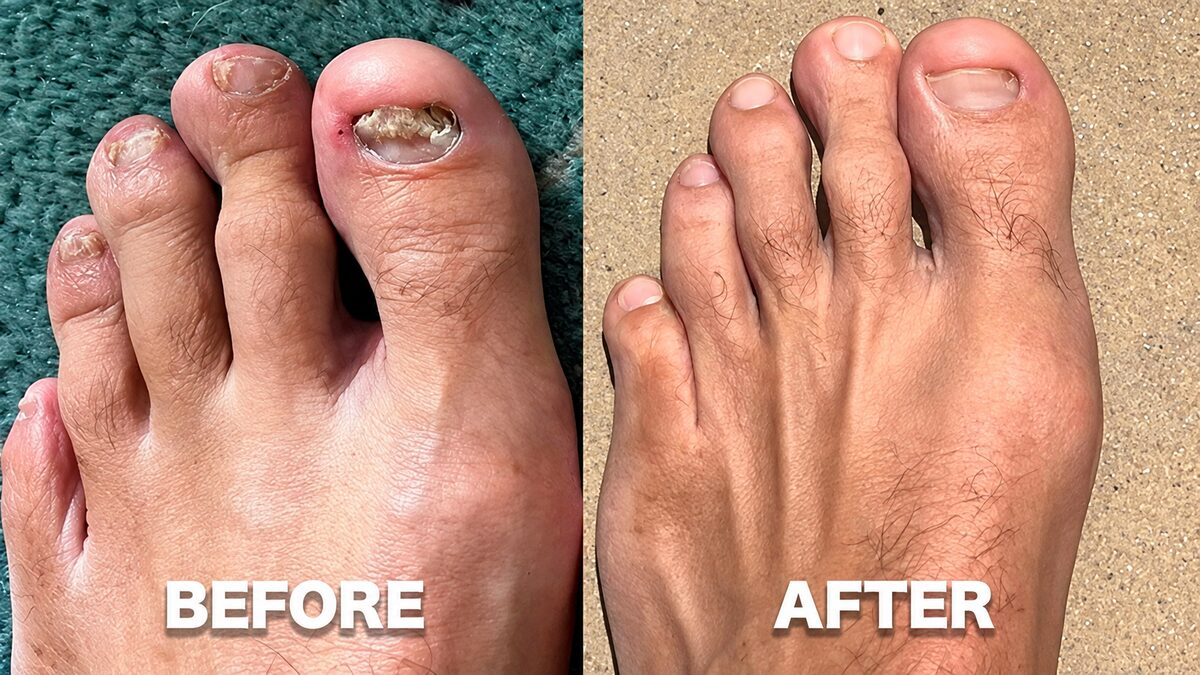
Big toenail: crumbling edge and yellow-brown staining gone, nail smooth again.
Patricia L. — Daily sessions, 5 months
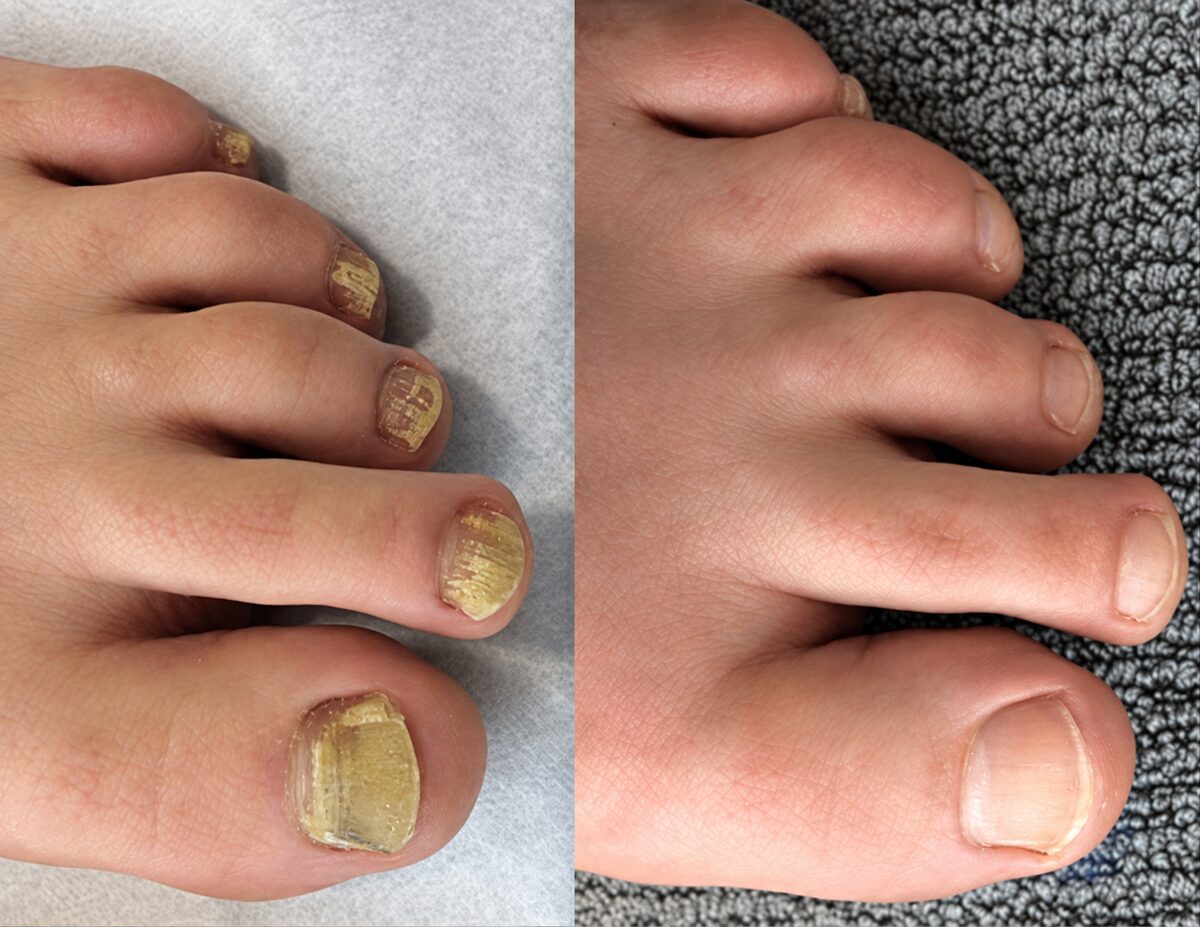
Three nails affected: clear new nail now covers most of each plate.
Karen H. — Daily sessions, 2 months
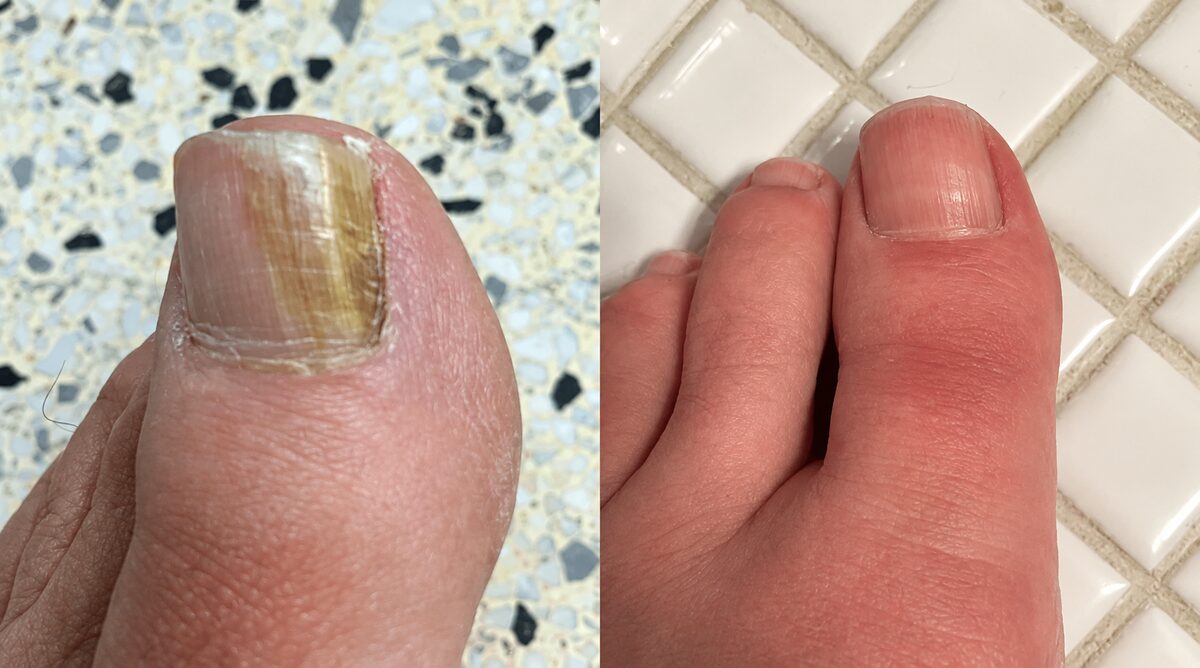
Thickened, deep-yellow nail grew back thinner and close to natural colour.
Amy S. — Daily sessions, 3 months
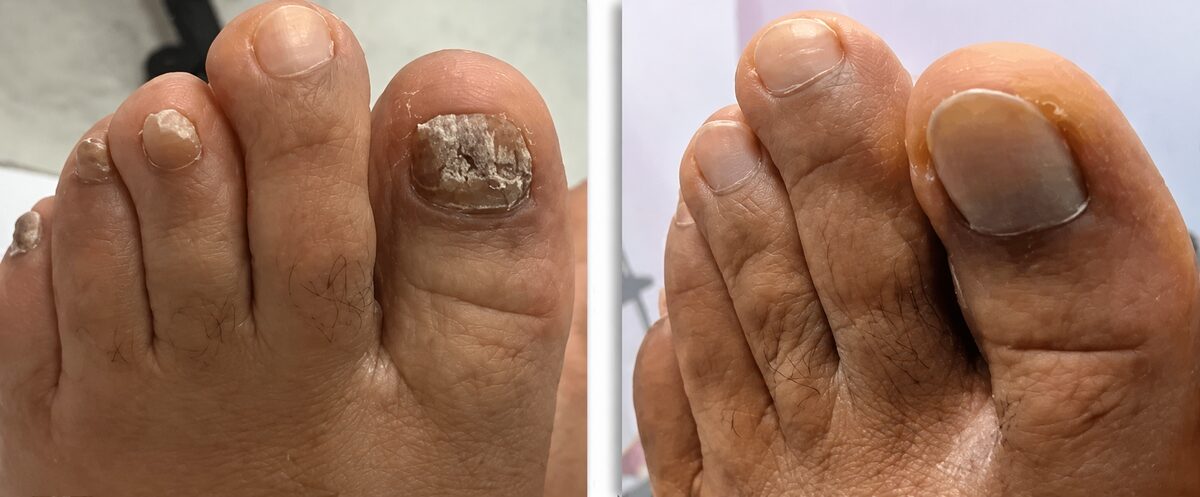
Chalky white surface replaced by an even nail growing out from the base.
Sloan M. — Daily sessions, 4 months
At-home light therapy
470nm blue and 910nm near-infrared, 90 seconds a day, from $34.99 per device.
- From $34.99 per device
- Free tracked shipping
- 30-day money-back
“I have been using FungaBeam since January. My case has cleared up and my nails look great.” — Patricia L., Ohio, US
Clinic laser vs at-home light device
| Factor | Clinic laser | At-home light device |
|---|---|---|
| Cost | $300–$1,500+ per course | From $34.99, one-off |
| Sessions | 3–4 sessions, weeks apart | Daily, 90 seconds |
| Power/heat | High power, generates heat | Low power LED, no meaningful heat |
| Supervision | Administered by a clinician | Self-administered at home |
| Diagnosis included | Often yes | No — diagnose separately first |
| Evidence strength | Moderate, mixed results | Moderate, mixed results |
Who each option suits
Clinic laser suits people who want it handled professionally, can absorb the cost, and value having a clinician check progress and debride the nail along the way. An at-home device suits people who want a drug-free, low-cost option and will genuinely do it every day for months — the daily habit matters more than the device's specifications.
Anyone with a severe infection, diabetes, or an unclear diagnosis should start with a clinician either way, since a proper diagnosis rules out nail psoriasis and other look-alike conditions that light therapy will not help.
Realistic month-by-month expectations with light therapy
With consistent daily use, the pattern generally mirrors other treatments: little visible change in the first three weeks, a thin band of clearer new growth by weeks four to eight, gradual widening of that band through months three to six, and full nail replacement by nine to twelve months if the fungus has been suppressed effectively throughout.
What can undermine results
Skipping days is the most common reason light therapy underperforms, since the effect is understood to be cumulative rather than a one-time treatment. A thick, unfiled nail also blocks a meaningful amount of light from reaching the nail bed, and untreated athlete's foot on the surrounding skin can keep reinfecting the nail regardless of how well the device works.
When to combine light therapy with something else
For severe or long-standing infections, combining light therapy with an oral or topical antifungal prescribed by a doctor is common and can improve overall outcomes. Light therapy is generally considered complementary rather than a guaranteed standalone replacement for medical treatment in advanced cases.
Frequently asked questions
Ready to start treating the nail bed tonight?
If you want a drug-free daily option, a low-power light device is a reasonable place to start.
- From $34.99 per device
- Free tracked shipping
- 30-day money-back
“I have been using FungaBeam since January. My case has cleared up and my nails look great.” — Patricia L., Ohio, US
Keep reading
- Laser clinics vs at homeClinic pricing, session counts, insurance reality, and the at-home comparison.
- FungaBeam reviewWhat the device is, how it is used, and an honest account of who it suits.
- Best treatment comparedEvery option ranked by evidence, cost, effort and speed.
- Terbinafine and LamisilThe prescription standard: how it works, success rates, side effects and monitoring.
Sources
This page is general information, not medical advice. FungaBeam is a consumer wellness device and is not intended to diagnose, treat, cure or prevent any disease. Speak to a doctor or podiatrist about your own situation, particularly if you have diabetes, circulation problems or worsening symptoms.