Published · Updated
The quick answer
- Getting rid of toenail fungus takes a plan, not a product: prep the nail, choose one treatment and commit to it daily, manage shoes and skin, and track new growth for nine to twelve months.
- The biggest cause of failure is not the wrong treatment — it is stopping too early, missing days, or judging progress by the wrong part of the nail.
- Severity should decide your treatment: mild new discoloration can often respond to topicals or light therapy; thick, multi-nail infections usually need an oral prescription.
- Anyone with diabetes, neuropathy or circulation problems should see a podiatrist or doctor before starting a home routine.
Week one: set the baseline
Photograph the nail in daylight against a plain background, with a ruler or coin for scale. Do this properly — it is the only way you will know in three months whether anything changed. Then soak the foot, clip the nail short, and file the thickened surface down so light or medication can actually reach the nail bed.
If you have diabetes, neuropathy or circulation problems, replace this entire page with an appointment. Fungal nail infections in those situations carry a higher risk of secondary bacterial infection and should be managed by a clinician from the start.
Week one: pick one treatment and commit
Choose based on severity and what you will actually sustain: a topical for a mild, recent case affecting one nail; a prescription oral antifungal for severe or multi-nail cases; clinic laser if budget allows and you want it professionally managed; or at-home light therapy if you want a drug-free option and will do it daily. Whatever you pick, plan for six months minimum before judging it.
Switching treatments every few weeks is one of the most common reasons people never clear an infection — each option needs sustained, uninterrupted use to show its real result. Decide once, write down the date you started, and stick with it.
What a full month-by-month plan looks like
| Timeframe | What to do | What to expect |
|---|---|---|
| Week 1 | Photograph, trim, file, start treatment | No visible change yet |
| Weeks 2–4 | Daily treatment, dry environment, treat athlete's foot | Still little visible change — this is normal |
| Weeks 4–8 | Continue daily treatment, keep filing monthly | First clear band of new growth near the cuticle |
| Months 3–6 | Continue treatment, trim damaged tip regularly | Clear band widens; reassess if no new growth at all |
| Months 6–12 | Maintain routine until fully grown out | Nail fully replaced with clear growth |
| Ongoing | Shoe rotation, sandals in public showers, dry feet | Prevent recurrence |
Every week: nail maintenance
- Soak ten minutes, clip straight across, file the surface thin
- Use a file and clippers reserved for the infected nail, and disinfect them after every use
- Never share tools, and skip pedicures until the nail is fully clear
Every day: the environment
Dry thoroughly between the toes after every shower — a damp gap between the toes is one of the most common reservoirs for reinfection. Apply an over-the-counter antifungal cream to the skin of the foot as well as treating the nail, because the nail is not the only place the fungus lives.
Wear moisture-wicking socks and change them if your feet sweat during the day. Rotate two or three pairs of shoes so each pair gets a full day to dry out completely before being worn again. Wear sandals in gym showers, pool decks and hotel bathrooms, which are some of the most common places people pick up or reinfect a fungal nail.
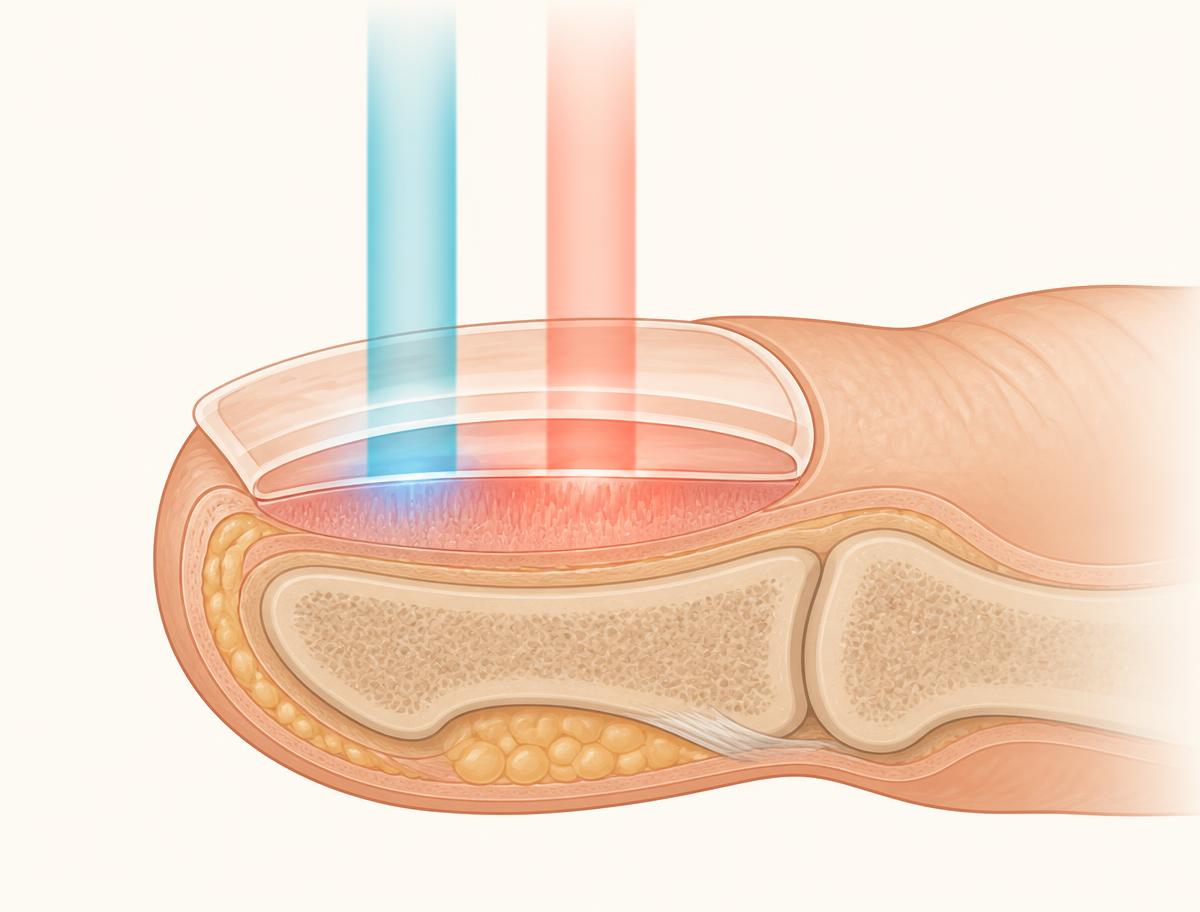
The daily step of the plan
Ninety seconds with FungaBeam, drug-free, from $34.99 per device.
- From $34.99 per device
- Free tracked shipping
- 30-day money-back
“I have been using FungaBeam since January. My case has cleared up and my nails look great.” — Patricia L., Ohio, US
Mistakes that cause relapse
The same handful of habits explain most relapses: using the same clippers or file on healthy and infected nails, wearing the same pair of shoes every day without letting them dry, stopping treatment as soon as the nail looks a little better rather than waiting for full regrowth, ignoring athlete's foot on the skin while treating only the nail, and sharing a bath mat, towel or nail tools with a partner or family member who also has an infection.
Any one of these can silently undo months of otherwise correct treatment, which is why the environmental habits matter just as much as the treatment itself.
Month two and beyond: judge the right thing
Compare only the band of nail closest to the cuticle with your day-one photograph. That is the nail grown since you started treatment. If it is coming in clear, you are winning even though most of the nail still looks bad — that discoloured section is old, dead nail waiting to be trimmed away.
If two full months of new growth is just as discoloured as the old nail, that is the moment to escalate to a stronger treatment or see a doctor — not week three, and not because the nail still 'looks bad' overall.
Month twelve: preventing the return
Recurrence is common, reported in a meaningful share of treated cases, largely because the environmental factors that caused the first infection are still present. Keep the shoe rotation and the sandals in changing rooms, treat any hint of athlete's foot immediately rather than waiting, and keep nails trimmed short and dry.
If a white or yellow dot reappears at the tip of a newly clear nail, act in the first month rather than waiting a year to see if it goes away on its own — early-stage regrowth is far easier to treat than an established infection.
What following the plan actually looks like
This is the plan working in real life: FungaBeam customers who followed a daily routine, each photo labelled with how long they had been at it. Notice the same thing in every one — the change starts as a clear band at the base and grows forward. Nobody's damaged nail magically repaired itself; healthy nail grew in behind it.
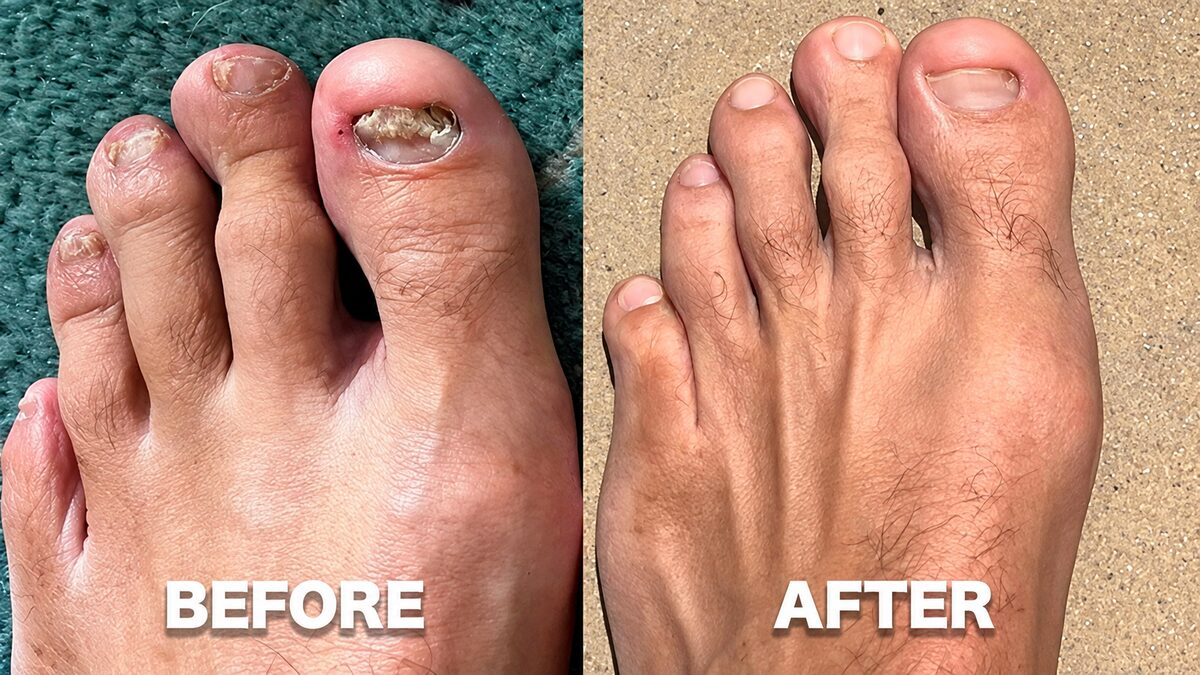
Big toenail: crumbling edge and yellow-brown staining gone, nail smooth again.
Patricia L. — Daily sessions, 5 months
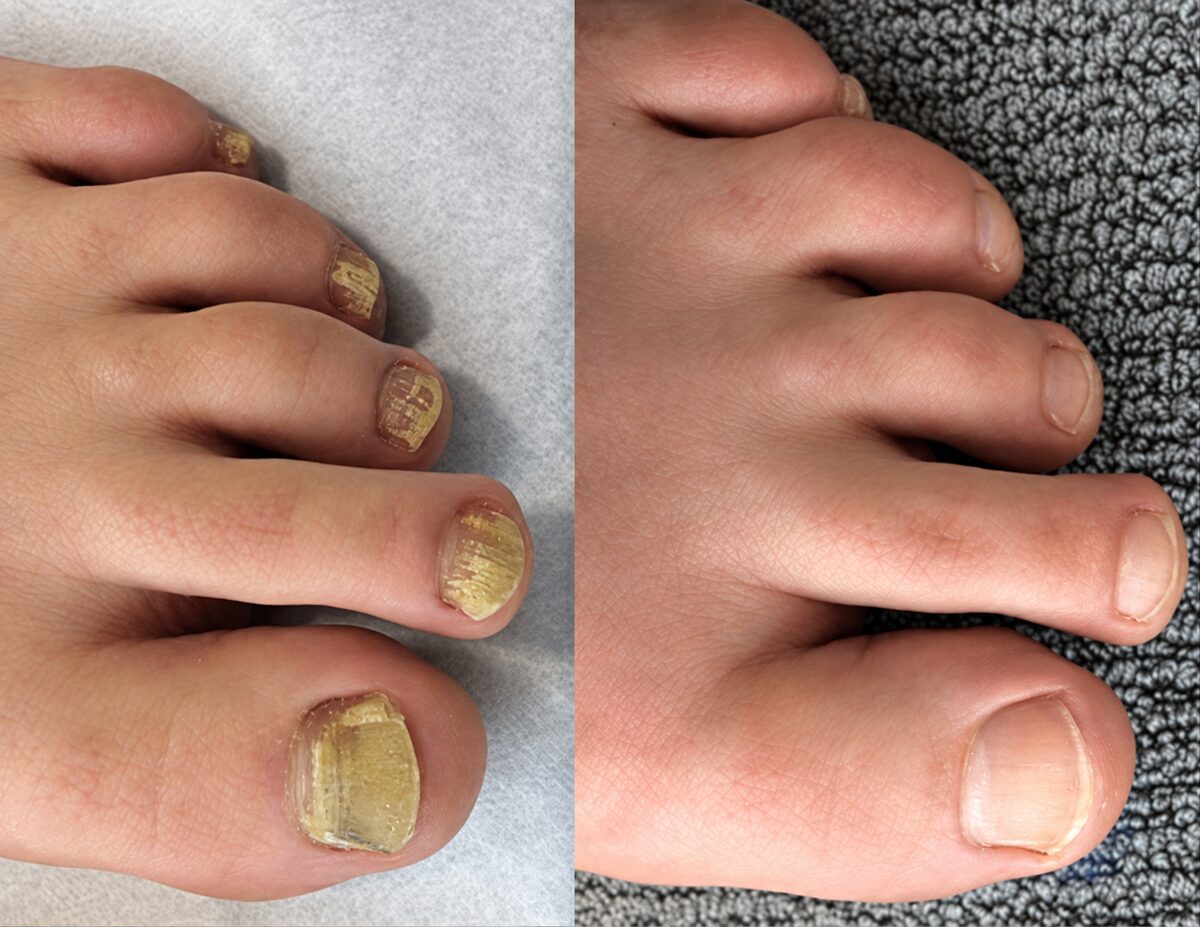
Three nails affected: clear new nail now covers most of each plate.
Karen H. — Daily sessions, 2 months
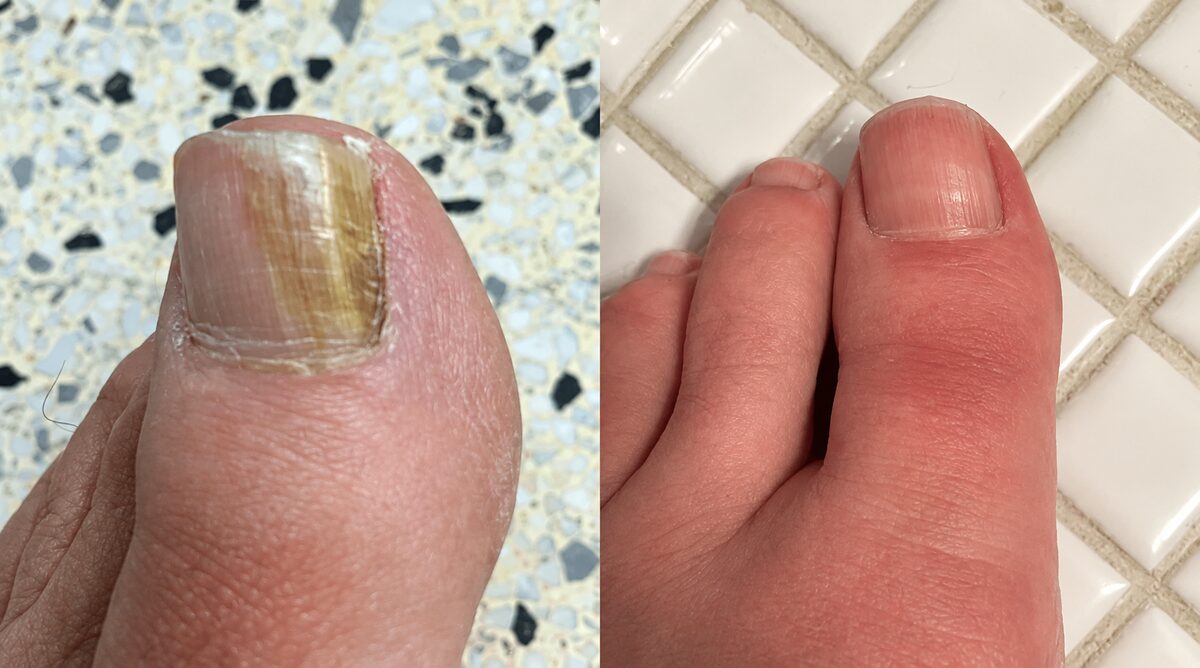
Thickened, deep-yellow nail grew back thinner and close to natural colour.
Amy S. — Daily sessions, 3 months
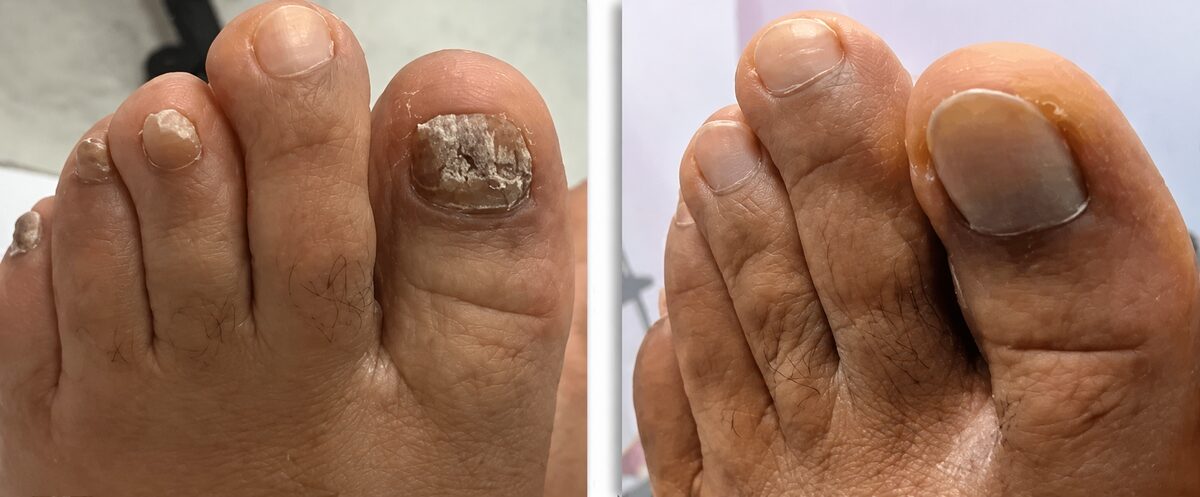
Chalky white surface replaced by an even nail growing out from the base.
Sloan M. — Daily sessions, 4 months
When to see a doctor
See a doctor if you have diabetes or circulation issues before starting any home treatment, if the nail shows signs of pain, swelling, pus or spreading redness, if several nails are severely thickened, or if six months of consistent treatment has produced no new clear growth at all. A lab test can also confirm the diagnosis, since nail psoriasis and other conditions can look similar to fungus.
Frequently asked questions
Ready to start treating the nail bed tonight?
Pick your treatment today and start the plan — every week you wait is a week added to the timeline.
- From $34.99 per device
- Free tracked shipping
- 30-day money-back
“I have been using FungaBeam since January. My case has cleared up and my nails look great.” — Patricia L., Ohio, US
Keep reading
- Nail fungus treatmentThe full treatment landscape, plus the home care that decides whether it returns.
- What kills it instantly?The honest answer to the internet's most searched nail fungus question.
- How long it takesA week-by-week and month-by-month timeline, and how to judge progress.
- Is it contagious?How it spreads between toes, partners and households — and how to stop it.
Sources
This page is general information, not medical advice. FungaBeam is a consumer wellness device and is not intended to diagnose, treat, cure or prevent any disease. Speak to a doctor or podiatrist about your own situation, particularly if you have diabetes, circulation problems or worsening symptoms.