Published · Updated
The quick answer
- Yes, toenail fungus is contagious, spread mainly through shed skin and nail fragments on damp shared surfaces rather than direct person-to-person contact.
- The most common routes are bathroom floors, shared bath mats, shared nail clippers, gym showers and pool decks.
- Spreading to your own other nails and reinfecting from untreated athlete's foot on the skin are actually more common than catching it from another person.
- Simple habits — separate tools, sandals in public showers, dry feet, shoe rotation — cut transmission risk substantially.
How it spreads
Dermatophytes shed constantly from an infected nail in tiny fragments of keratin. Those fragments survive on bathroom floors, pool decks, changing room benches, bath mats, towels and inside shoes, and they infect the next damp foot that touches them.
Direct skin-to-skin contact matters less than shared surfaces. The most common transmission routes in a household are the bathroom floor, a shared bath mat and shared nail clippers — none of which involve touching another person at all.
What people usually mean by this question
Most people asking this are worried about one of three things: passing it to a partner or child, catching it from a gym or nail salon, or whether it can spread from one of their own nails to another. All three are real risks, but they differ enough in likelihood and prevention that it helps to separate them.
Spreading to your own other nails
This is the most common spread of all. Picking at an infected nail and then touching another toe, or using the same clippers across all ten nails, moves the infection along the foot. Untreated athlete's foot between the toes acts as a permanent reservoir feeding new nails, which is why treating only the visibly infected nail often fails to stop the spread.
Spreading between people in a household
Household transmission happens mainly through shared surfaces and objects rather than casual contact. A shared bath mat, unwashed shower floor, or communal nail clippers can pass fragments between family members far more efficiently than sitting near someone or shaking hands.
Children and partners of someone with an active infection are not guaranteed to catch it, but the household's shared bathroom habits are the biggest factor in whether it spreads.
Is it contagious in bed?
Sharing a bed with someone who has toenail fungus is low risk but not zero, because fragments can transfer to sheets. Wash bedding regularly at a warm temperature, do not share towels, and keep the infected foot clean and dry. The bathroom is a far bigger risk than the bedroom.
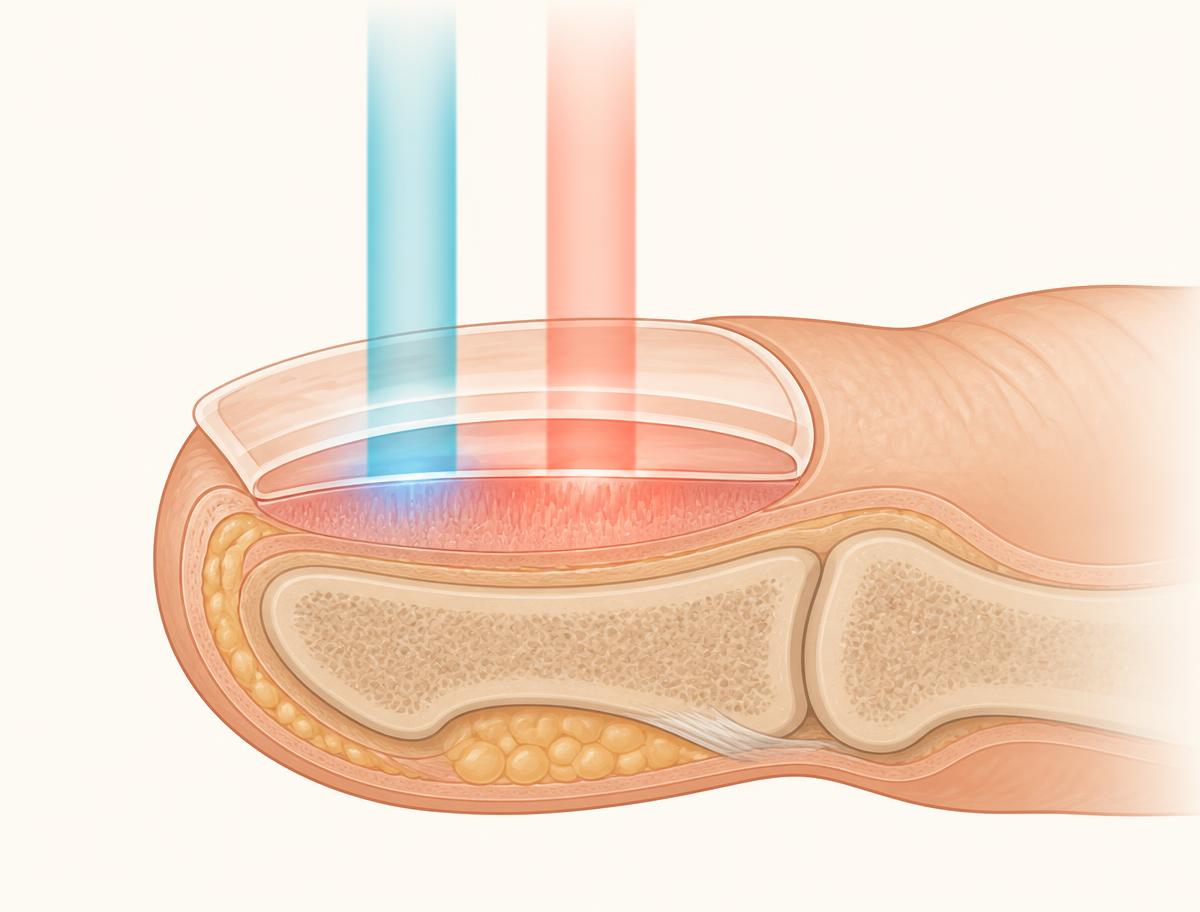
Treat it before it spreads
One device per person, or save with a two, three or four pack for the household.
- From $34.99 per device
- Free tracked shipping
- 30-day money-back
“I have been using FungaBeam since January. My case has cleared up and my nails look great.” — Patricia L., Ohio, US
Where transmission risk is highest
| Setting | Risk level | Why |
|---|---|---|
| Gym/pool showers, barefoot | High | Damp, communal floor, many bare feet |
| Shared bath mat at home | High | Stays damp, direct foot contact |
| Shared nail clippers | High | Direct transfer of infected fragments |
| Nail salon (unsterilized tools) | Moderate–high | Depends on hygiene standards |
| Shared bed/sheets | Low | Indirect, infrequent contact |
| Casual social contact | Very low | No direct contact with feet |
How to stop the spread
- Separate clippers and files for the infected nail, disinfected after each use
- Wear sandals in gym showers, changing rooms and around pools
- Do not share towels, socks, shoes or bath mats
- Wash socks, towels and bath mats hot and dry them fully
- Disinfect the shower or bath floor regularly
- Treat athlete's foot at the first sign, on everyone in the household
- Rotate shoes so each pair dries completely between wears
Nail salons and pedicures
Nail salons can be a transmission route if tools are not properly sterilized between clients. Ask whether tools are autoclaved or single-use, bring your own tools if you are prone to infections, and avoid pedicures altogether while you have an active infection to avoid spreading it further or picking up a secondary one.
When to see a doctor
See a doctor if the infection is spreading to multiple nails despite good hygiene, if a household member with diabetes or a compromised immune system develops symptoms, or if the skin around the nail becomes red, swollen or painful, which can indicate a secondary bacterial infection needing separate treatment.
Frequently asked questions
Ready to start treating the nail bed tonight?
Break the chain of reinfection at home before it spreads to another nail or another person.
- From $34.99 per device
- Free tracked shipping
- 30-day money-back
“I have been using FungaBeam since January. My case has cleared up and my nails look great.” — Patricia L., Ohio, US
Keep reading
- Tinea unguiumThe dermatophyte form of nail fungus — how it spreads from athlete's foot and how to stop it.
- Step-by-step planA month-by-month routine covering the nail, the skin, the shoes and the tracking.
- Fingernail fungusWhy hands clear faster than feet, and the routine that gets you there.
- Nail fungus treatmentThe full treatment landscape, plus the home care that decides whether it returns.
Sources
This page is general information, not medical advice. FungaBeam is a consumer wellness device and is not intended to diagnose, treat, cure or prevent any disease. Speak to a doctor or podiatrist about your own situation, particularly if you have diabetes, circulation problems or worsening symptoms.