Published · Updated
The quick answer
- Fingernail fungus clears faster than toenail fungus because fingernails grow about twice as quickly, replacing fully in four to six months.
- Fingernails see more yeast (Candida) infections than toenails, especially in people whose hands are frequently wet.
- Wet work, acrylics/gels, and aggressive cuticle cutting are the main triggers to remove first.
- The same treatment ladder as toenail fungus applies, just with a shorter timeline for visible results.
How fingernail fungus differs
Toenail infections are overwhelmingly dermatophyte-driven. Fingernails see a higher share of Candida yeast infections, particularly in people whose hands are wet for long periods — bartenders, cleaners, healthcare workers, and parents of small children who wash hands constantly.
Yeast infections often involve the skin fold around the nail as well: the cuticle area becomes red, swollen and tender, and the nail deforms with ridges as it grows out from an inflamed matrix. This pattern, called paronychia, is distinct from the dry, crumbly presentation typical of dermatophyte toenail fungus.
Common triggers
- Hands repeatedly wet and not dried thoroughly, especially between the fingers and under the nail
- Acrylic or gel nails, which trap moisture between the product and the natural plate for weeks at a time
- Aggressive cuticle cutting during manicures, which removes the seal that protects the nail matrix from organisms
- Shared or poorly sterilised salon tools used across multiple clients
- Transferring your own toenail infection by picking at an affected toe and then touching a fingernail
How it is diagnosed
The same lab process applies as for toenails: a clipping sent for KOH microscopy or culture confirms whether the cause is a dermatophyte, a yeast, or something else entirely, such as psoriasis of the nail. This is particularly useful for fingernails because yeast and dermatophyte infections are treated somewhat differently.
Treatment options for hands
Because fingernails grow faster, the same treatments used for toenails tend to show results sooner. Topical antifungals, oral prescriptions for confirmed and persistent cases, and daily light therapy are all reasonable options, and the faster growth cycle rewards consistency particularly quickly.
| Option | Approx. cost | Time to first visible change | Best for |
|---|---|---|---|
| Topical antifungal | $15-$50 | 4-8 weeks | Mild, surface infections |
| Oral antifungal (prescription) | $10-$40/month | 3-6 weeks for new growth | Confirmed, persistent infections |
| At-home light therapy | From $34.99 one-off | 3-6 weeks for new growth | Drug-free daily routine, any cause |
| Hygiene and wet-work changes alone | Minimal | Ongoing | Mild yeast-related cases, prevention |
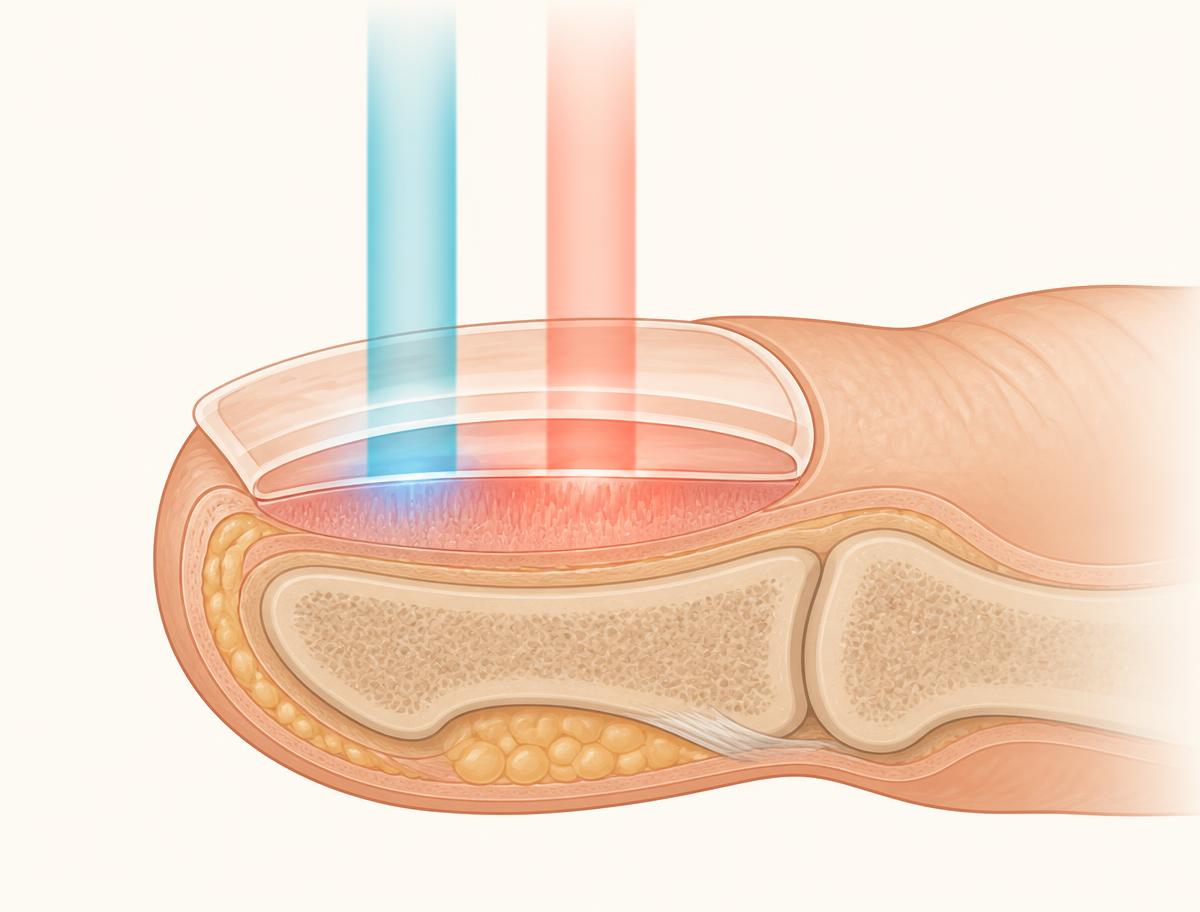
Works on fingernails too
The same 90-second session applies to any nail — fingers included.
- From $34.99 per device
- Free tracked shipping
- 30-day money-back
“I have been using FungaBeam since January. My case has cleared up and my nails look great.” — Patricia L., Ohio, US
Building a routine that works on hands
Keep hands dry, wear waterproof gloves for wet work such as dishes or cleaning, pause acrylics and gels until the nail is clear, and stop having cuticles cut at manicure appointments. File the affected nail thin and short. Then apply your chosen treatment daily — the shorter growth cycle means you should see a clear band at the base within about a month if it is working.
Because the hands are always visible, fingernail cases are also easiest to track: photograph the nail weekly against the same background so small changes are easier to spot than they would be by memory alone.
What goes wrong
The most common mistake is continuing gel manicures or wet work throughout treatment, which keeps reintroducing moisture and undoing progress. The second is stopping cuticle trimming too late — once the matrix is inflamed, further cutting keeps reinjuring the area that needs to heal.
Prevention and daily habits
Dry hands thoroughly after washing, including under the nail edge, use gloves for prolonged wet work, avoid biting nails or picking at cuticles, and give nails periodic breaks from gel or acrylic overlays.
When to see a doctor
Redness, swelling and pain around the nail fold can indicate a bacterial infection rather than fungus and may need antibiotics rather than antifungal treatment. Recurrent fingernail infections with no obvious wet-work cause are also worth investigating, since they occasionally point to an underlying health issue such as diabetes or a circulation problem.
Frequently asked questions
Ready to start treating the nail bed tonight?
Use the same 90-second daily light session on fingernails for a faster, four-to-six-month timeline.
- From $34.99 per device
- Free tracked shipping
- 30-day money-back
“I have been using FungaBeam since January. My case has cleared up and my nails look great.” — Patricia L., Ohio, US
Keep reading
- Onychomycosis explainedThe clinical picture: types, stages, diagnosis and every treatment route.
- Nail fungus treatmentThe full treatment landscape, plus the home care that decides whether it returns.
- How long it takesA week-by-week and month-by-month timeline, and how to judge progress.
- Is it contagious?How it spreads between toes, partners and households — and how to stop it.
Sources
This page is general information, not medical advice. FungaBeam is a consumer wellness device and is not intended to diagnose, treat, cure or prevent any disease. Speak to a doctor or podiatrist about your own situation, particularly if you have diabetes, circulation problems or worsening symptoms.