Published · Updated
The quick answer
- Tinea unguium is nail fungus specifically caused by dermatophytes, the same organisms behind athlete's foot and ringworm.
- It is closely linked to athlete's foot — treating the nail without treating the skin usually leads to reinfection.
- Diagnosis follows the same route as any onychomycosis: microscopy or culture of a nail clipping.
- Because dermatophytes cause most nail fungus cases, most general nail fungus treatments apply directly to tinea unguium.
Tinea unguium vs onychomycosis
The two terms overlap but are not identical. Onychomycosis covers any fungal nail infection, from any organism. Tinea unguium is the subset caused specifically by dermatophytes such as Trichophyton rubrum. Since dermatophytes cause the large majority of nail infections, in everyday conversation the words are used interchangeably.
The distinction matters for one practical reason: dermatophytes are the same organisms that cause athlete's foot and body ringworm, so a nail infection and a skin infection often feed each other in a loop. Treating the nail while ignoring the skin between your toes is one of the most common reasons people end up reinfected months later, right after they thought they had cleared it.
How to recognise it
Tinea unguium tends to follow a recognisable sequence, usually starting small and progressing gradually rather than appearing overnight.
- A yellow, white or brown streak appearing at the free edge or side of the nail
- Gradual thickening, so the nail catches on socks and is hard to trim with normal clippers
- Crumbly or powdery debris collecting under the plate, visible when you scrape gently at the free edge
- The nail lifting away from the bed (onycholysis), sometimes with a visible gap
- A faint musty smell in advanced, longstanding cases
Causes and where people pick it up
Dermatophytes thrive in warm, damp, communal places: gym showers, pool decks, changing rooms, hotel bathrooms and shared nail salon tools. They also survive happily inside shoes for extended periods, which is why reinfection from your own footwear is so common even after successful treatment.
Risk rises with age, diabetes, reduced circulation, sweaty feet (hyperhidrosis), repeated nail trauma from running or tight shoes, a family history of fungal nail infections, and any recent or untreated athlete's foot infection.
How it is diagnosed
A clinician will typically take a small clipping or scraping from the affected nail for KOH microscopy and culture, which can distinguish a dermatophyte infection from a yeast or mould infection or from a non-fungal look-alike such as psoriasis. This matters most when oral medication is being considered, since some antifungals work better against certain organisms than others.
A drug-free daily routine for stubborn nails
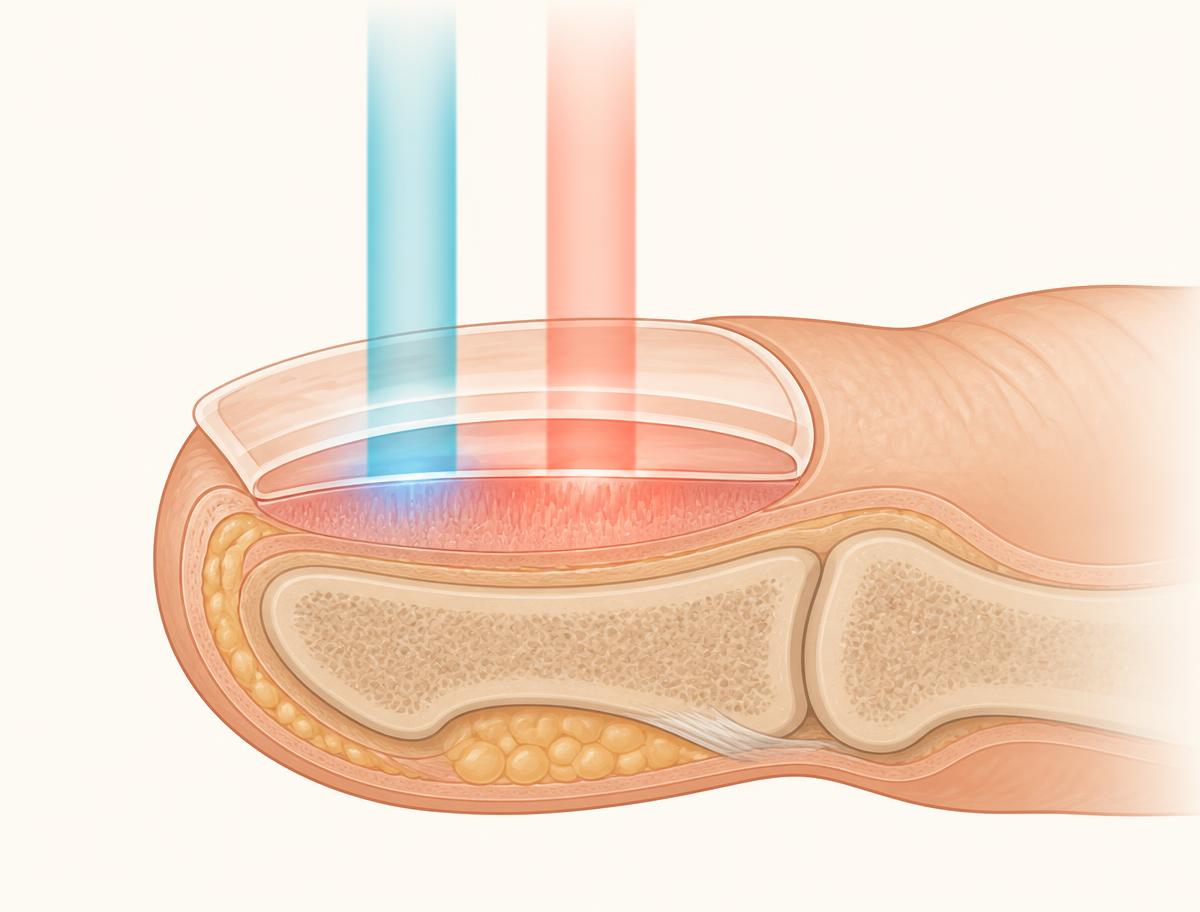
Ninety seconds a day of targeted light, aimed at the nail bed where creams cannot reach.
- From $34.99 per device
- Free tracked shipping
- 30-day money-back
“I have been using FungaBeam since January. My case has cleared up and my nails look great.” — Patricia L., Ohio, US
Every treatment route, realistically
Topical antifungal lacquers (ciclopirox, efinaconazole) are the mildest option and work best on thin or early infections; expect months of daily application and modest overall cure rates for thicker nails. Oral terbinafine or itraconazole remain the most effective single treatments for dermatophyte nail infection, typically prescribed for six to twelve weeks with monitoring, at a cost of roughly $10-$40 a month for generics plus the price of a consultation. At-home light therapy and diligent filing are drug-free, lower-cost options that many people combine with topical treatment rather than use in isolation.
| What you notice | Most likely explanation | What to do |
|---|---|---|
| Yellow streak from the tip, spreading slowly | Distal tinea unguium | Confirm with a clinician, start a daily treatment |
| Itchy, flaky skin between toes too | Concurrent athlete's foot | Treat the skin with OTC antifungal cream alongside the nail |
| Nail lifted with no pain, no injury history | Onycholysis from fungal infection | See a podiatrist to confirm and trim the lifted portion |
| Musty smell, crumbling nail, years old | Advanced, longstanding infection | Expect a longer course; consider oral prescription option |
What goes wrong and common mistakes
A treatment that only targets the nail is half a plan. Alongside whatever you use on the nail itself, treat the skin with an over-the-counter antifungal cream, rotate your shoes so each pair dries fully, wash socks in hot water, dry thoroughly between the toes after every shower, and never share clippers or files.
Then be patient. Even a successful treatment does not repair the damaged plate — it stops the infection so healthy nail can grow out behind it. Expecting a discoloured nail to turn clear rather than grow out clear is the most common source of disappointment.
Prevention and daily habits
Once cleared, keep feet dry, wear moisture-wicking socks, use sandals in communal wet areas, and treat any recurrence of athlete's foot immediately rather than waiting for it to spread to the nail again. Spraying an antifungal powder into shoes periodically is a cheap habit that meaningfully reduces reinfection risk.
Who this applies to and who should not self-treat
Most healthy adults with a typical dermatophyte nail infection can reasonably start with topical or light-based treatment alongside skin care. People with diabetes, poor circulation, immune suppression, or nails that are painful, bleeding or accompanied by spreading redness should see a podiatrist rather than self-treating, since dermatophyte infections in these groups can occasionally lead to more serious skin or soft-tissue complications.
Frequently asked questions
Ready to start treating the nail bed tonight?
Pair a consistent skin-and-nail routine with 90 seconds of daily light therapy from FungaBeam.
- From $34.99 per device
- Free tracked shipping
- 30-day money-back
“I have been using FungaBeam since January. My case has cleared up and my nails look great.” — Patricia L., Ohio, US
Keep reading
- Onychomycosis explainedThe clinical picture: types, stages, diagnosis and every treatment route.
- Is it contagious?How it spreads between toes, partners and households — and how to stop it.
- Toe fungus signsEarly warning signs, look-alike conditions, and what to do in the first month.
- Step-by-step planA month-by-month routine covering the nail, the skin, the shoes and the tracking.
Sources
This page is general information, not medical advice. FungaBeam is a consumer wellness device and is not intended to diagnose, treat, cure or prevent any disease. Speak to a doctor or podiatrist about your own situation, particularly if you have diabetes, circulation problems or worsening symptoms.