Published · Updated
The quick answer
- Mild, early cases (small white or yellow patch) respond best to filing plus a topical or light therapy device, no prescription needed.
- Moderate cases (thickened, discoloured, one or two nails) often do best with a device or topical used consistently for 4–6 months.
- Severe cases (multiple nails, thick and crumbling, painful) usually need a doctor's assessment and often oral terbinafine.
- Recurring infections need the cause addressed — footwear, showers, untreated athlete's foot — as much as any new treatment.
Start here: which situation matches you?
Nail fungus is not one condition with one best answer — a small white patch on one toenail and a thick, crumbling infection across four toenails need genuinely different approaches, even though both are technically onychomycosis. This guide is organised by severity and by whether it is a fingernail or toenail, because both change what will realistically work.
If you are unsure which category you fall into, a rough rule of thumb is: mild means a small discoloured patch with a mostly normal nail shape; moderate means clear thickening or larger discoloured area on one or two nails; severe means multiple nails affected, visible crumbling, or the nail lifting from the bed; recurring means it has come back after a treatment that seemed to work.
Mild cases: small patch, normal nail shape
This is the easiest stage to treat and the one most people ignore because it does not look serious. A daily over-the-counter antifungal cream or an at-home light therapy session, combined with weekly filing of the surface, is usually enough. Expect two to four months of consistent effort before the patch is fully replaced by new growth, since even mild infections take time to grow out.
The main risk at this stage is doing nothing because it seems cosmetic. Untreated mild infections often slowly spread to more of the nail or to neighbouring nails over the following year.
Moderate cases: thickened, discoloured, one or two nails
At this stage, topicals alone often struggle because the nail plate has thickened enough to block penetration. A combination approach works best: regular filing to thin the nail, plus either a prescription topical lacquer, oral terbinafine if you would rather involve a doctor, or a daily at-home light therapy device. Expect four to eight months of consistent treatment.
This is also the stage where people most often give up too early, three or four weeks in, because the visible tip of the nail still looks bad. The band nearest the cuticle is what tells you if it is working — check there, not at the tip.
Severe cases: multiple nails, crumbling, painful, or lifting
This is the stage where a clinician's assessment stops being optional. A doctor can confirm the diagnosis with a nail clipping, properly debride severely thickened nail, and discuss oral terbinafine, which generally has the strongest published cure rates for confirmed, extensive infections. Anyone with diabetes, neuropathy or circulation issues should have this assessed by a professional regardless of severity, given the higher risk of complications from foot infections.
At-home routines are not the wrong idea at this stage, but they work best as a supplement to medical treatment rather than a replacement for it, particularly if the nail is painful or visibly lifting.
Recurring infections: it came back
A treatment that worked once and then saw the infection return almost always points to the cause, not the treatment. Dermatophytes live in shoes, showers and the skin between toes, so an infection can restart even after a genuinely successful course if damp shoes, an untreated case of athlete's foot, or a shared shower routine are still in play.
Before starting any new treatment for a recurrence, address footwear rotation, treat any athlete's foot on the same foot, wash socks and towels hot, and disinfect nail tools. Skipping this step is the single biggest reason people cycle through treatment after treatment without lasting success.
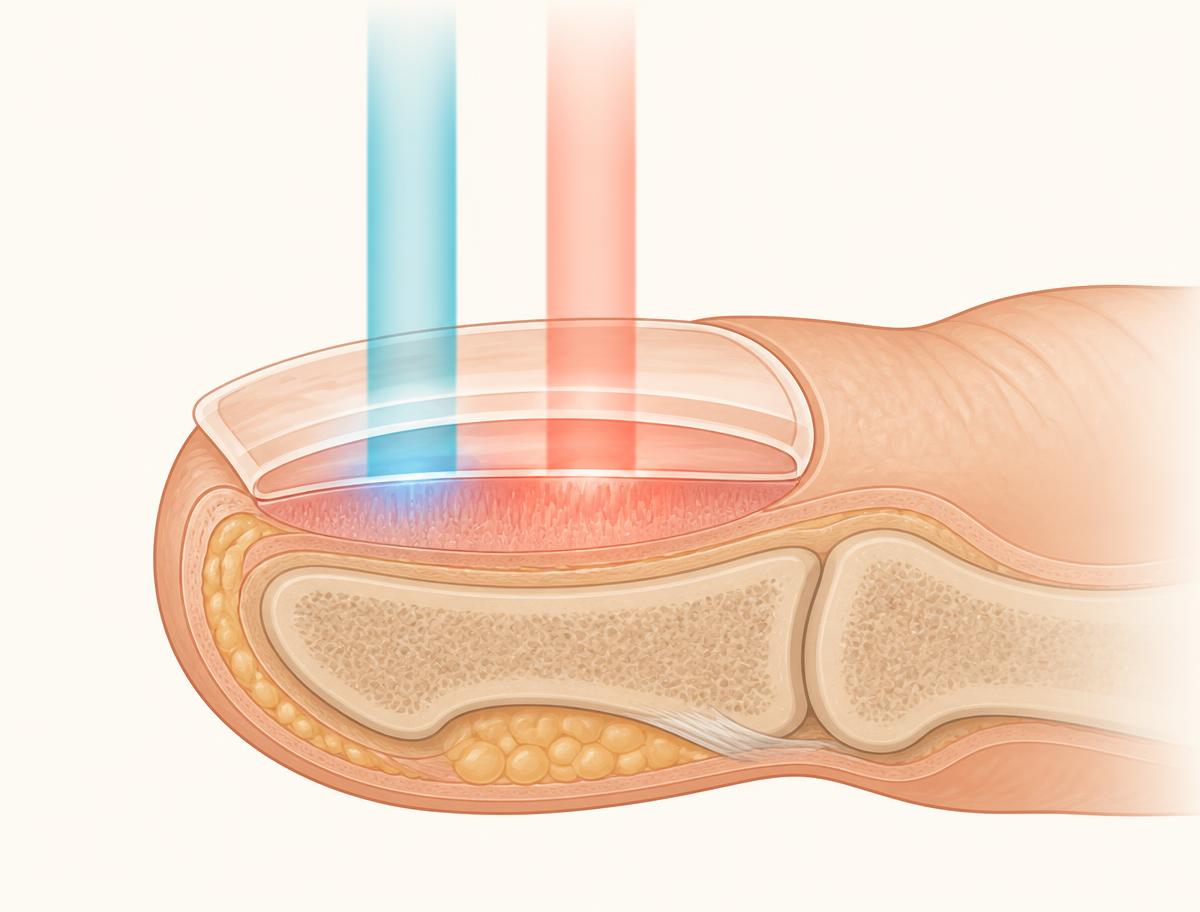
Whatever stage you are at
FungaBeam works alongside filing and hygiene at any stage, from $34.99, with a 30-day money-back guarantee.
- From $34.99 per device
- Free tracked shipping
- 30-day money-back
“I have been using FungaBeam since January. My case has cleared up and my nails look great.” — Patricia L., Ohio, US
Fingernails versus toenails: what changes
Fingernails grow roughly three times faster than toenails, so any treatment shows visible progress sooner — often within four to six weeks rather than the eight-plus weeks typical for toenails. Fingernail infections are also generally easier to keep dry and clean day to day, since hands are not confined inside damp shoes for hours at a time.
The treatment options are largely the same for both, and a device like FungaBeam that folds to fit a hand as well as a foot means you are not buying separate solutions for each.
Treatment options and typical cost by severity
Note that cost alone should not decide your route — a cheap treatment applied inconsistently for the wrong severity level wastes more time overall than a slightly costlier one matched correctly to your situation.
| Situation | Best-fit treatment | Typical cost | Time commitment |
|---|---|---|---|
| Mild, one small patch | Topical or light therapy + filing | $15–$50 | 2–4 months |
| Moderate, 1–2 nails | Topical, light therapy or oral Rx + filing | $35–$150+ | 4–8 months |
| Severe, multiple nails | Doctor-led, often oral terbinafine | Rx cost + monitoring | 12 weeks + growth time |
| Recurring | Repeat treatment + cause removal (footwear, hygiene) | Varies | Ongoing habit change |
What to look for in an at-home device at any stage
FungaBeam meets this checklist at every stage: 470nm and 910nm LEDs, roughly 90-second sessions, a folding shell for hands and feet, a 30-day money-back guarantee and a 12-month warranty. It suits mild-to-moderate self-managed cases well; for severe cases, use it alongside — not instead of — medical care.
| Feature | What to check |
|---|---|
| Wavelengths | Stated numbers (e.g. 470nm blue, 910nm near-infrared), not vague marketing terms |
| Session length | Under 5 minutes so you will actually do it daily |
| Coverage | Fits toes and fingers, not one or the other |
| Returns | 30 days minimum, since early weeks show nothing |
| Warranty | 12 months or longer |
The mistake almost everyone makes
Treating every case the same way, regardless of severity, is the single most common error. A mild patch does not need oral medication, and a severe, multi-nail infection with lifting is unlikely to resolve on filing and cream alone. Matching effort to actual severity, and being honest about which category you are in, saves months of wasted treatment.
Frequently asked questions
Ready to start treating the nail bed tonight?
Match the treatment to where you actually are today, not where you wish you were, and give it the months it needs before judging it.
- From $34.99 per device
- Free tracked shipping
- 30-day money-back
“I have been using FungaBeam since January. My case has cleared up and my nails look great.” — Patricia L., Ohio, US
Keep reading
- Best treatment comparedEvery option ranked by evidence, cost, effort and speed.
- Fingernail fungusWhy hands clear faster than feet, and the routine that gets you there.
- Early-stage fungusWhy the first few months matter more than any product you choose.
- Fungus and diabetesWhy diabetes changes the plan, and the daily foot-check routine that protects you.
Sources
This page is general information, not medical advice. FungaBeam is a consumer wellness device and is not intended to diagnose, treat, cure or prevent any disease. Speak to a doctor or podiatrist about your own situation, particularly if you have diabetes, circulation problems or worsening symptoms.