Published · Updated
The quick answer
- If you have diabetes, see your doctor or podiatrist before self-treating any toenail fungus.
- Reduced circulation and nerve sensation can let small foot problems progress further before you notice them.
- A daily foot-check routine, checking between toes and under nails for any change, is one of the most protective habits available.
- Treatment is still possible and often successful with diabetes, but it should be guided and monitored by a professional.
Why diabetes changes everything about foot care
Diabetes can reduce circulation to the feet and cause peripheral neuropathy, a loss of sensation that means small problems — a blister, a cut, a fungal infection — can worsen for weeks before they are painful enough to notice. Slower healing on top of that means an infection that would be minor for someone else can take longer to resolve and has a higher chance of complications.
This is not a reason to panic about a discoloured toenail, but it is the reason every major health body recommends that people with diabetes have any foot or nail change assessed by a professional rather than guessing at home. A five-minute appointment early is a far better use of time than months of self-treatment that may be treating the wrong thing, or that misses a developing skin problem alongside the nail.
Why self-treatment is riskier here
With normal sensation and circulation, a wrong guess about a nail problem mostly costs time. With diabetes, a wrong guess can let an infection progress to the surrounding skin without the usual pain signal warning you, and any resulting skin break carries a higher risk of slow healing or more serious infection. This is why the standard, responsible advice is to have a podiatrist confirm the diagnosis and check the whole foot before starting any treatment on your own.
Your podiatrist can also check circulation and sensation as part of the same visit, which tells you and them how much caution any home treatment needs, and whether closer monitoring is warranted.
What a podiatrist visit typically involves
Expect a visual exam of the nail and surrounding skin, a check of circulation (often by feeling pulses in the foot) and sensation (often with a simple monofilament test), and usually a nail clipping sent for fungal testing to confirm the diagnosis before any treatment plan is set. This full picture is exactly what self-diagnosis at home cannot provide.
Treatment is still possible, just guided
A diabetes diagnosis does not rule out treating a fungal nail — it changes who should be involved in deciding how. Oral antifungals are prescribed with more care around drug interactions and liver monitoring. Topical treatments and drug-free options like light therapy are often perfectly reasonable to use, but the sensible order is: get the diagnosis and clearance from your doctor or podiatrist first, then discuss which options fit your specific health picture.
| Option | Consideration with diabetes |
|---|---|
| Oral antifungal | May need liver monitoring and a check for drug interactions with diabetes medication |
| Topical antifungal | Generally low risk, but confirm with your podiatrist given any skin sensitivity |
| At-home light therapy | Drug-free, no interactions; still confirm diagnosis and get clearance first |
| Nail trimming and filing at home | Ask your podiatrist about safe technique; many recommend professional trimming if sensation is reduced |
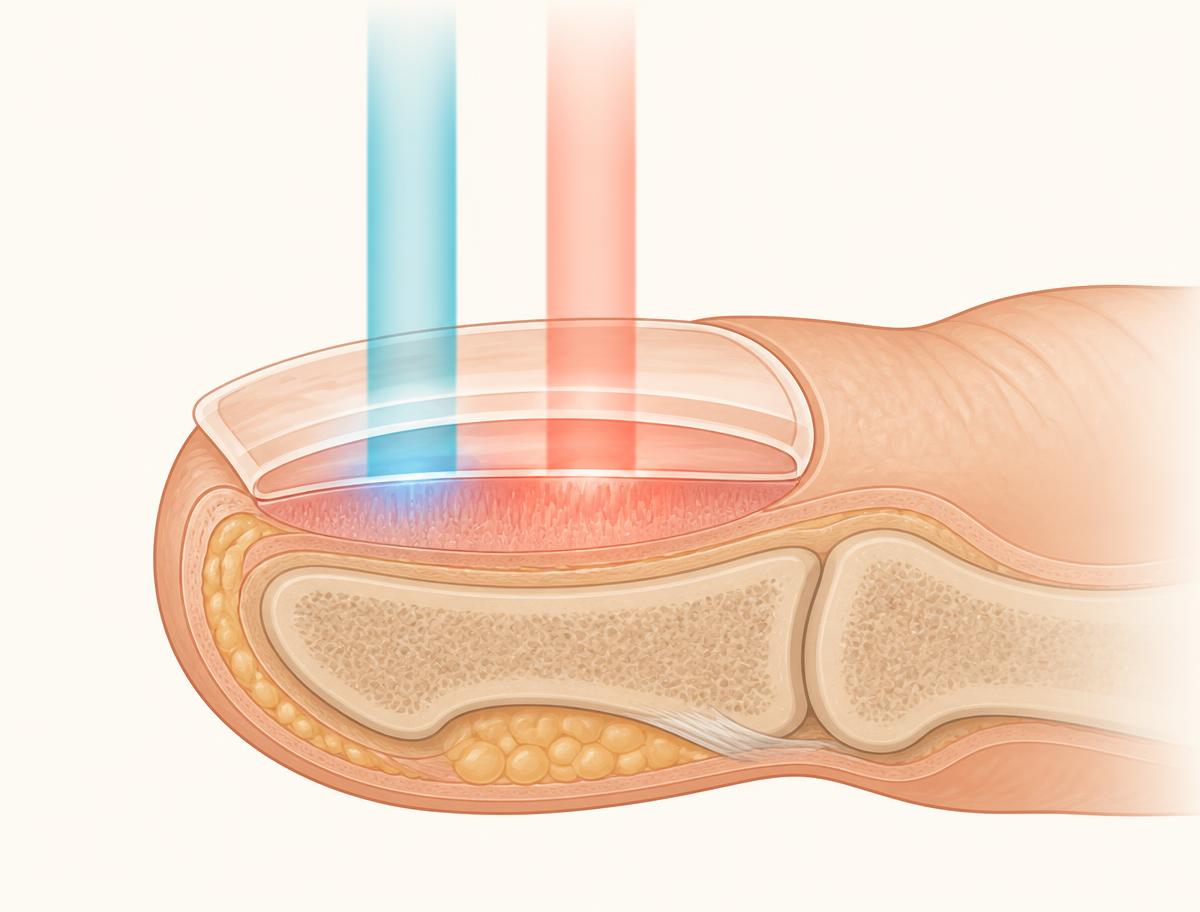
With your podiatrist's guidance
Once your doctor has confirmed the diagnosis and cleared you to proceed, a 90-second daily light session is a drug-free option to discuss adding alongside their plan.
- From $34.99 per device
- Free tracked shipping
- 30-day money-back
“I have been using FungaBeam since January. My case has cleared up and my nails look great.” — Patricia L., Ohio, US
A daily foot-check routine that protects you
Checking your feet daily is one of the most protective habits available, and it takes under two minutes.
- Look at the top, sides and sole of each foot, and between every toe, using a mirror if needed to see the underside.
- Check for any new redness, swelling, cuts, blisters, cracked skin or changes to a nail's colour or thickness.
- Feel the temperature of your feet — one foot noticeably warmer or cooler than the other is worth mentioning to your doctor.
- Check that shoes fit well and have no seams, stones or rough areas that could rub unnoticed.
- Report any change, however small, at your next appointment rather than waiting for it to become obvious.
What goes wrong
The most serious mistake is treating a discoloured nail at home for months without ever having it examined, because with reduced sensation you may not get the usual warning signs if something else develops alongside it. The second common issue is self-trimming thickened nails aggressively, which is easy to do unsafely if sensation is reduced; many podiatrists recommend professional nail care for exactly this reason.
Is this you? When this section applies
This caution applies to anyone with diagnosed diabetes, prediabetes with reduced circulation or sensation, or any other condition affecting foot circulation or nerve sensation. If that describes you, please treat 'see a doctor or podiatrist' as the actual first step here, not a formality — it is the single change that most reduces risk for people in this group.
Frequently asked questions
Ready to start treating the nail bed tonight?
Talk to your podiatrist about adding a 90-second daily light session to a doctor-guided plan.
- From $34.99 per device
- Free tracked shipping
- 30-day money-back
“I have been using FungaBeam since January. My case has cleared up and my nails look great.” — Patricia L., Ohio, US
Keep reading
- Black toenail causesTelling a fungal nail from a runner's bruise — and the warning signs to take seriously.
- Onychomycosis explainedThe clinical picture: types, stages, diagnosis and every treatment route.
- Fungus vs psoriasisTwo conditions, near-identical appearance, completely different treatment paths.
- Thick yellow toenailsFungus, trauma, age or polish? Identify the cause and pick the right fix.
Sources
This page is general information, not medical advice. FungaBeam is a consumer wellness device and is not intended to diagnose, treat, cure or prevent any disease. Speak to a doctor or podiatrist about your own situation, particularly if you have diabetes, circulation problems or worsening symptoms.