Published · Updated
The quick answer
- Oregano oil, largely due to its carvacrol content, shows strong antifungal activity against dermatophytes in laboratory testing — stronger than several other essential oils commonly suggested for nail fungus.
- There is no robust clinical trial specifically confirming it cures onychomycosis in humans, and it must be heavily diluted, since it is more likely than tea tree oil to irritate or burn skin.
- A reasonable dilution is around one to three percent in a carrier oil, well below the concentration used in laboratory testing.
- Given the irritation risk, most people are better served by a gentler, better-studied topical or a non-topical method unless they are confident in careful dilution and patch testing.
What it is and why people try it
Oregano oil is extracted from the leaves of Origanum vulgare and is notably rich in carvacrol and thymol, two compounds with some of the strongest documented antifungal and antibacterial activity of any commonly available essential oil in laboratory testing. That laboratory potency is exactly why it appears on remedy lists, often described as 'more powerful' than tea tree oil.
People try it hoping that greater potency in a dish translates to a faster or more reliable result on a stubborn nail — a reasonable hope, but one that runs into the same delivery and safety trade-offs seen with every strong essential oil.
What the evidence actually shows
Carvacrol and thymol, oregano oil's main active compounds, have been shown in laboratory studies to inhibit a range of dermatophytes and yeasts, in some tests at lower concentrations than tea tree oil needs to achieve a similar effect. That is a genuinely notable laboratory finding.
What does not exist is a robust clinical trial specifically testing oregano oil against onychomycosis in humans and confirming cure rates. The evidence base here is earlier-stage than for tea tree oil: strong in vitro data, thin human data, and the same unresolved question of how much of that laboratory potency actually reaches a fungus living under a nail plate.
How to dilute it correctly
Oregano oil is considered a 'hot' essential oil, more likely than most to cause skin burns or irritation when used undiluted or over-concentrated. A commonly recommended dilution for skin use is roughly one to three percent in a carrier oil — noticeably lower than the five to ten percent sometimes used for tea tree oil.
Always patch test on the inside of the forearm and wait a full twenty-four hours before applying anywhere near the foot. If any stinging, redness or burning sensation develops at the test site, do not proceed to the nail, and consider a gentler alternative instead.
How people use it
- Dilute oregano oil to roughly one to three percent in a carrier oil such as coconut or olive oil.
- Patch test on the forearm and wait twenty-four hours before proceeding.
- Wash and dry the foot, then clip and file the nail thin.
- Apply one to two drops of the diluted mixture to the nail and surrounding skin with a cotton bud, avoiding excess.
- Repeat once or, if well tolerated, twice daily, with weekly filing, for a minimum of eight to twelve weeks.
Timeline and what working looks like
Given the limited human trial data, there is no well-established timeline specific to oregano oil. Following the general pattern for topical essential oils, a fair trial is at least eight to twelve weeks of consistent, correctly diluted, well-tolerated use, judged by clear new nail growth at the base rather than surface appearance.
Because irritation risk is higher with this oil, stop tracking for antifungal benefit and address skin health immediately if any redness, peeling or burning sensation develops — that is a sign to reduce concentration or frequency, not a sign of the treatment 'working.'
A gentler daily option
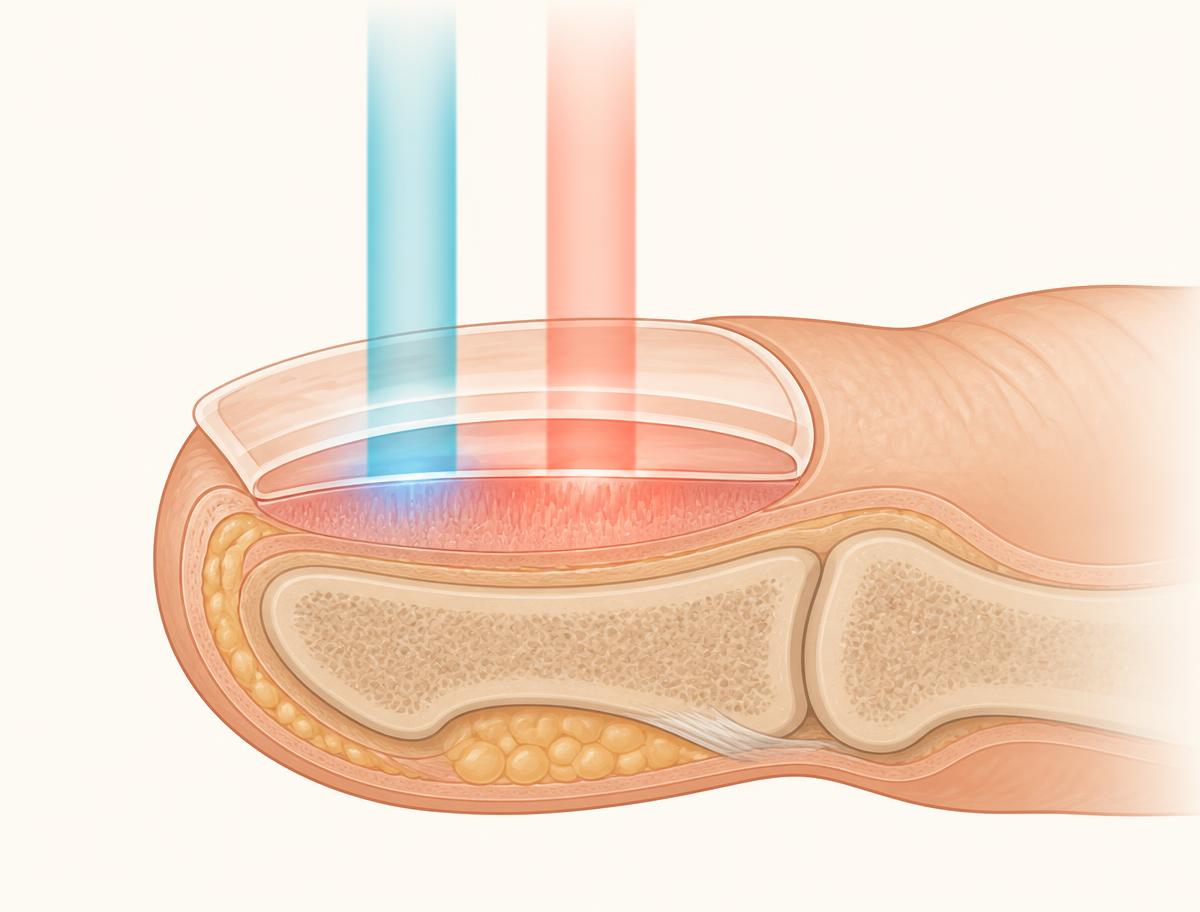
No dilution, no burn risk, no oily residue — FungaBeam's 90-second daily light session targets the nail bed directly.
- From $34.99 per device
- Free tracked shipping
- 30-day money-back
“I have been using FungaBeam since January. My case has cleared up and my nails look great.” — Patricia L., Ohio, US
Risks and who should avoid it
Oregano oil carries a higher irritation and burn risk than milder essential oils, particularly on skin that is already compromised around an infected nail. It should never be used undiluted, on broken skin, on children, during pregnancy without medical advice, or internally without professional guidance, since concentrated oregano oil taken orally can interact with medications including blood thinners.
Stop immediately at the first sign of burning, blistering or persistent redness, and see a pharmacist or doctor if irritation does not settle quickly after stopping use.
Oregano oil compared with gentler and stronger options
Where it sits on the spectrum of strength versus risk.
| Approach | Lab antifungal potency | Human trial evidence | Skin irritation risk | Typical cost |
|---|---|---|---|---|
| Oregano oil (diluted) | High | Very limited, mostly anecdotal | Higher — a 'hot' oil | $10–20 |
| Diluted tea tree oil | Moderate-high | Several small trials | Moderate | $10–20 |
| Oral terbinafine (prescription) | Not applicable (systemic) | Strong, multiple trials | Low (systemic side effects instead) | Prescription cost varies |
| Daily light therapy (e.g. FungaBeam) | Not applicable (light-based) | Emerging, device-based | Very low | From $34.99 |
What to combine it with
If you use oregano oil, weekly filing remains an important supporting step, as with every topical here — it reduces the amount of keratin the diluted oil has to cross. Keep the surrounding skin moisturised with a plain, fragrance-free product on days you are not applying the oil, to offset its drying tendency.
Continue daily washing and thorough drying, fresh socks, and shoe rotation, and treat any active athlete's foot on the surrounding skin at the same time, since that is a common source of reinfection regardless of which nail treatment you use.
When to stop and see a doctor
If skin irritation develops and does not settle quickly after reducing concentration or stopping, or if eight to twelve weeks of well-tolerated, consistent use produces no visible new growth at the base of the nail, it is reasonable to move to a gentler or more evidence-supported method rather than pushing a harsher oil harder.
See a doctor if the nail is painful, if you notice burns, blistering or spreading redness, if you have diabetes or poor circulation, or if you take blood-thinning medication and are considering any oral use of oregano oil.
Frequently asked questions
Ready to start treating the nail bed tonight?
If the irritation risk of oregano oil concerns you, a light-based device offers a comparably daily routine without it.
- From $34.99 per device
- Free tracked shipping
- 30-day money-back
“I have been using FungaBeam since January. My case has cleared up and my nails look great.” — Patricia L., Ohio, US
Keep reading
- Tea tree oilCorrect dilution, application method, and what the trials actually found.
- Apple cider vinegarThe soak method, the pH theory, and why it rarely clears an established infection alone.
- What kills it instantly?The honest answer to the internet's most searched nail fungus question.
- Best treatment comparedEvery option ranked by evidence, cost, effort and speed.
Sources
This page is general information, not medical advice. FungaBeam is a consumer wellness device and is not intended to diagnose, treat, cure or prevent any disease. Speak to a doctor or podiatrist about your own situation, particularly if you have diabetes, circulation problems or worsening symptoms.