Published · Updated
The quick answer
- Apple cider vinegar has no dedicated clinical trials showing it cures onychomycosis; the case for it rests on its acidity making the environment less hospitable to fungal growth.
- Diluted soaks (roughly one part vinegar to two parts warm water, fifteen to twenty minutes) are the standard method, always followed by thorough drying.
- Its most reliable contribution is softening the nail for easier filing, not eliminating fungus already established under the plate.
- Undiluted or prolonged use can irritate or burn skin, so it needs care, not just enthusiasm.
What it is and why people try it
Apple cider vinegar is fermented apple juice, mildly acidic (typically around pH 2 to 3), and already a fixture in most kitchens. It shows up in home-remedy lists for everything from dandruff to acid reflux, and toenail fungus is no exception — the appeal is that it is inexpensive, already owned, and feels like a 'natural' option compared with a pharmacy product.
The theory behind using it on nails is straightforward: dermatophyte fungi tend to grow better in a more neutral pH environment, so making the surface more acidic is thought to make it less hospitable. It is a reasonable hypothesis, but a hypothesis is not the same as demonstrated clinical results.
What the evidence actually shows
There is no dedicated clinical trial evidence showing apple cider vinegar soaks cure or significantly improve onychomycosis in humans. What exists is general laboratory data on vinegar's antimicrobial properties against various organisms, and a large volume of anecdotal reporting online, but nothing that isolates toenail fungus outcomes specifically.
As with other kitchen-cupboard remedies on this site, the plausible mechanism (acidity, mild antimicrobial activity) does not automatically translate into clearing an infection that lives under a keratin nail plate. Vinegar soaks change the surface environment far more than they change what is happening in the nail bed.
How people use it
- Mix roughly one part apple cider vinegar to two parts warm water in a basin.
- Soak the affected foot for fifteen to twenty minutes.
- Rinse and dry the foot completely, especially between the toes.
- File the softened nail thin once it has dried.
- Repeat daily or every other day, for a minimum of eight to twelve weeks before judging results.
Timeline and what working looks like
Because there is no trial data to anchor a timeline, expectations should be modest and judged the same way as any other topical: by whether a clear band of new, undiscoloured nail appears at the base (the cuticle end) over eight to twelve weeks of consistent use.
A softer, easier-to-trim nail after a few weeks of soaking is a real and fairly common observation, but it reflects hydration and softening of keratin, not necessarily a change in the underlying fungal infection. Do not mistake one for the other when deciding whether to continue.
Risks and what not to do
Undiluted vinegar, or very frequent soaking, can dry and irritate skin, and repeated exposure around any small cuts or hangnails can cause stinging or delayed healing. Stop if the skin around the nail becomes red, cracked or painful, rather than pushing through irritation in hope of a fungal benefit.
Never mix vinegar with hydrogen peroxide or bleach in the same basin — combining vinegar with either produces irritant byproducts. Anyone with diabetes, neuropathy or poor circulation should check with a clinician before starting any regular foot soak.
If vinegar soaks aren't moving the needle
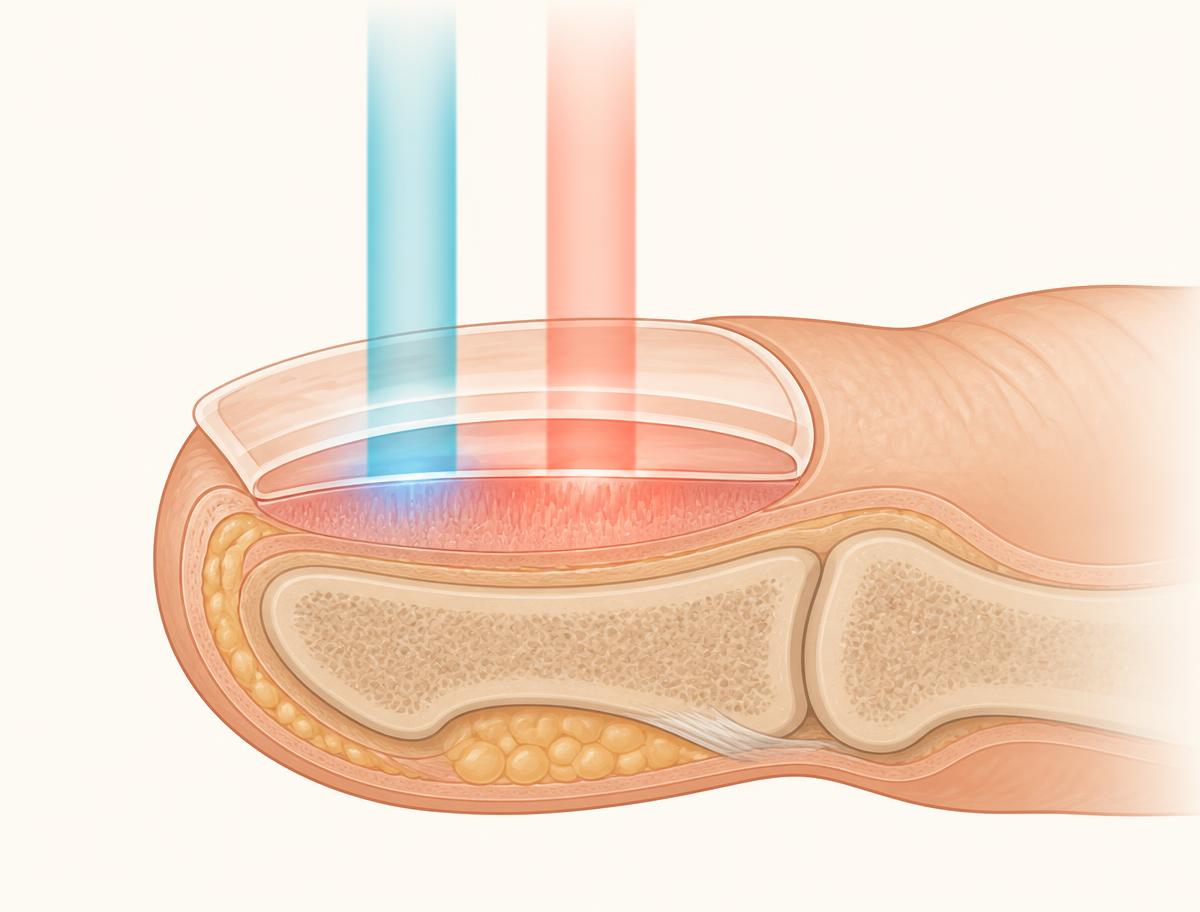
FungaBeam delivers light through the nail plate to the nail bed in a 90-second daily session — no soaking required.
- From $34.99 per device
- Free tracked shipping
- 30-day money-back
“I have been using FungaBeam since January. My case has cleared up and my nails look great.” — Patricia L., Ohio, US
Why the nail plate defeats most topicals
The same barrier applies here as with every other remedy on this site: the nail plate is dense, layered keratin built to resist exactly the kind of penetration a fifteen-minute soak would need to achieve to meaningfully change the environment in the nail bed. Vinegar can lower the pH at the surface, but there is little to suggest it meaningfully changes conditions several layers down where an established infection lives.
This is why filing remains the single most useful physical step in any vinegar-based routine — it is the part of the process actually capable of shortening the distance to the infection, rather than the soak itself.
Apple cider vinegar compared with other options
Where it sits relative to alternatives people typically compare it against.
| Approach | Evidence strength | Typical cost | Realistic timeline | Main real benefit |
|---|---|---|---|---|
| Apple cider vinegar soak | Anecdotal, no dedicated trials | Under $10 | 8–12+ weeks, inconsistent | Softens nail for filing |
| Diluted tea tree oil | Moderate — small trials | $10–20 | 3–6 months | Some direct antifungal exposure |
| Oral terbinafine (prescription) | Strong, multiple trials | Prescription cost varies | 12-week course, up to a year to full nail | Systemic delivery to nail bed |
| Daily light therapy (e.g. FungaBeam) | Emerging, device-based | From $34.99 | 4–8 weeks first growth | Reaches nail bed, no soaking |
What to combine it with
Use the soak primarily as preparation: soften and clean the nail, dry thoroughly, then file the thickened surface before applying whatever your primary treatment is. Daily clean, dry socks and rotating footwear so shoes fully dry between wears matter as much as anything applied directly to the nail.
If athlete's foot is also present on the surrounding skin, treat that at the same time — it is a common source of reinfection that a nail-only routine will not resolve.
When to stop and see a doctor
If eight to twelve weeks of consistent, correctly diluted soaking has produced no visible new growth at the base of the nail, it is reasonable to conclude the soak alone is not reaching the infection, and to shift effort to a treatment built to penetrate the nail plate. See a doctor if the nail is painful, if the skin looks infected, if you have diabetes or circulation issues, or if you would like a firm diagnosis before spending more months on any single approach.
Frequently asked questions
Ready to start treating the nail bed tonight?
Vinegar can help you prepare the nail; it is not likely to clear the infection underneath on its own.
- From $34.99 per device
- Free tracked shipping
- 30-day money-back
“I have been using FungaBeam since January. My case has cleared up and my nails look great.” — Patricia L., Ohio, US
Keep reading
- Epsom salt soakWhat magnesium sulfate actually does for a fungal nail, and what it does not.
- Baking sodaWhat sodium bicarbonate can realistically do for a fungal nail, and where it falls short.
- Tea tree oilCorrect dilution, application method, and what the trials actually found.
- Best treatment comparedEvery option ranked by evidence, cost, effort and speed.
Sources
This page is general information, not medical advice. FungaBeam is a consumer wellness device and is not intended to diagnose, treat, cure or prevent any disease. Speak to a doctor or podiatrist about your own situation, particularly if you have diabetes, circulation problems or worsening symptoms.