Published · Updated
The quick answer
- Baking soda (sodium bicarbonate) has some laboratory evidence of mild antifungal and moisture-absorbing properties, but no clinical trials showing it clears onychomycosis.
- It is genuinely useful as a moisture-control step in socks and shoes, which reduces the damp conditions fungi favour.
- As a paste or soak applied to the nail itself, its ability to reach an established infection under the plate is limited, same as every other topical here.
- Treat it as a hygiene and prevention tool first, and a nail treatment a distant second.
What it is and why people try it
Baking soda, or sodium bicarbonate, is a mild alkaline household staple used for everything from baking to odour control to cleaning. It appears on toenail fungus remedy lists mainly because of two loosely related properties: some laboratory evidence of mild antifungal activity, and its well-established ability to absorb moisture and neutralise odour, which matters because damp feet are a major risk factor for fungal growth.
People try it because it is essentially free, already in the kitchen cupboard, and feels gentler than an essential oil or a disinfectant — a reasonable instinct, even if the antifungal case for it is weaker than the moisture-control case.
What the evidence actually shows
A small number of laboratory studies have found that sodium bicarbonate can inhibit the growth of certain fungi, including some dermatophyte species, at particular concentrations in a dish. That is a real finding, but it has not been translated into clinical trials showing baking soda soaks or pastes clear an established toenail infection in humans.
Its more robust, better-documented property is moisture absorption: sodium bicarbonate is genuinely effective at reducing dampness and odour in shoes and socks, and dermatophytes thrive in warm, moist environments. That makes baking soda a more credible prevention and hygiene tool than a direct cure for an infection already established under the nail.
How people use it
There are two common approaches: a soak and a paste, plus a shoe-care use that is arguably the most evidence-supported of the three.
- Soak: dissolve two to three tablespoons of baking soda in a basin of warm water and soak the feet for fifteen to twenty minutes, then dry thoroughly.
- Paste: mix baking soda with a small amount of water to a thick paste, apply to the clean, dry nail, leave for ten minutes, then rinse and dry completely.
- Shoe care: sprinkle a small amount of baking soda inside shoes overnight to absorb moisture and odour, then tip out before wearing.
- File the nail thin regularly regardless of which method you use, since that step benefits any topical approach.
- Repeat consistently for at least eight to twelve weeks before judging any change specific to the nail itself.
Timeline and what to expect
There is no trial-based timeline for baking soda clearing a fungal nail infection, because that specific outcome has not been studied in humans. If you use it as a soak or paste directly on the nail, judge it the same way as any topical — by whether new, clear growth appears at the base of the nail over roughly two to three months, not by softness or smell, which change much faster and independently of the infection itself.
Its moisture-control benefit in shoes and socks, by contrast, is noticeable almost immediately in terms of reduced dampness and odour, even though that is a prevention effect rather than a treatment effect on the existing infection.
Risks and what not to do
Baking soda is gentle and low-risk for most people, but frequent soaking or paste use can dry out skin over time, and its alkalinity is the opposite of the acidic environment some other remedies (like vinegar) aim for — there is no strong reason to combine the two approaches. Avoid applying it to broken or irritated skin, and discontinue if any redness develops.
As always, anyone with diabetes, neuropathy or poor circulation should check with a clinician before starting a new regular foot-soak routine.
Dryness helps prevention, not cure
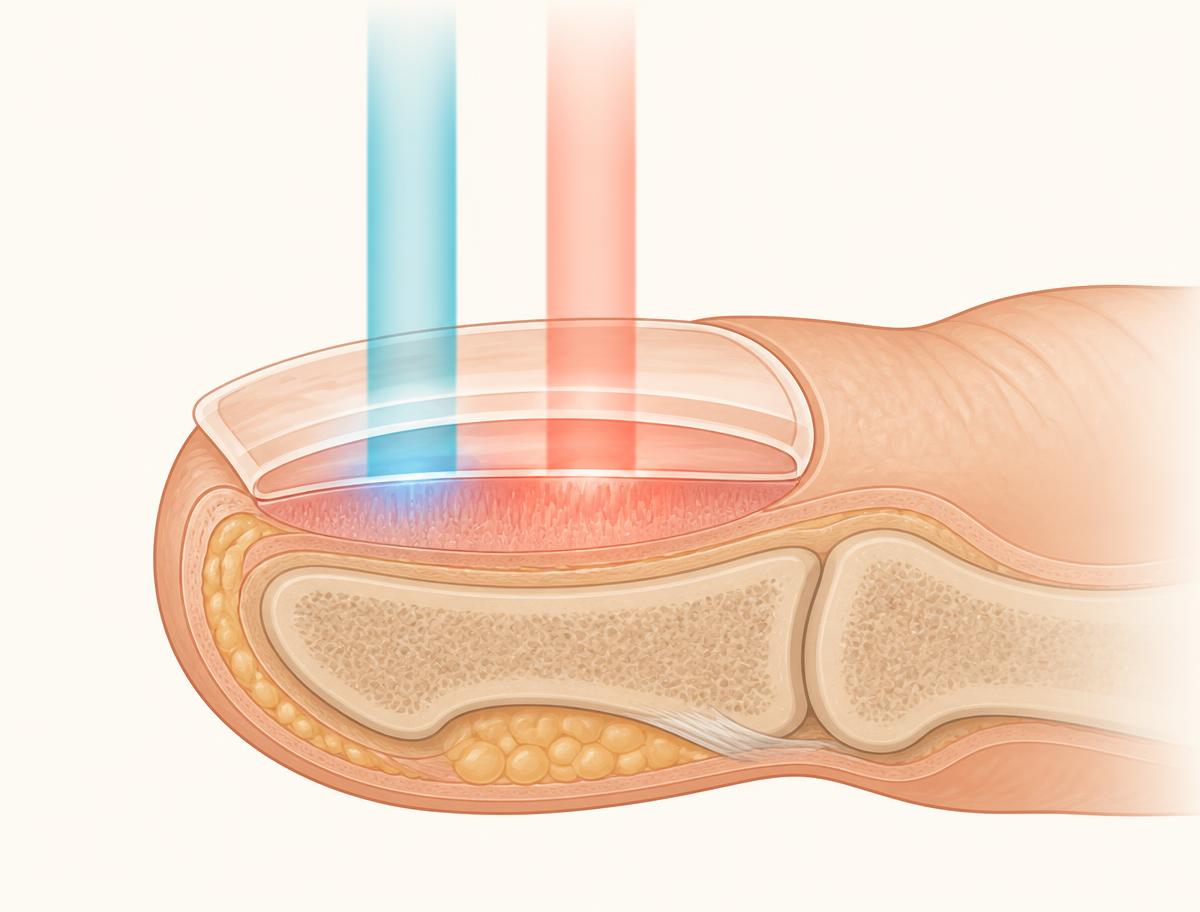
Use baking soda to keep feet dry, and FungaBeam's 90-second daily light session for the infection itself.
- From $34.99 per device
- Free tracked shipping
- 30-day money-back
“I have been using FungaBeam since January. My case has cleared up and my nails look great.” — Patricia L., Ohio, US
Why the nail plate still limits it
Even where baking soda shows mild antifungal activity in a laboratory dish, the same delivery problem applies as with every other topical on this site: a paste or soak sitting on the surface of the nail reaches an infection living under a dense, multi-layered keratin plate in only trace amounts. Its moisture-control benefit works differently — by changing the environment around the foot rather than trying to cross the nail plate — which is arguably why that use case has more practical value than the direct-application one.
Baking soda compared with other approaches
Where it realistically sits.
| Use case | Evidence strength | Typical cost | Best role | Reaches the nail bed? |
|---|---|---|---|---|
| Baking soda paste/soak on nail | Weak, lab-only antifungal data | Under $5 | Minor supporting role | No |
| Baking soda in shoes/socks | Moderate for moisture control | Under $5 | Prevention of reinfection | Not applicable |
| Oral terbinafine (prescription) | Strong, multiple trials | Prescription cost varies | Treating established infection | Yes, via bloodstream |
| Daily light therapy (e.g. FungaBeam) | Emerging, device-based | From $34.99 | Treating established infection | Yes, light through the plate |
What to combine it with
Baking soda's strongest role is inside the prevention routine: sprinkled in shoes overnight, it helps keep the environment fungi prefer from building up, which supports whatever treatment you are using on the nail itself. Pair it with daily washing and thorough drying, fresh socks daily, and shoe rotation so pairs get a full day to dry.
For the nail itself, treat baking soda as a minor supporting step at most, and put your primary effort into a method with a clearer route to the nail bed — filing plus a diluted essential oil, a prescription antifungal, or a light-based device.
When to stop and see a doctor
If you are using baking soda directly on the nail hoping it will clear the infection and eight to twelve weeks have passed with no new clear growth at the base, that is consistent with its weak direct evidence and a fair point to shift effort elsewhere. Keep using it in shoes for moisture control regardless.
See a doctor if the nail is painful, if the surrounding skin looks infected, if you have diabetes or poor circulation, or if you would like a confirmed diagnosis before continuing with any home routine.
Frequently asked questions
Ready to start treating the nail bed tonight?
Keep feet dry with baking soda, and put your antifungal effort into something that reaches the nail bed.
- From $34.99 per device
- Free tracked shipping
- 30-day money-back
“I have been using FungaBeam since January. My case has cleared up and my nails look great.” — Patricia L., Ohio, US
Keep reading
- Apple cider vinegarThe soak method, the pH theory, and why it rarely clears an established infection alone.
- Epsom salt soakWhat magnesium sulfate actually does for a fungal nail, and what it does not.
- Hydrogen peroxideSoaks, dilution, skin risk, and why disinfecting the surface rarely fixes the bed.
- Best treatment comparedEvery option ranked by evidence, cost, effort and speed.
Sources
This page is general information, not medical advice. FungaBeam is a consumer wellness device and is not intended to diagnose, treat, cure or prevent any disease. Speak to a doctor or podiatrist about your own situation, particularly if you have diabetes, circulation problems or worsening symptoms.