Published · Updated
The quick answer
- Hydrogen peroxide kills fungal spores it contacts directly, but a soak barely penetrates the nail plate, so it rarely clears an established infection in the nail bed.
- It is genuinely useful for a supporting role: disinfecting clippers, files and shower floors where reinfection often begins.
- Diluted soaks (equal parts 3% peroxide and water) a few times a week are the standard method, never at higher concentrations on skin.
- If you want a treatment aimed at the actual infection rather than surface hygiene, peroxide alone is one of the weaker options on this list.
What it is and why people try it
Hydrogen peroxide is a common household antiseptic that breaks down organic material and kills a broad range of microbes on contact, including fungal spores. Because it is cheap, already in most medicine cabinets, and clearly does something visible (the familiar fizzing on contact with tissue), it is an intuitive first thing people reach for when a toenail starts looking discoloured.
The appeal is largely about accessibility rather than evidence: it does not require a prescription, a dermatologist visit, or waiting for delivery, and the fizzing reaction feels like proof it is 'working' even though that reaction is simply peroxide breaking down on contact with skin cells and debris, not a sign it has reached the fungus.
What the evidence actually shows
There is limited clinical trial evidence specifically testing hydrogen peroxide soaks against onychomycosis. What is well established is its general antiseptic action against microorganisms on contact — which is real, but describes surface disinfection, not treatment of a deep-seated nail infection.
The infection in onychomycosis lives within and under the nail plate, in the nail bed and matrix. A soak, even a long one, exposes the outer surface of the plate to peroxide but does not saturate the dense keratin layers below in meaningful concentration. This is the same delivery problem that limits every topical remedy on this list, just with less supporting trial data than tea tree oil or even Vicks VapoRub.
How people use it
If you want to try it as a supporting step, this is the commonly described method.
- Mix equal parts 3% hydrogen peroxide and warm water in a basin — never use higher concentrations directly on skin.
- Soak the affected foot for ten to fifteen minutes.
- Dry the foot completely afterwards, especially between the toes.
- File the softened nail thin with a dedicated file.
- Limit this to three or four times a week rather than daily, to reduce skin dryness.
Timeline and what to watch for
Because there is little trial data to anchor expectations, there is no well-established timeline for peroxide soaks clearing a nail infection on their own. If used as the sole treatment, most people report no meaningful change in the discoloured area even after several months, which is consistent with its poor penetration of the nail plate.
If you do try it, watch the skin around the nail as closely as the nail itself — dryness, whitening or cracking there is a more likely early sign than any change in the fungal discolouration.
Risks worth knowing
Repeated peroxide exposure bleaches and dries skin, can cause stinging and whitening of the skin around the nail, and delays healing of any small cuts or hangnails nearby. Daily long soaks also leave the foot damp for extended periods, which is the exact environment dermatophytes prefer to spread in — working against the goal.
Never combine hydrogen peroxide with vinegar in the same basin; mixing the two produces peracetic acid, which is far more irritating to skin than either ingredient alone. Anyone with diabetes, neuropathy or poor circulation should not experiment with foot soaks of any kind without clinical advice first, because minor skin damage in that group can progress quickly to something more serious.
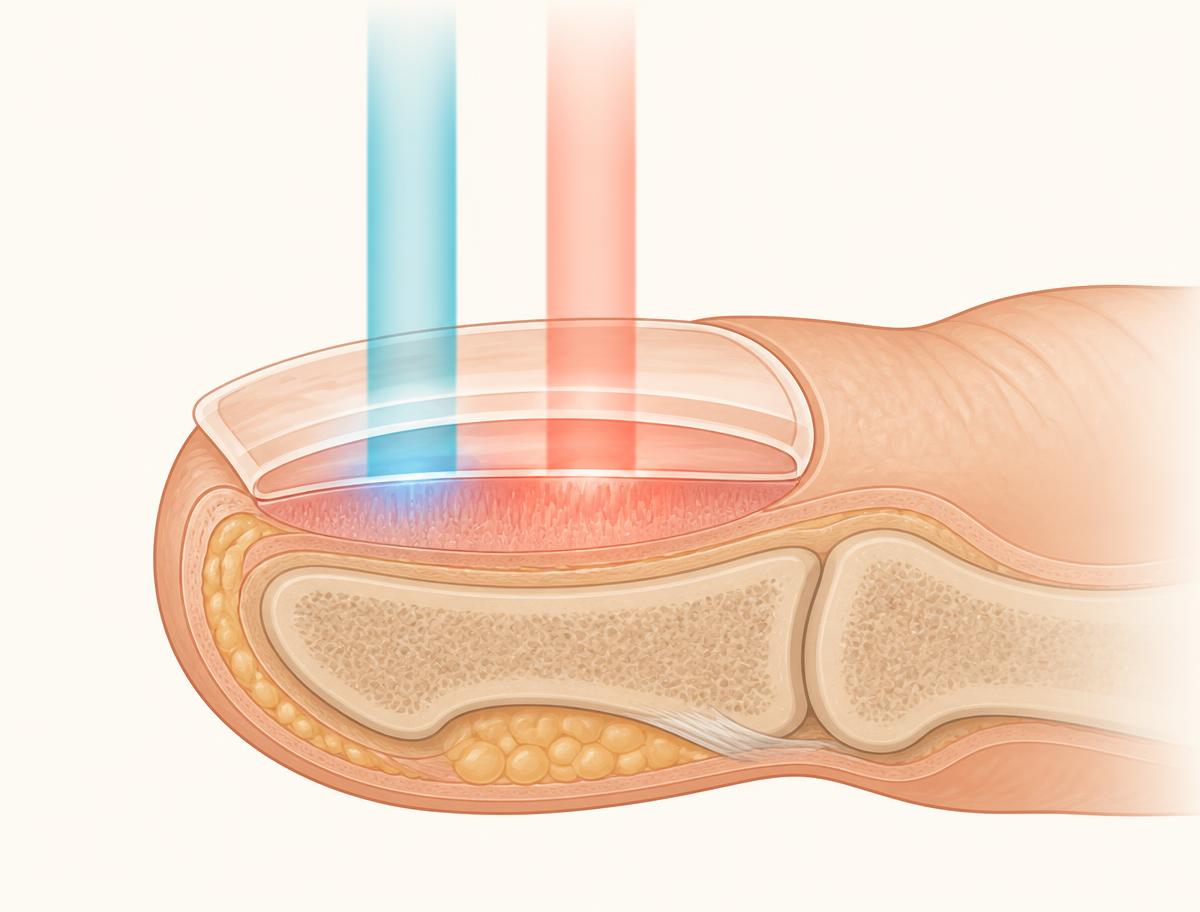
Stop soaking, start treating the bed
FungaBeam targets the nail bed directly in a 90-second daily session. No soaking, no mess.
- From $34.99 per device
- Free tracked shipping
- 30-day money-back
“I have been using FungaBeam since January. My case has cleared up and my nails look great.” — Patricia L., Ohio, US
Why the nail plate defeats most topicals
This is the recurring theme across every home remedy for toenail fungus: the nail plate is not a passive covering, it is a dense, multi-layered keratin structure that evolved specifically to resist penetration. Anything applied to the outside — oil, cream, disinfectant — reaches the infection living underneath in only trace amounts unless the product is specifically formulated to cross keratin or the nail is mechanically thinned first.
Peroxide's disinfectant action, in particular, works on contact and does not have any special ability to travel through keratin, which is part of why its role here is better understood as hygiene support than as nail treatment.
Peroxide compared with better-evidenced options
A realistic comparison, since peroxide is often reached for first.
| Approach | Evidence strength | Typical cost | Best actual use | Penetrates the nail plate? |
|---|---|---|---|---|
| Hydrogen peroxide soak | Very weak for nail treatment | Under $5 | Disinfecting tools, shower floor, hygiene | No |
| Diluted tea tree oil | Moderate — small trials | $10–20 | Mild, early surface infections | Poorly |
| Oral terbinafine (prescription) | Strong, multiple trials | Prescription cost varies | Established or moderate-severe infections | Yes, via bloodstream |
| Daily light therapy (e.g. FungaBeam) | Emerging, device-based | From $34.99 | Daily use alongside hygiene routine | Yes, light passes through the plate |
What to combine it with
Use hydrogen peroxide for what it is genuinely good at: disinfecting nail clippers and files after every use, wiping down the shower floor, and keeping shared surfaces clean if more than one household member is dealing with a fungal infection. That hygiene layer reduces the chance of reinfecting a nail that is otherwise improving from another treatment.
Combine it with daily foot washing and thorough drying, clean socks every day, and rotating shoes so each pair has time to fully dry — footwear hygiene is consistently underestimated as a source of reinfection.
When to move on and when to see a doctor
If your only treatment has been a peroxide soak for more than a month with no visible change at the base of the nail, that is not a failure of patience — it reflects the method's limited ability to reach the infection at all. It is reasonable to redirect that effort toward a treatment designed to cross the nail plate rather than continue soaking indefinitely.
See a doctor or podiatrist if the nail is painful, if the surrounding skin looks infected, if you have diabetes or poor circulation, or if you would like a professional diagnosis before continuing to guess at home.
Frequently asked questions
Ready to start treating the nail bed tonight?
Use peroxide for hygiene, and put your daily effort into something that can actually reach the nail bed.
- From $34.99 per device
- Free tracked shipping
- 30-day money-back
“I have been using FungaBeam since January. My case has cleared up and my nails look great.” — Patricia L., Ohio, US
Keep reading
- Listerine foot soakThe famous vinegar-and-mouthwash soak, and what it can realistically achieve.
- Vicks VapoRubThe evidence, the method people use, and why results are so inconsistent.
- What kills it instantly?The honest answer to the internet's most searched nail fungus question.
- Nail fungus treatmentThe full treatment landscape, plus the home care that decides whether it returns.
Sources
This page is general information, not medical advice. FungaBeam is a consumer wellness device and is not intended to diagnose, treat, cure or prevent any disease. Speak to a doctor or podiatrist about your own situation, particularly if you have diabetes, circulation problems or worsening symptoms.