Published · Updated
The quick answer
- Epsom salt (magnesium sulfate) has no established antifungal action against dermatophytes; its main effect is softening skin and nails and providing general soothing comfort.
- It is worth using for nail softening ahead of filing, and as a comfortable, low-risk foot-care habit — not as a standalone fungal treatment.
- There is no clinical evidence it clears onychomycosis, with or without extended soaking times.
- If comfort is your only goal it is reasonable to continue; if clearing the infection is the goal, it needs to be paired with something that actually addresses the fungus.
What it is and why people try it
Epsom salt is magnesium sulfate, a mineral compound long used in warm foot and bath soaks for muscle soreness, general relaxation and softening rough skin. It has no specific history as an antifungal agent, but because foot soaks in general are associated with foot care, and because it is inexpensive and easy to find, it regularly appears on toenail fungus remedy lists by association rather than direct evidence.
People try it partly for comfort — sore feet after standing all day genuinely feel better after a warm soak — and partly on the assumption that anything marketed for 'foot health' must help with a foot fungal problem too. That assumption does not hold up well under scrutiny.
What the evidence actually shows
There is no clinical evidence that magnesium sulfate has meaningful antifungal activity against the dermatophytes and yeasts responsible for onychomycosis. Its documented effects are on skin softening, mild anti-inflammatory soothing, and general relaxation — genuinely useful for tired feet, but not mechanisms that would be expected to clear a fungal infection living under a nail plate.
This puts Epsom salt in a different category from tea tree oil or even Vicks VapoRub, both of which at least have laboratory-demonstrated antifungal activity in their ingredients. Epsom salt's case rests almost entirely on general foot-care association rather than any antifungal mechanism.
How people use it
- Dissolve two to three tablespoons of Epsom salt in a basin of warm water.
- Soak the feet for fifteen to twenty minutes.
- Dry the feet thoroughly afterwards, especially between the toes.
- File the softened nail if it is thickened.
- Repeat a few times a week as a comfort and softening habit rather than a daily antifungal ritual.
Timeline and what to realistically expect
There is no antifungal timeline to give here, because there is no established antifungal effect to track. What people typically notice is softer, easier-to-trim nails and more comfortable feet after regular soaking — real benefits, but not evidence the underlying infection is changing.
If you are using Epsom salt as your only intervention and expecting the discolouration to resolve, it is worth being clear-eyed early: there is no mechanism by which it would be expected to do that, so the disappointment of a few months later is avoidable by setting expectations correctly now.
Risks and who should be cautious
Epsom salt soaks are low-risk for most people. Very frequent soaking can dry the skin, and anyone with open cuts, broken skin, or very sensitive skin should be cautious. As with any foot soak, people with diabetes, neuropathy or poor circulation should check with a clinician before making it a regular habit, since prolonged water exposure and skin changes matter more in that group.
Comfort is not the same as treatment
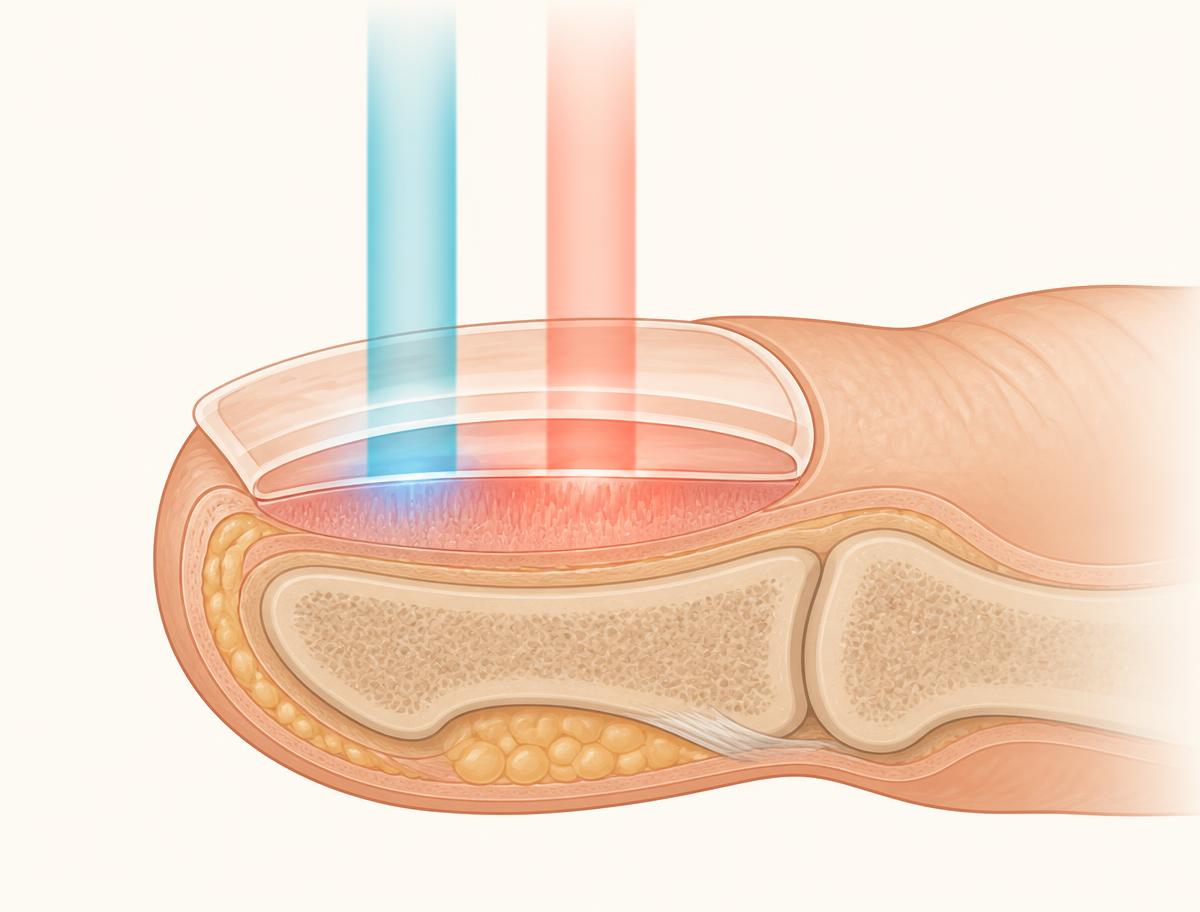
Pair the soak's softening effect with FungaBeam's 90-second daily light session for something aimed directly at the nail bed.
- From $34.99 per device
- Free tracked shipping
- 30-day money-back
“I have been using FungaBeam since January. My case has cleared up and my nails look great.” — Patricia L., Ohio, US
Why softening is not the same as treating
The recurring theme across every remedy on this site is that the nail plate is a dense keratin barrier, and clearing an infection requires either getting an antifungal agent through it or getting it there via the bloodstream. Epsom salt soaks can soften that barrier temporarily, which is a genuinely useful preparatory step — but softening the barrier is not the same as delivering anything antifungal across it.
If Epsom salt is the only thing in your routine, you have prepared the nail for treatment without actually applying one. Filing the softened nail is worthwhile; stopping there and expecting resolution is where the routine falls short.
Epsom salt compared with actual antifungal approaches
A comparison that makes the gap clear.
| Approach | Antifungal evidence | Typical cost | Main benefit | Penetrates the nail plate? |
|---|---|---|---|---|
| Epsom salt soak | None established | Under $10 | Comfort, nail softening | No |
| Diluted tea tree oil | Moderate — small trials | $10–20 | Some direct antifungal exposure | Poorly |
| Oral terbinafine (prescription) | Strong, multiple trials | Prescription cost varies | Systemic delivery to nail bed | Yes, via bloodstream |
| Daily light therapy (e.g. FungaBeam) | Emerging, device-based | From $34.99 | Reaches nail bed directly | Yes, light passes through the plate |
What to combine it with
Use Epsom salt soaks for comfort and to soften the nail before filing, then apply an actual antifungal step — a diluted essential oil, a prescription topical, or a light-based device — to the freshly thinned nail. Keep up daily washing and drying, clean socks, and shoe rotation regardless of which soak habit you keep.
If foot odour or general skin comfort is a bigger priority for you than the nail specifically, Epsom salt remains a reasonable, low-cost habit to keep for its own sake.
When to redirect effort and see a doctor
If you have been relying on Epsom salt soaks alone hoping the nail discolouration will resolve, it is worth redirecting that time now rather than after months of no change, since there is no antifungal mechanism to expect otherwise. Continue the soak for comfort if you enjoy it, but pair it with a treatment aimed at the fungus.
See a doctor if the nail is painful, if you notice signs of skin infection, if you have diabetes or poor circulation, or if you want confirmation that the nail change is fungal in the first place.
Frequently asked questions
Ready to start treating the nail bed tonight?
Enjoy the soak for what it is — comfort and softening — and put your antifungal effort elsewhere.
- From $34.99 per device
- Free tracked shipping
- 30-day money-back
“I have been using FungaBeam since January. My case has cleared up and my nails look great.” — Patricia L., Ohio, US
Keep reading
- Apple cider vinegarThe soak method, the pH theory, and why it rarely clears an established infection alone.
- Baking sodaWhat sodium bicarbonate can realistically do for a fungal nail, and where it falls short.
- Listerine foot soakThe famous vinegar-and-mouthwash soak, and what it can realistically achieve.
- Best treatment comparedEvery option ranked by evidence, cost, effort and speed.
Sources
This page is general information, not medical advice. FungaBeam is a consumer wellness device and is not intended to diagnose, treat, cure or prevent any disease. Speak to a doctor or podiatrist about your own situation, particularly if you have diabetes, circulation problems or worsening symptoms.