Published · Updated
The quick answer
- Do not mix bleach with vinegar (or ammonia) in any container, including a foot basin — the combination releases toxic chlorine gas, which is dangerous especially in an enclosed bathroom.
- Even a bleach-only soak carries a real risk of skin and eye irritation or chemical burns, and there is no clinical evidence it clears an established toenail fungus infection.
- We recommend against bleach soaks of any kind for this purpose; the risk profile is out of proportion to any plausible benefit.
- Safer, better-evidenced options exist, from diluted essential oils to prescription antifungals to light-based devices.
What people are trying to do, and why we're addressing it directly
Diluted household bleach (sodium hypochlorite) is sometimes suggested online as a foot soak for toenail fungus, on the reasoning that it is a powerful disinfectant used to kill mould and mildew elsewhere in the home. Some versions of the suggestion pair it with vinegar to 'boost' the effect. We are addressing this topic because people search for it, not to endorse it — the honest, responsible answer here is a warning, not a method.
We are not going to walk through a recommended bleach soak recipe, because we do not think one exists that is worth the risk for this purpose.
The chlorine gas risk is not theoretical
Mixing bleach with an acid — including ordinary household vinegar — releases chlorine gas. Mixing bleach with ammonia-based cleaners produces chloramine vapours. Both are genuinely dangerous, particularly in a small, poorly ventilated bathroom where a foot soak would typically happen, and have caused real hospitalisations when people combine cleaning products without realising the risk.
This is not a small, edge-case warning: it is one of the most common household chemical accidents, and it happens specifically because people underestimate how quickly two 'safe-sounding' products can react. Never combine bleach with vinegar, ammonia, or any other cleaning product in the same container, basin or room with poor airflow.
Even bleach alone carries meaningful risk
Setting the mixing risk aside, a bleach-only soak is still not something we recommend. Household bleach is formulated for surfaces, not skin, and even diluted solutions can cause irritation, dryness, and in more concentrated or prolonged exposure, chemical burns to skin already compromised by a fungal infection or surrounding cracks and hangnails.
Eye and respiratory irritation from fumes is also a real risk in an enclosed bathroom, even without any mixing error. None of this is offset by strong evidence that a bleach soak actually clears onychomycosis.
What the evidence actually shows
There is no clinical trial evidence supporting diluted bleach soaks as a treatment for toenail fungus. Bleach is an effective surface disinfectant against many organisms, including fungal spores, on hard surfaces — which is a reasonable case for using it to clean a shower floor or bathroom tile, not for soaking a foot in it.
As with hydrogen peroxide, general disinfectant activity on a surface does not translate into an established infection under a nail plate being cleared by a brief soak, and the added skin-damage risk with bleach specifically tips the balance further against it.
If skin contact or fume exposure happens
Rinse any skin that has contacted bleach thoroughly with plain water for several minutes, remove any contaminated clothing, and seek medical attention if irritation, blistering or pain persists. If you smell a strong chemical odour after mixing cleaning products, leave the room immediately, ventilate the space by opening windows and doors without re-entering to do so, and seek fresh air. If breathing difficulty, coughing or chest tightness develops, seek emergency medical care.
A safer daily alternative
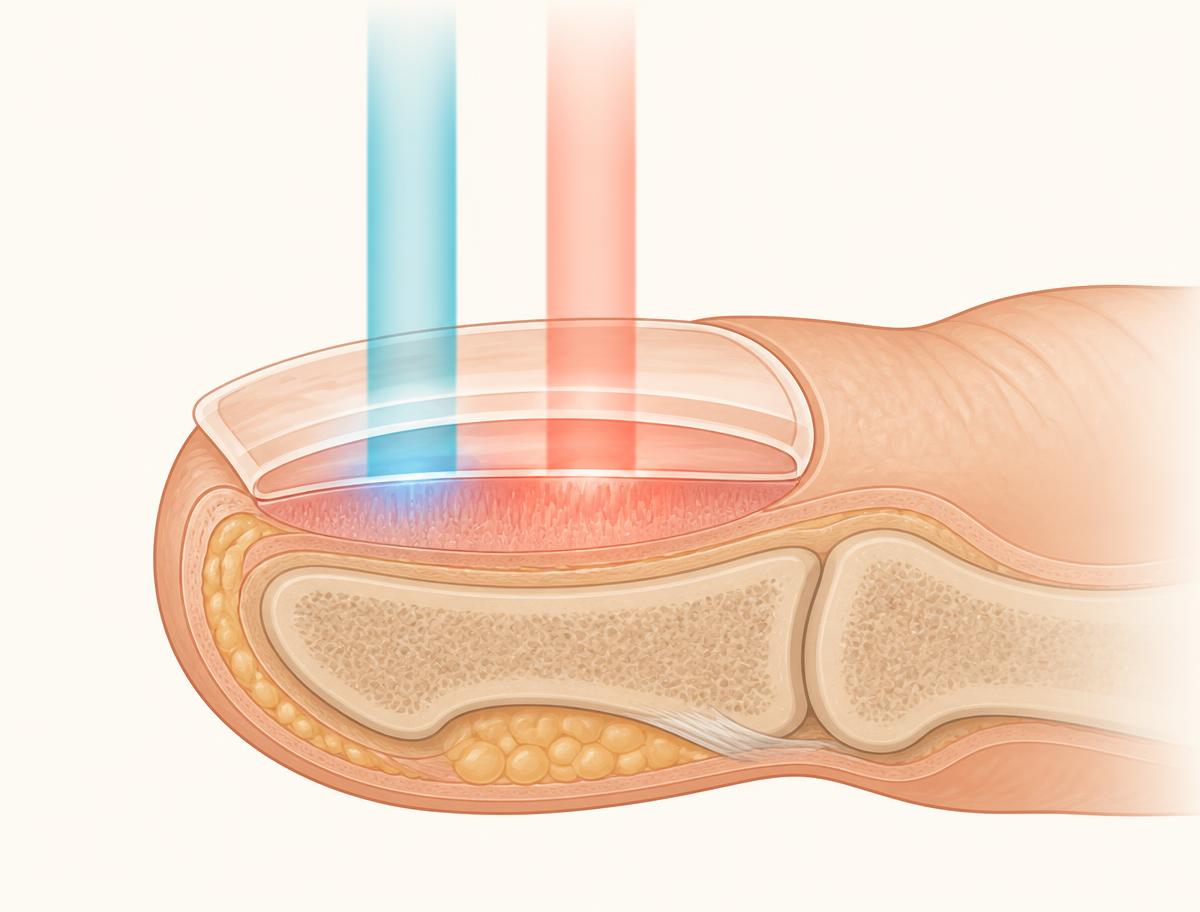
No chemical mixing, no fumes, no burn risk — FungaBeam's 90-second daily light session targets the nail bed without any of these hazards.
- From $34.99 per device
- Free tracked shipping
- 30-day money-back
“I have been using FungaBeam since January. My case has cleared up and my nails look great.” — Patricia L., Ohio, US
Safer approaches worth trying instead
A comparison of genuinely lower-risk options for the same goal.
| Approach | Evidence for nail fungus | Skin/chemical risk | Typical cost | Our view |
|---|---|---|---|---|
| Bleach (or bleach + vinegar) soak | None established | High — burns, fumes, possible toxic gas if mixed | Under $5 | Not recommended |
| Diluted tea tree oil | Moderate — small trials | Moderate if used undiluted | $10–20 | Reasonable low-risk trial |
| Oral terbinafine (prescription) | Strong, multiple trials | Low (systemic side effects instead) | Prescription cost varies | Discuss with a doctor |
| Daily light therapy (e.g. FungaBeam) | Emerging, device-based | Very low | From $34.99 | Reasonable low-risk daily option |
What to use bleach for instead
Bleach has a legitimate, useful role in a toenail fungus routine — just not as something you soak your foot in. Diluted bleach solutions (following the product label's instructions for surface disinfection) can be used to clean shower floors, bathroom tiles, and other hard surfaces where fungal spores can persist and cause reinfection, always in a well-ventilated space and never combined with any other cleaning product.
Keep clippers and files disinfected separately (rubbing alcohol is a simpler, lower-risk choice for metal tools), wash bath mats regularly on a hot cycle, and let shower areas dry out between uses where possible.
What to combine safer methods with
Whichever safer treatment you choose — diluted essential oil, prescription antifungal, or light-based device — pair it with regular filing of thickened nail, daily washing and thorough drying, clean socks, and shoe rotation so pairs fully dry between wears. These habits reduce reinfection regardless of the specific treatment and matter as much as the treatment itself.
When to see a doctor
See a doctor promptly if you have already been exposed to bleach or mixed chemical fumes and are experiencing skin burns, eye irritation that does not resolve with rinsing, or any breathing difficulty. Separately, see a doctor or podiatrist for the nail fungus itself if it is painful, spreading, affecting someone with diabetes or poor circulation, or simply has not improved after trying a safer, better-evidenced approach for several months.
Frequently asked questions
Ready to start treating the nail bed tonight?
Skip the bleach soak entirely — the risk is real and the antifungal benefit is not established.
- From $34.99 per device
- Free tracked shipping
- 30-day money-back
“I have been using FungaBeam since January. My case has cleared up and my nails look great.” — Patricia L., Ohio, US
Keep reading
- Hydrogen peroxideSoaks, dilution, skin risk, and why disinfecting the surface rarely fixes the bed.
- Listerine foot soakThe famous vinegar-and-mouthwash soak, and what it can realistically achieve.
- What kills it instantly?The honest answer to the internet's most searched nail fungus question.
- Best treatment comparedEvery option ranked by evidence, cost, effort and speed.
Sources
This page is general information, not medical advice. FungaBeam is a consumer wellness device and is not intended to diagnose, treat, cure or prevent any disease. Speak to a doctor or podiatrist about your own situation, particularly if you have diabetes, circulation problems or worsening symptoms.