Published · Updated
The quick answer
- Antifungal creams work well on skin (athlete's foot) but struggle to penetrate the dense nail plate to reach a nail bed infection.
- Amorolfine and ciclopirox lacquers are formulated specifically to cross the nail and are the better cream-family option for mild nail cases.
- Filing the nail thin before every application meaningfully improves how well any cream or lacquer works.
- For thick, long-standing or multi-nail infections, creams alone are usually not enough — pair with a device, or ask about oral treatment.
Why nails are harder to treat than skin
Antifungal creams are genuinely effective against skin infections like athlete's foot, where the medication sits directly on living, permeable skin. A nail is different: the visible plate is dense, largely dead keratin, and the infection you are trying to reach — the nail bed underneath — sits behind that barrier. A cream applied to the surface has to first get through the plate before it can do anything.
This is not a flaw in any particular product; it is a physical limitation shared by every topical antifungal cream on the market, branded or generic. It is why nail-specific formulations exist at all, and why plain skin creams are usually the weakest option for nail infections specifically.
Clotrimazole and terbinafine cream
Clotrimazole and terbinafine creams are widely available over the counter and are genuinely good choices for athlete's foot and skin-fold fungal infections. Used on a nail, they can help with very early, superficial discoloration right at the free edge, but they are not formulated to penetrate a thickened plate and are generally the weakest of the topical options for an established nail infection.
Where they are useful for nail fungus is alongside a nail-specific treatment: treating the skin around the nail and any accompanying athlete's foot with clotrimazole or terbinafine cream while using a proper nail lacquer or device on the nail itself.
Amorolfine and ciclopirox lacquers
Amorolfine (often prescription in some countries, available differently elsewhere) and ciclopirox lacquers are formulated specifically to adhere to and penetrate the nail plate, unlike a general skin cream. They are painted on like nail polish, typically once or twice weekly for amorolfine or more frequently for ciclopirox, and are removed periodically with the recommended solvent or by filing before the next application.
These are the more realistic cream-family option for mild-to-moderate nail infections, though they still require months of consistent, correctly-timed application, and results on thick, long-standing infections are limited compared with oral treatment.
Tolnaftate and other OTC options
Tolnaftate is another over-the-counter antifungal, sold as a cream, spray or solution, mainly marketed for athlete's foot. Like clotrimazole, it is not specifically formulated for nail penetration, so its role in nail fungus treatment is similarly limited to very superficial cases or as a companion treatment for surrounding skin.
How to actually use a cream or lacquer properly
Most creams fail not because the ingredient is wrong, but because of how they are applied. These steps matter more than the brand:
- File the surface of the nail down as thin as is comfortable before each application — this alone significantly improves penetration.
- Clean and dry the nail fully before applying; any residual moisture dilutes the product.
- Apply to the entire nail surface and under the free edge, not just the visibly discoloured patch.
- Follow the specific product's frequency exactly — lacquers often have a weekly removal-and-reapplication cycle that differs from a daily cream.
- Continue for the full recommended period, generally many months, not just until the surface looks better.
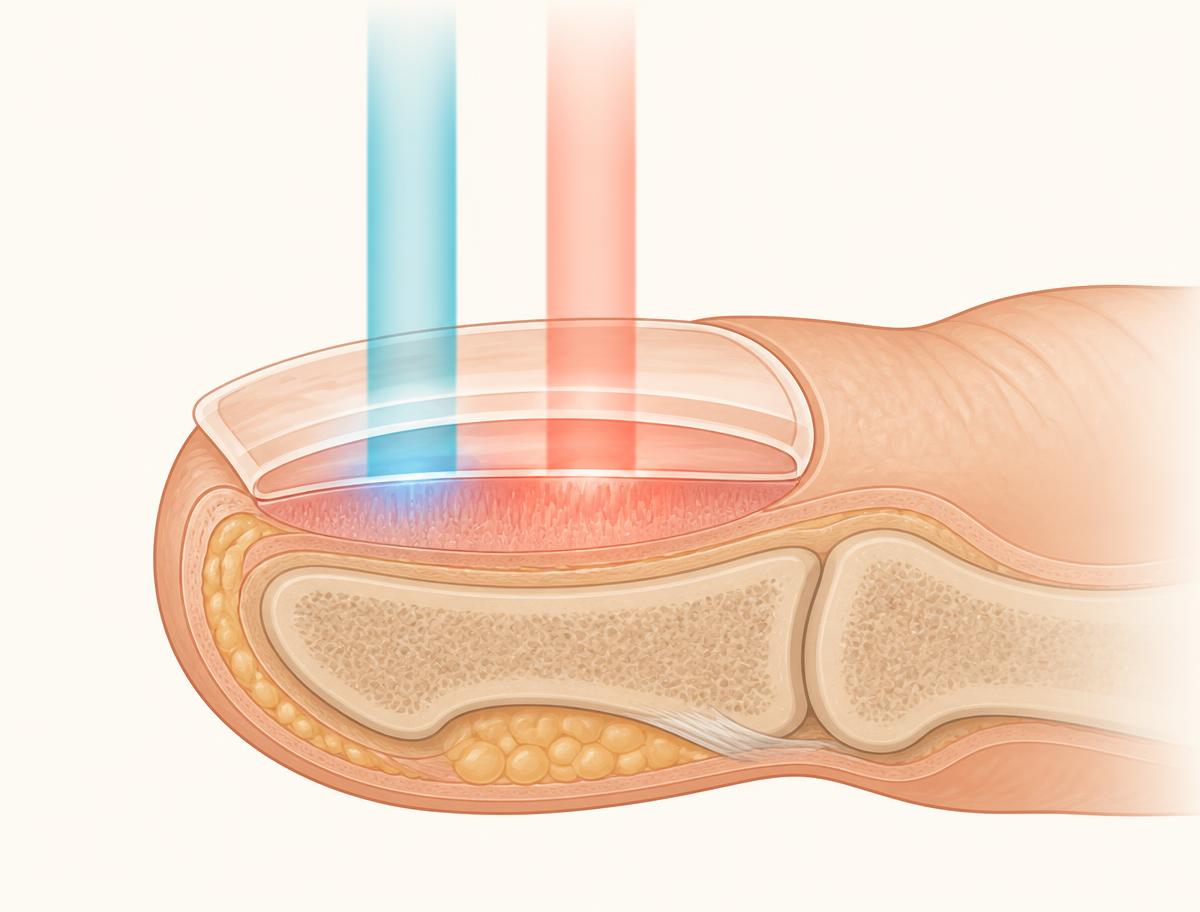
When cream alone is not reaching far enough
FungaBeam's light reaches through the nail plate to the nail bed, from $34.99, 90 seconds a day.
- From $34.99 per device
- Free tracked shipping
- 30-day money-back
“I have been using FungaBeam since January. My case has cleared up and my nails look great.” — Patricia L., Ohio, US
Cream and lacquer options compared
The pattern is consistent: general skin creams are cheap and useful for the skin around the nail, but nail-specific lacquers cost more and are the only cream-family products actually built to cross the plate.
| Product type | Formulated for nails? | Typical cost | Best-fit case |
|---|---|---|---|
| Clotrimazole cream | No — skin-focused | $10–$20 | Accompanying athlete's foot, not the nail itself |
| Terbinafine cream | No — skin-focused | $10–$25 | Same as above |
| Tolnaftate | No — skin-focused | $8–$15 | Very superficial nail edge involvement only |
| Amorolfine lacquer | Yes | $25–$60 | Mild-to-moderate, early nail involvement |
| Ciclopirox lacquer | Yes | $40–$80+ | Mild-to-moderate, early nail involvement |
When creams are realistically not enough
If the nail is significantly thickened, more than half the nail is affected, several nails are involved, or you have already used a cream or lacquer correctly for several months without any new clear growth at the base, it is time to consider something that reaches further. That means either at-home light therapy, which delivers 470nm blue and 910nm near-infrared light through the nail plate rather than relying on chemical penetration, or a conversation with a doctor about oral terbinafine.
This is a common point where people switch to FungaBeam: they have already tried the cream route in good faith, applied it correctly, and simply were not seeing the nail bed respond. A light therapy session takes 90 seconds daily, involves no ongoing product cost, and does not depend on chemical penetration through the same barrier that limited the cream.
Combining creams with other treatments
Using a skin cream on surrounding athlete's foot while treating the nail itself with a lacquer, a device, or oral medication is not redundant — it is addressing two different infection sites at once, since fungus on the skin around the nail is often the same infection reinfecting the nail plate. This combination is one of the more evidence-sensible approaches for people who want to stay entirely topical.
What people get wrong with creams
The most common error is applying a plain skin cream to the nail and expecting nail-lacquer-level penetration, then concluding creams don't really work when the real issue was product choice. The second is stopping after a few weeks because the visible tip has not changed — with any topical, the meaningful signal is new growth at the base, which takes 8 or more weeks to appear regardless of which product is used.
Frequently asked questions
Ready to start treating the nail bed tonight?
If you have been applying a cream diligently for months with no change at the base of the nail, that is real information — it means you need something that reaches further, not more of the same.
- From $34.99 per device
- Free tracked shipping
- 30-day money-back
“I have been using FungaBeam since January. My case has cleared up and my nails look great.” — Patricia L., Ohio, US
Keep reading
- Terbinafine and LamisilThe prescription standard: how it works, success rates, side effects and monitoring.
- Best treatment by situationMild, moderate, severe or recurring — matched to the right treatment for each.
- Light therapy device guideWavelengths, red flags, real costs, and how to judge any device before buying.
- Early-stage fungusWhy the first few months matter more than any product you choose.
Sources
This page is general information, not medical advice. FungaBeam is a consumer wellness device and is not intended to diagnose, treat, cure or prevent any disease. Speak to a doctor or podiatrist about your own situation, particularly if you have diabetes, circulation problems or worsening symptoms.